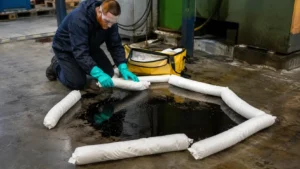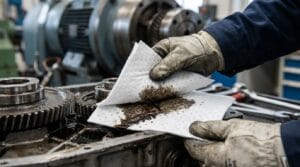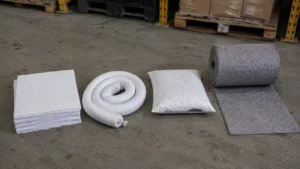
Absorbent materials are not interchangeable. A sorbent material that pulls oil off water beautifully can be nearly useless on a battery-acid spill, and a material that soaks up gallons of water in a diaper core will do very little for a hydraulic fluid leak on a warehouse floor. Choosing the wrong absorbent material wastes budget, creates disposal headaches, and on a chemical spill can even be a safety risk. This guide breaks down the major families of absorbent materials, from synthetic polypropylene to natural cellulose to mineral sorbents like clay and vermiculite, and shows how each one fits a different liquid, environment, and budget.
Rather than treating every sorbent material as one undifferentiated category, this article organizes absorbent materials the way a procurement or EHS manager actually needs to think about them: by base chemistry, by liquid affinity, and by real-world format. Each section below links out to a deeper, dedicated guide for that specific material or use case, so this page works as a starting map rather than the final word on any single product.
How to Classify Absorbent Materials
The fastest way to sort absorbent materials is by base chemistry: natural organic materials like cellulose and wood fiber, synthetic materials like polypropylene and superabsorbent polymer, and mineral materials like clay, vermiculite, and diatomaceous earth. Each family behaves differently in terms of biodegradability, cost, and how it holds up once saturated, and that alone rules out entire categories for certain jobs.
The second, arguably more important axis is liquid affinity. Hydrophobic oil-only sorbents such as polypropylene repel water and absorb only hydrocarbons, which makes them the right call on a dock or waterway where water is always present. Universal absorbents take on water, oil, coolant, and most non-aggressive fluids without discrimination, which is why they dominate general maintenance areas. Chemical absorbents are built or treated to resist degradation from acids, caustics, and solvents that would otherwise dissolve a standard pad.
Putting those two axes together gives a quick filter: start with what liquid is involved, then narrow to the base chemistry that fits your budget, disposal requirements, and environment. A marina needs hydrophobic synthetic sorbent material it can leave floating on water; a machine shop wants an inexpensive natural or synthetic universal absorbent for daily drips; a lab or chemical plant needs a sorbent chemically rated for what is actually being spilled. The sections below work through each material family using that same lens, and the comparison table further down puts the numbers side by side.
Polypropylene: Synthetic and Oil-Only
Polypropylene is the synthetic fiber behind most commercial oil absorbent pads, rolls, socks, and booms. It is melt-blown into a nonwoven web that is naturally hydrophobic, meaning it repels water and selectively absorbs oil, fuel, and other hydrocarbons, which is exactly why it is the standard choice anywhere water is present, such as bilges, storm drains, docks, and outdoor equipment yards. A single polypropylene pad typically holds roughly 8 to 15 times its own weight in oil depending on grade and fiber density.
Because the fiber itself does not degrade in water or most petroleum products, polypropylene sorbents hold their shape and absorbency through extended contact, which matters for boom deployments that sit on water for hours or days. They are not biodegradable, so used pads generally need to be handled and disposed of as oily waste rather than composted, and heavier grades cost more per unit than cellulose alternatives.
Marine spill response, machine shop drip control near coolant or wash-down water, refinery and terminal secondary containment, and any outdoor application where the sorbent might contact rain or groundwater are all cases where the hydrophobic property earns its cost premium over cellulose. For a full technical walkthrough of fiber structure, bonding, and grading, see our polypropylene absorbent guide, and for a closer look at exactly what these pads are built from, our breakdown of what oil absorbent pads are made of.
To see where polypropylene sits specifically inside the broader oil-absorbent category, and when a universal alternative makes more sense, read our oil absorbents guide and our companion piece on oil-only absorbents and when to use them.
Cellulose and Wood Pulp: Natural and General-Purpose
Cellulose absorbents are made from processed wood pulp or recycled paper fiber, formed into mats, rolls, or loose granules. Unlike polypropylene, cellulose is hydrophilic, meaning it absorbs water and oil alike, which is exactly what makes it a strong universal absorbent for general maintenance areas where the spilled liquid is unpredictable. A typical cellulose pad or mat absorbs around 5 to 9 times its own weight, somewhat less than premium polypropylene, but at a noticeably lower cost per unit.
Because wood pulp is a natural organic material, cellulose sorbents are biodegradable and compostable in most jurisdictions once free of hazardous contamination, which simplifies disposal for facilities handling non-hazardous fluids like coolant, water, and food-grade oils. The tradeoff is that cellulose breaks down faster than synthetic fiber under heavy foot traffic or prolonged saturation, so it is better suited to routine drip control than to extended outdoor boom deployment.
Facilities running mixed fluids on a shop floor, loading dock, or warehouse aisle typically default to a cellulose-based universal absorbent for exactly this flexibility. Our universal absorbents guide covers where that flexibility helps and where it runs into limits, and our maintenance absorbents guide walks through matching cellulose formats to everyday plant maintenance tasks.
Clay and Mineral Sorbents: Floor-Dry Applications
Clay-based sorbents, often sold as floor-dry or oil-dry, are ground mineral products such as fuller’s earth, bentonite, or attapulgite clay applied as loose granules directly onto a spill. Clay works primarily by adsorption rather than absorption: liquid clings to the surface and pore structure of each granule rather than being drawn deep into a fiber matrix, which is why capacity numbers for clay run lower than for fiber-based sorbents, typically around 0.3 to 0.5 times the material’s own weight.
The appeal of clay is upfront cost and speed. A bag of floor-dry is inexpensive per pound, works on almost any liquid, and can be swept or shoveled up quickly after a large spill in a garage, loading bay, or auto shop, which is why it remains common in automotive and light-industrial settings despite its lower efficiency. The downsides are real: clay produces dust that can be an inhalation hazard, adds significant weight to disposal drums since the mineral itself does not evaporate off, and offers no chemical resistance for aggressive fluids.
For facilities weighing clay against a pad-based system for routine floor spills, our industrial absorbents guide compares loose mineral sorbents to manufactured pads across cost, labor, and cleanup time.
Vermiculite and Diatomaceous Earth: Mineral, Chemical-Neutral Sorbents
Vermiculite is an expanded mica mineral, lightweight and highly porous, commonly packaged in chemical spill kits because it is chemically inert and will not react with acids, caustics, or most solvents. It absorbs roughly 3 to 4 times its own weight and is naturally biodegradable, but its low bulk density means a given volume of vermiculite holds less total liquid than an equivalent volume of fiber pad, so it is used more for containment and neutralization support than as a primary high-volume sorbent.
Diatomaceous earth is made from the fossilized silica shells of diatoms, ground into a fine, highly porous powder. It absorbs around 1.5 to 2 times its own weight and, like vermiculite, is prized in laboratory and chemical-plant settings for its chemical neutrality rather than raw capacity. Both materials are typically sold in small containment-kit quantities rather than bulk industrial formats, since their role is usually to safely bag up a hazardous liquid for disposal rather than to soak up large-volume leaks.
Where a spill involves an acid, base, or solvent that would attack fiber or degrade a standard pad, a chemical-compatible sorbent is the safer starting point. Our chemical absorbents guide goes deeper on how vermiculite, diatomaceous earth, and treated pads are matched to specific chemical hazard classes.
Activated Carbon: Adsorption for Odor and VOC Control
Activated carbon is not a typical liquid sorbent in the pad-and-boom sense; it is a highly porous carbon media, often derived from coconut shell or coal, engineered with an enormous internal surface area that adsorbs odor-causing compounds and volatile organic compounds directly from air or from the surface of a liquid. Its liquid-holding capacity by weight, roughly 0.4 to 0.6 times its own weight, is modest compared to fiber or SAP, because its job is molecular capture rather than bulk liquid volume.
Activated carbon shows up in absorbent products as a layer or additive rather than a standalone pad, most often in mats and cartridges placed near fuel storage, wastewater treatment, or any area where lingering hydrocarbon odor is a complaint even after the visible liquid has been cleaned up. It is a mid-to-high cost material relative to plain polypropylene or cellulose, reflecting the processing required to activate the carbon’s pore structure, but it solves a problem those materials cannot: it pulls the smell out of the air, not just the liquid off the floor.
Superabsorbent Polymers: High-Capacity Water Loading
Superabsorbent polymers, usually cross-linked sodium polyacrylate, are the material family behind consumer products like diapers, but the same chemistry appears in specialty industrial absorbent pads and mats designed for water-based fluids such as coolant, condensate, and washdown water. SAP works by locking liquid into a gel structure rather than simple capillary action, which is why it can hold an extraordinary 30 to 300 times its own weight in water, far beyond any fiber or mineral sorbent on this list.
The catch is that SAP performance drops sharply on oil and most hydrocarbons, since the polymer’s gelling mechanism is built around water molecules, so it is not a substitute for polypropylene on an oil spill. SAP is also a higher cost-per-unit material and, once gelled, adds meaningful weight and volume to a waste stream, which matters for facilities managing disposal costs on large-volume water absorbent use. It earns its place in specialty composite pads where high water capacity in a compact pad size outweighs those tradeoffs, such as condensate management under HVAC equipment or dedicated coolant containment.
Matching Material to Liquid: A Decision Framework
For pure oil, fuel, or hydraulic fluid where water may also be present, hydrophobic polypropylene is almost always the right first choice, since it selectively grabs the hydrocarbon and leaves water behind. For an unpredictable mix of oils, coolants, and water in a general maintenance area, a universal cellulose or blended-fiber absorbent gives the flexibility to handle whatever actually spills without needing to identify the liquid first.
For an unknown or hazardous chemical, a chemical-compatible material, whether that is treated polypropylene, vermiculite, or diatomaceous earth, protects against the sorbent itself degrading and failing mid-cleanup, which is a real risk with standard fiber on strong acids or solvents. For high-volume water, condensate, or coolant specifically, superabsorbent polymer delivers the highest capacity per pound, while for large low-cost floor spills where speed and price matter more than efficiency, mineral floor-dry remains a defensible choice despite its lower absorbency ratio.
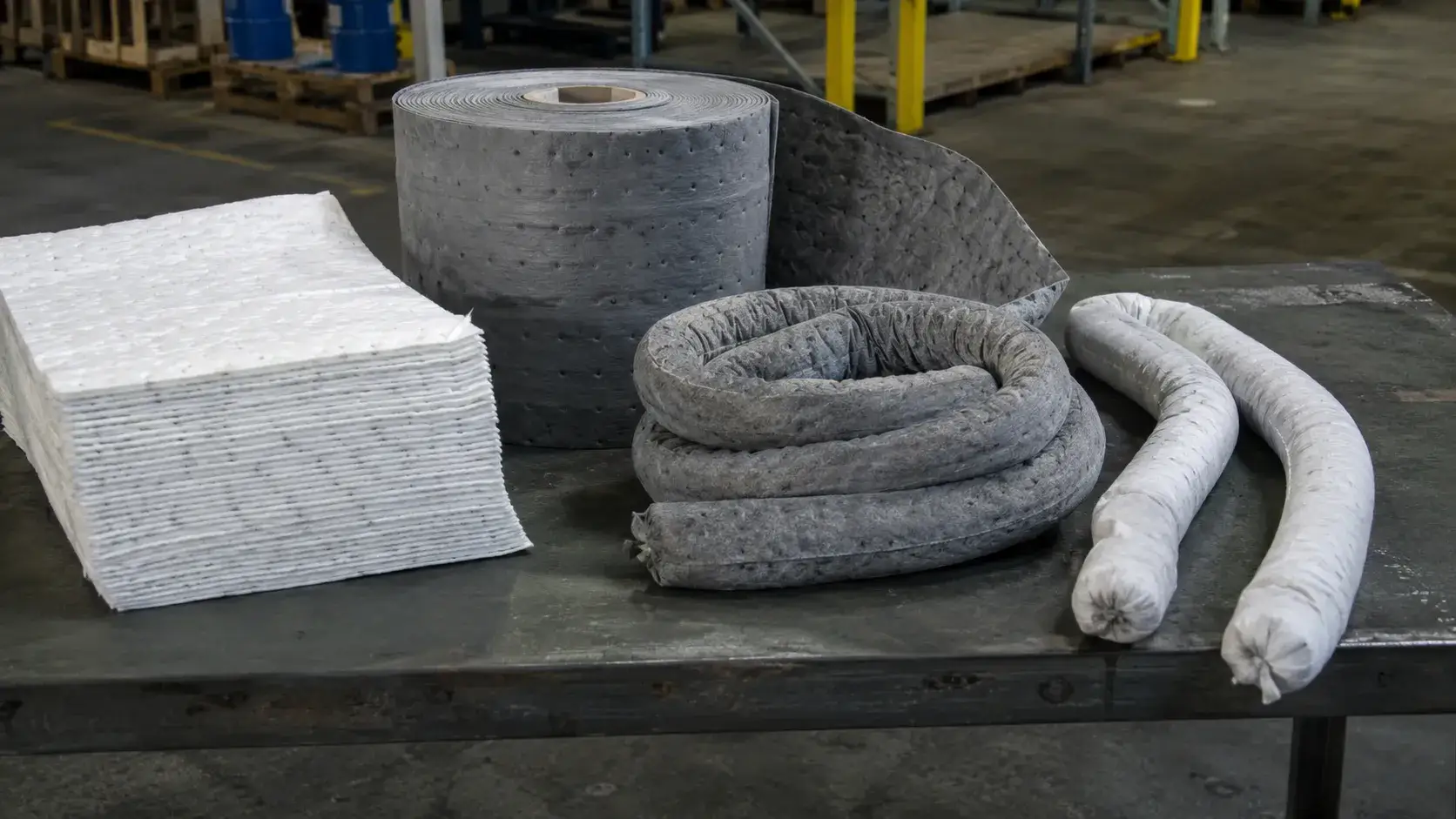
Format matters as much as material. Pads and mats suit routine wiping and drip pans, rolls suit long linear leak paths under equipment, socks and booms suit containment around a spill’s perimeter or on water, and loose granular sorbents like clay, vermiculite, or diatomaceous earth suit spills where sweeping up the material afterward is acceptable. Most facilities end up stocking two or three material types rather than one, matched to their most common liquids and their least common but highest-risk ones.
Materials Comparison Table
| Material | Absorbency Capacity | Cost Tier | Biodegradable | Hydrophobic (Oil-Only) | Typical Format |
|---|---|---|---|---|---|
| Polypropylene | 8-15x own weight (oil) | Low-Mid | No | Yes | Pads, rolls, booms, pillows |
| Cellulose / Wood Pulp | 5-9x own weight | Low | Yes | No | Mats, rolls, granules |
| Clay (Floor-Dry) | 0.3-0.5x own weight | Low | Partial | No | Loose granules |
| Vermiculite | 3-4x own weight | Low-Mid | Yes | No | Loose granules |
| Diatomaceous Earth | 1.5-2x own weight | Low-Mid | Partial | No | Loose powder/granules |
| Activated Carbon | 0.4-0.6x own weight (vapor) | Mid-High | No | Varies | Loose media, cartridges, mats |
| Superabsorbent Polymer (SAP) | 30-300x own weight (water) | Mid-High | No | No | Pads, granules, composite cores |
Absorbency figures are approximate and vary by product grade, fiber density, and the specific liquid being absorbed; treat them as a starting comparison rather than a guaranteed spec.
Choosing Between Pre-Formed Pads and Loose Sorbent Material
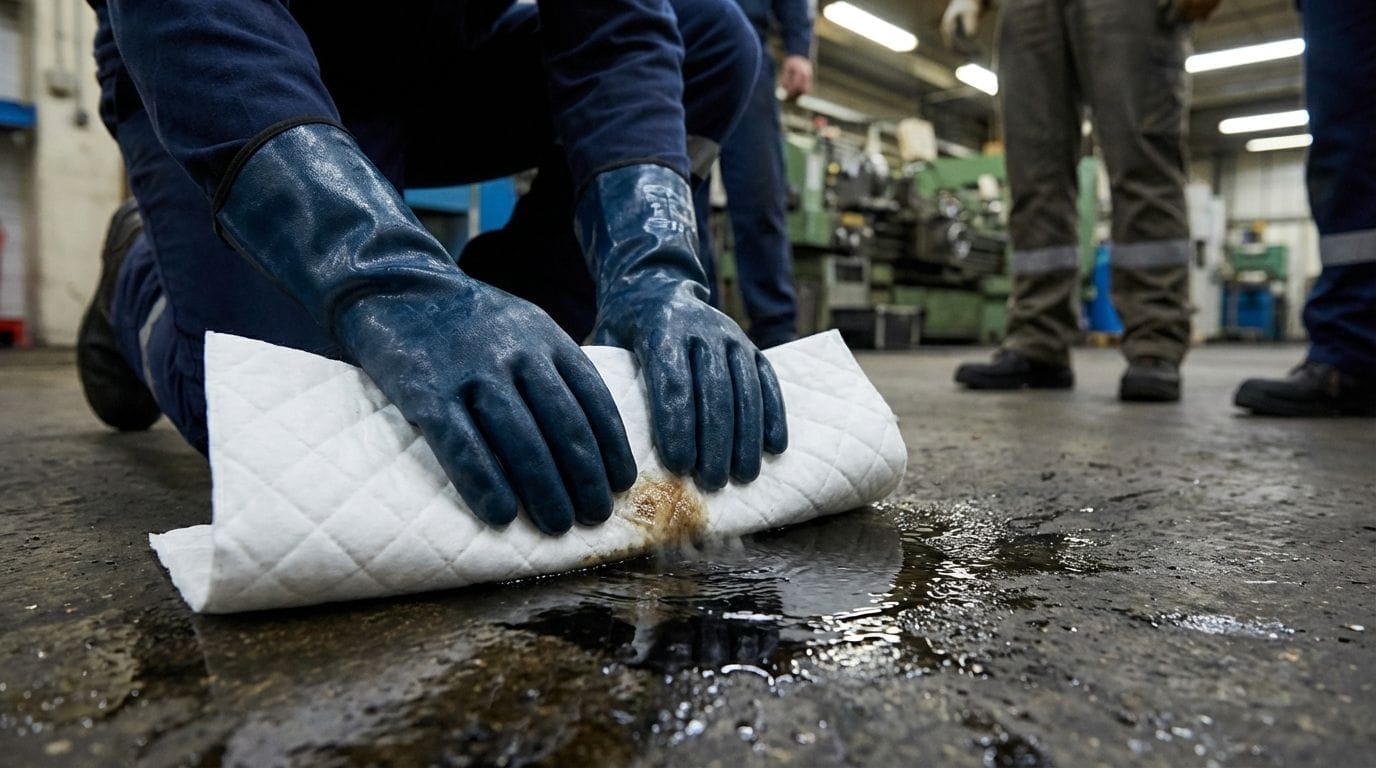
Pre-formed pads and rolls made from polypropylene or cellulose offer faster cleanup, less mess, and easier disposal weight-tracking than loose granular sorbent, which is why most facilities running frequent, predictable spills standardize on pads. AbsorbentX’s oil absorbent pads line covers general oil and fuel drip control, while the oil-only absorbent pads line is built specifically for hydrophobic, water-repelling performance on docks, bilges, and outdoor containment areas.
For a broader look at how pad construction, weight class, and perforation affect performance across material types, our absorbent pads guide is a useful next stop after this overview.
Sustainability and Disposal Considerations
Biodegradability varies widely across this list and should factor into material choice as much as raw capacity. Cellulose and vermiculite break down naturally once free of hazardous contamination, which can reduce disposal cost and align with a facility’s environmental goals for non-hazardous fluid cleanup. Polypropylene and superabsorbent polymer do not biodegrade, and any sorbent saturated with a regulated hazardous liquid, regardless of material, must generally be handled as hazardous waste rather than sorted by biodegradability alone.
Weight is a second practical factor. Mineral sorbents like clay add substantial inert weight to a disposal drum since the material itself never evaporates, which can meaningfully raise per-pound hazardous waste disposal costs compared to a lighter fiber pad that absorbed the same volume of liquid. Facilities running high spill volumes often find that a slightly more expensive fiber sorbent still costs less overall once disposal weight is factored in.
Frequently Asked Questions
What is the most absorbent material for oil spills?
Polypropylene is generally the most effective material for pure oil and fuel spills because it is hydrophobic and selectively absorbs hydrocarbons while repelling water, typically holding 8 to 15 times its own weight.
What is the difference between an absorbent and an adsorbent material?
An absorbent material draws liquid into its internal structure, like a sponge, while an adsorbent material holds liquid on its surface through molecular attraction. Fiber pads and superabsorbent polymer are true absorbents; activated carbon and clay work primarily through adsorption.
Which absorbent material is biodegradable?
Cellulose and wood pulp sorbents are biodegradable and compostable once free of hazardous contamination, and vermiculite and diatomaceous earth are naturally occurring minerals that break down over time. Polypropylene and superabsorbent polymer are not biodegradable.
Can I use one absorbent material for every type of spill?
No single material performs well across oil, water, and aggressive chemicals. A universal cellulose or blended-fiber absorbent covers most everyday non-hazardous liquids, but oil-heavy environments still benefit from dedicated polypropylene, and any known chemical hazard should use a chemical-compatible sorbent instead.
How much liquid can superabsorbent polymer hold compared to polypropylene?
Superabsorbent polymer can hold 30 to 300 times its own weight in water, far more than polypropylene’s 8 to 15 times its weight in oil, but SAP performs poorly on oil and hydrocarbons since its gelling action is built around water molecules.
Sources
EPA reference on sorbent materials used in oil spill response: epa.gov oil spill response sorbents
Materials-science background on superabsorbent polymer chemistry and water uptake behavior: ScienceDirect – Superabsorbent Polymers