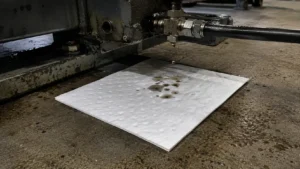
If you have shopped for spill control supplies, you have probably noticed that some listings say sorbent pads and others say absorbent pads for what looks like the exact same product. That is not a typo, and it is not two different product lines. In almost every case, sorbent pads and absorbent pads are the same physical item, a bonded sheet of meltblown polypropylene fiber, sold under two different naming conventions that trace back to who wrote the label. Understanding the difference, and when it genuinely matters, keeps you from filtering out perfectly good product just because it used the word you were not searching for.
The Short Answer: Mostly Vocabulary, Not Chemistry
In regulatory and technical writing, sorbent is the umbrella term. It covers any material that captures a liquid, whether that capture happens by absorption, where the liquid soaks into the material’s structure the way a sponge works, or adsorption, where the liquid clings to the material’s surface without penetrating it. Because most spill-control fiber pads do a bit of both, agencies and standards bodies default to the broader, more technically accurate word.
Absorbent is the narrower term. Strictly, it describes a material where liquid is drawn into the internal structure of the fibers, not just held on the surface. Retail and product-listing language leans on absorbent because it is the more familiar consumer word. Most buyers searching for spill supplies type absorbent pad, not sorbent pad, so listings get written to match that habit.
The practical result is that when a pad is made from the same meltblown polypropylene, at the same GSM, with the same ply count and backing, calling it a sorbent pad or an absorbent pad changes nothing about how it performs on a spill. You are reading two labels for one product. If you want the deeper mechanism-level explanation of adsorption versus absorption in oil-capture chemistry, that is covered in our companion article on oil sorbent versus oil absorbent; this article stays focused on the product and purchasing side of the naming question.
Why Two Words Exist for the Same Product
The split is mostly about audience and origin, not engineering. Government and standards documents, including EPA spill-response guidance, OSHA hazard communication material, and ASTM absorbency test methods, were written by people who needed a word broad enough to cover every capture mechanism, so sorbent became the default in that world. Once that language got baked into federal contracting language and safety data sheets, it stuck, and a lot of industrial and hazmat-focused suppliers picked it up to match the terminology their compliance-minded buyers expect to see.
Retail and e-commerce listings evolved separately. Search volume, not regulatory precision, drives how those pages get written, and far more shoppers type absorbent pad into a search bar than sorbent pad. Distributors who sell into general industrial, automotive, and facilities-maintenance markets tend to default to absorbent for that reason, even when their own spec sheets cite ASTM sorbent test methods a few lines down.
Neither convention is wrong, and neither is a signal of quality on its own. A heavy-duty pad from a hazmat-focused supplier that calls its product a sorbent pad is not automatically more capable than a general industrial pad labeled absorbent pad. The word choice tells you more about which market the seller is writing for than about what the product will do on your shop floor.
When the Distinction Actually Matters
There is one place where the sorbent versus absorbent split carries real technical weight, and it is worth naming clearly rather than dismissing it entirely. Adsorption-focused materials, such as activated carbon, clay-based granular sorbents, and some specialty sorbent socks, genuinely work by a different mechanism than fiber pads that soak liquid into their structure. If you are comparing a granular adsorbent to a fiber absorbent pad, the mechanism difference can affect retention under pressure, re-release risk, and disposal handling.
For standard oil-only and universal fiber pads, though, this distinction almost never applies, because the product itself functions as an absorbent regardless of which word appears on the label. The mechanism-level comparison between true adsorption and absorption chemistry, including why some sorbents repel water while others do not, is the subject of our dedicated article on oil sorbent versus oil absorbent, and it is worth reading there rather than repeating in a single paragraph here.
What matters for pad buyers day to day is simpler. Does the pad’s grade match your spill type, and does its GSM and construction match your expected fluid volume? Those two answers do not change based on whether the listing title says sorbent or absorbent.

How to Read a Spec Sheet Regardless of the Word Used
Skip the product title and go straight to four numbers and one classification, and the sorbent-versus-absorbent question stops mattering. Every legitimate spec sheet, whichever word it uses in the headline, should give you these.
- GSM, grams per square meter: the fiber density. Light-duty pads typically run 90 to 150 GSM, medium-duty 150 to 200 GSM, and heavy-duty 200 GSM and up. Higher GSM generally means more absorbent capacity per pad, but also a stiffer, less pliable sheet.
- Ply count: single-ply pads are thinner and cheaper per unit; double- and triple-ply or laminated pads add bulk and capacity, and often include a scrim or perforated film backing for extra tear resistance.
- Absorbency capacity, stated in ounces or liters per pad or per case: this is the number that tells you how much liquid a pad can hold before it is saturated, and it should scale with GSM and ply count.
- Grade classification: oil-only pad, which repels water, floats, and pulls only hydrocarbons; universal pad, which absorbs oils, coolants, solvents, and water alike; or chemical and hazmat pad, rated for aggressive or unknown chemistries.
If a spec sheet is missing these numbers and only offers marketing language like super absorbent or heavy duty sorbent, that is the real red flag, not which of the two words appears in the title. A pad correctly labeled sorbent with a full spec sheet beats a pad labeled absorbent with no GSM listed, every time.
Does Performance Actually Differ Between the Two?
No, not because of the label. Two pads made from the same base material, at the same GSM, with the same ply construction, will perform the same on a spill whether the seller calls them sorbent pads or absorbent pads. Manufacturers running the same meltblown polypropylene pad lines often sell into both regulatory-facing and general industrial channels under different naming conventions, and the product specification, not the marketing copy, is what determines how many ounces of oil or coolant a given pad will hold.
Where you will see real performance differences is entirely inside the spec sheet. A 90 GSM single-ply pad against a 250 GSM triple-ply laminated pad will behave very differently on a five-gallon spill, regardless of which word sits in the product title. The naming convention a supplier happens to use is not a proxy for engineering quality, and treating it as one will lead you to overlook identical or better products simply because they were listed under the term you were not searching.
This is also where cost efficiency gets left on the table. Two functionally identical pads, one under a sorbent listing aimed at government and hazmat buyers and one under an absorbent listing aimed at general industrial buyers, can carry different price points purely because of the audience each listing targets. Comparing spec sheets side by side, not titles, is how you find the better price for the same performance.
Buying Guidance: Search Both Terms, Compare Specs
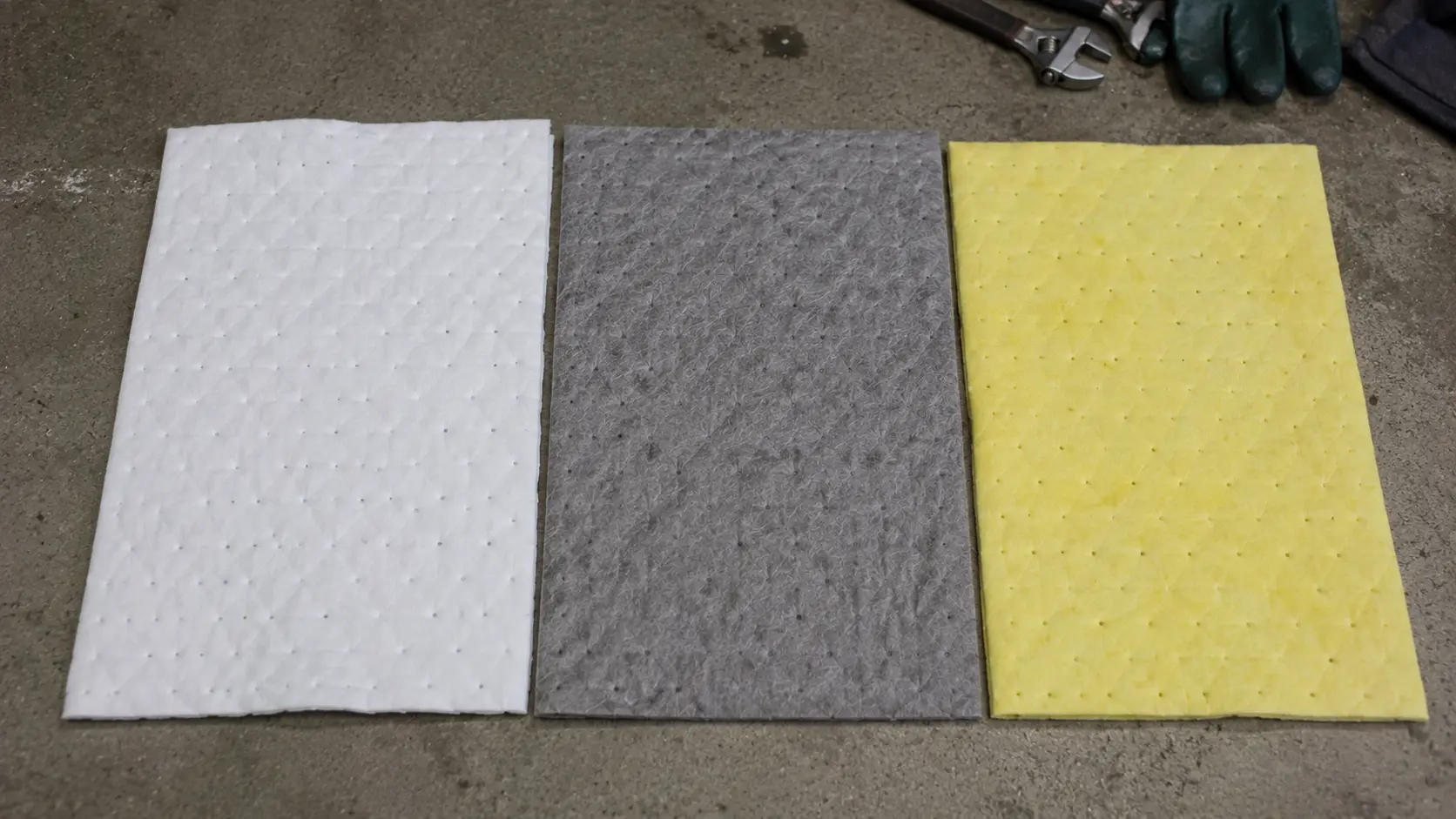
Practically, this means widening your search. If you only search absorbent pads, you may miss hazmat-grade or ASTM-referenced product lines that a supplier lists as sorbent pads for a compliance-focused audience. If you only search sorbent pads, you may miss general industrial listings that carry identical GSM and grade but are titled absorbent pads for retail search visibility. Searching both terms and then filtering by the actual spec numbers gets you the full field of comparable product, not half of it.
When you are evaluating a bulk or OEM order, ask your supplier directly for GSM, ply count, absorbency capacity, and grade classification rather than relying on the product name to tell you anything. You can review a working example of that spec-first structure on our oil-only absorbent pads product page and our broader oil absorbent pads catalog, both of which list GSM and grade regardless of which term you searched to find them.
A supplier who can hand you that data quickly, and whose numbers hold up across their oil-only, universal, and standard pad lines, is a more reliable signal than which of the two words happens to be in their catalog headline. Treat the naming convention as a search-widening tool, not a filtering criterion, and you will see more of the market for the same budget.
Reading Real Listings: A Side-by-Side Look
The table below shows how the same underlying decision points map across a listing that uses sorbent language and one that uses absorbent language. Notice that the columns that actually determine performance are identical.
| Question | “Sorbent pad” | “Absorbent pad” |
|---|---|---|
| What it usually means | Umbrella term covering any material that captures liquid, by absorption or adsorption | A material that pulls liquid into its internal structure |
| Most common source | EPA, OSHA, ASTM documents; industrial and hazmat distributors | Retail listings, product titles, general safety catalogs |
| Underlying product, most of the time | Meltblown polypropylene pad | Same meltblown polypropylene pad |
| Does the word alone tell you performance? | No | No |
| What actually tells you performance | GSM, ply count, oil-only vs universal grade, backing | Same: GSM, ply count, grade, backing |
The practical takeaway from this table is that the left-hand question, the word choice, is the least useful piece of information on the page. The two right-hand columns collapse into the same answer once you are looking at spec numbers instead of headlines, which is exactly why spec-first comparison beats keyword-only comparison for bulk buyers.
What This Means for Universal and Oil-Only Product Lines Specifically
The naming split shows up across both major pad categories. A universal pad, rated to absorb oils, coolants, solvents, and water together, may be marketed as a universal sorbent pad on one site and a universal absorbent pad on another, with the same GSM range and the same absorbency numbers underneath. The same is true of oil-only pads, which repel water and pull only hydrocarbons; you will see both oil-only sorbent pad and oil-only absorbent pad used for products built to the same grade.
If your facility runs mixed spill risk, oils plus coolants plus the occasional water intrusion, you want a universal-grade product regardless of which word is on the box. If your spill risk is hydrocarbon-only, such as a machine shop with tramp oil on the floor, an oil-only grade pad is the correct choice, again regardless of naming. Our guides on universal absorbents, their uses and limits and when to use oil-only absorbents both walk through grade selection in more depth than this article, and both apply equally whether the product you land on is titled sorbent or absorbent.
For a broader primer on pad construction, ply structure, and how GSM maps to absorbency across an entire product line, our absorbent pads guide and our polypropylene absorbent guide cover the material science behind the fiber itself, which is the actual variable driving performance, not the sorbent-versus-absorbent naming choice covered in this article.

A Note on Standards and Testing
If you want to verify absorbency claims rather than take a listing’s word for it, look for reference to recognized test methods rather than relying on the sorbent or absorbent label. The most commonly cited standard for sorbent performance testing is ASTM F726, which measures absorbency and retention for spill-control materials, and it is referenced by both sorbent-labeled and absorbent-labeled product lines because it applies to the underlying material, not the marketing name.
For agency-level guidance on spill response materials and terminology, the EPA’s oil spill response resource pages are a useful reference point, and they consistently use sorbent as the general term, which is part of why that word shows up more often in compliance-driven purchasing than in general retail listings.
Citing a recognized test standard, rather than a brand’s own adjectives, is the fastest way to compare two pads honestly, whether one is called a sorbent pad and the other an absorbent pad.
Frequently Asked Questions
Is a sorbent pad the same as an absorbent pad?
In almost every commercial case, yes. Both terms describe the same meltblown polypropylene product. Sorbent is the broader technical term used in regulatory and standards writing, while absorbent is the more common retail term, but the physical product behind either label is usually identical.
Why do some spec sheets say sorbent and others say absorbent?
It comes down to audience. Suppliers writing for compliance-focused, government, or hazmat buyers tend to use sorbent because that word matches EPA, OSHA, and ASTM language. Suppliers writing for general industrial or retail buyers tend to use absorbent because that is the term most people search for.
Will a sorbent pad absorb more than an absorbent pad?
Not because of the name. Absorbency capacity comes from GSM, ply count, and construction, not from which word is printed on the packaging. Two pads with matching specs will perform the same regardless of label.
Should I search both terms when comparing suppliers?
Yes. Searching only one term can cause you to miss otherwise identical or better products listed under the other word. Widening your search and then comparing GSM, ply count, and grade classification gives you the full picture.
Is sorbent always the more technically correct term?
In a strict sense, yes, because sorbent covers both absorption and adsorption mechanisms while absorbent describes only one. For everyday fiber pad shopping, though, this distinction rarely changes a purchasing decision, since most pads sold under either term work by absorption.
Where can I read more about the chemistry difference between sorption and absorption?
That deeper material-science comparison, covering how adsorption and absorption actually work at the fiber level, is covered in our companion article on oil sorbent versus oil absorbent, which focuses on mechanism rather than product naming.