Oil only absorbents are the white, water-repelling members of the sorbent family, built to capture oil and fuel while ignoring water entirely. That single property — hydrophobic and buoyant — makes them the right tool in situations where a universal absorbent would fail, such as spills on water or on a rain-soaked floor. Knowing exactly when to reach for oil-only is what separates efficient cleanup from wasted material.
This guide explains what oil only absorbents are, the science that lets them float and reject water, the specific scenarios where they are the correct choice, and the formats they come in. Whether you handle fuel outdoors, work near water, or just want the most efficient oil cleanup, the same logic applies. By the end you will know when oil-only is the answer and when it is not.
What Are Oil Only Absorbents?
Oil only absorbents are sorbent products made from untreated, hydrophobic polypropylene that absorb oil and hydrocarbons while repelling water. They follow the industry colour code by being white, which distinguishes them at a glance from gray universal and yellow chemical products. The same material is made into pads, rolls, socks, booms, and pillows.
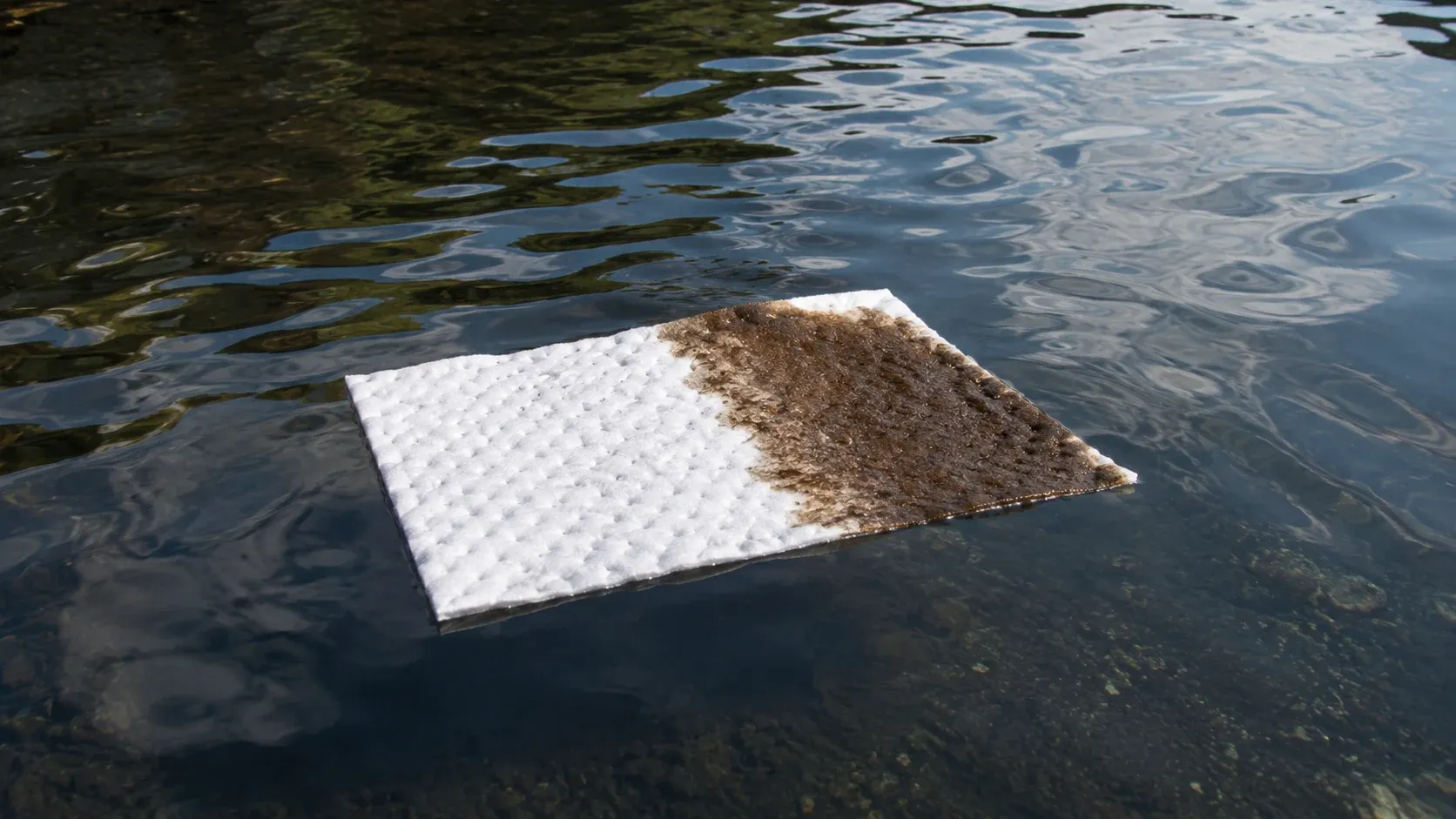
The defining trait is selectivity. Because the fibers repel water and attract oil, these absorbents pull in fuel, lubricants, and oil while leaving water behind, and their low density lets them float. That is why a saturated oil-only pad can be lifted straight off the surface of a puddle or a pond, still floating, without dropping the oil it has captured.
For the material science in depth, see our guide on what oil absorbent pads are made of. This article focuses on when to actually use them.
Why Oil Only Absorbents Repel Water and Float
The behaviour comes from two properties built into the polypropylene fiber. It is hydrophobic, meaning water cannot wet its surface and beads off instead of soaking in, and oleophilic, meaning oil is chemically drawn onto the fiber and wicked inward by capillary action. Water is pushed away while oil is pulled in.
Low density does the rest. Polypropylene is lighter than water, so an oil-only absorbent floats even when loaded with oil, letting it ride on the surface of a spill and be retrieved without sinking. This combination of rejection, attraction, and buoyancy is the whole basis of on-water oil recovery.
This selectivity is not a coating that wears off after one use but a property of the polypropylene itself, so a quality oil-only absorbent keeps rejecting water for its whole working life. The fine meltblown structure amplifies the effect, packing thousands of fibers into a lofty web with an enormous internal surface area that traps oil while water never gets a foothold. That is how a thin pad can hold many times its own weight in oil yet shed water almost completely.
Our guide on do oil absorbent pads absorb water explains this selectivity and how to confirm a pad is truly oil-only.
When to Use Oil Only Absorbents
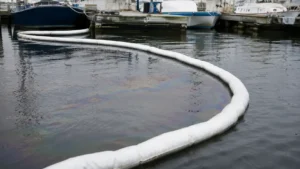
The clearest case for oil-only absorbents is any spill on or near water. On ponds, harbors, bilges, and stormwater, they float and lift the oil while ignoring the water beneath, so every gram of capacity goes toward the contaminant. A universal absorbent here would fill with water and fail, saturating long before it captured the oil you actually needed to remove.
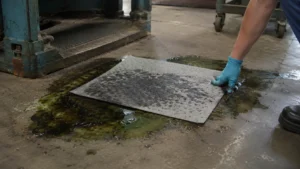
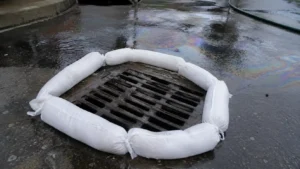
They are equally the right choice outdoors and on wet surfaces. After rain, on a washed-down floor, or around drains, oil-only absorbents target the oil without soaking up the surrounding water, so a single pad does far more work. Anywhere you need to keep water out of your recovered waste, oil-only is the answer. This also makes disposal cleaner, since a pad full of oil and very little water is easier to handle as oily waste than one swollen with both.
They also shine on pure hydrocarbon spills indoors — fuel, hydraulic oil, and lubricants — where their high oil capacity and clean handling make them efficient even when water is not present. In short, use oil-only whenever the target is oil and water is either present or unwanted in the waste.
When NOT to Use Oil Only Absorbents
Oil-only absorbents do one thing supremely well, which means they are the wrong choice when the spill is not oil. On a water-based coolant, a mixed water spill, or a solvent that is not a hydrocarbon, an oil-only pad will largely reject the liquid and leave you frustrated. Those situations call for a universal absorbent instead, which is treated to take up water-based fluids as well as oil.
They are also not built for aggressive chemistry. Strong acids, caustics, and reactive chemicals require a chemically resistant hazmat-grade absorbent, not oil-only polypropylene. Using the wrong grade risks both a failed cleanup and a safety hazard.
The rule is simple: oil-only for hydrocarbons, universal for mixed and water-based fluids, chemical for aggressive substances. Matching grade to liquid is the decision that prevents most wasted material, and it takes only a moment of thought before you reach for a pad.
Oil Only Absorbent Formats
Oil-only absorbents come in the same range of formats as other grades, each suited to a different job. Pads and rolls are the flat everyday workhorses for spills, drips, and wipe-downs, while socks and booms are long tubes for containment and on-water use. Pillows handle deep puddles and sit under leaking valves.
The table below summarises the formats and where each fits. Choosing usually means combining a few — pads for the bulk, socks or booms to contain, pillows for the deep spots.
Weight matters within each format too. Heavier, higher-GSM oil-only pads hold more and resist tearing when saturated or walked on, while lighter grades wick fast and suit quick wipe-downs. Matching the weight to the spill volume avoids both waste and the frustration of a pad that fills too quickly.
| Format | Form | Best for |
| Pads | Flat sheets | Everyday oil spills, drips, wipe-downs |
| Rolls | Continuous sheeting | Large-area coverage, custom lengths, walkways |
| Socks | Flexible tubes | Surrounding drains and machines, containment |
| Booms | Large floating tubes | On-water spills, harbors, marine containment |
| Pillows | Filled cushions | Deep puddles, sumps, under leaking valves |
How to Choose and Use Oil Only Absorbents
Start by confirming the spill is a hydrocarbon and that water is present or unwanted in the waste — that is the trigger for oil-only. Then match the format to the spill: pads for small spills and wipe-downs, socks or booms to contain a spread or ring a drain, pillows for deep puddles, and rolls for wide areas.
In use, place pads directly on the oil and let capillary action wick it up rather than scrubbing. On water, set booms at the leading edge of the slick and let the floating pads load before retrieving them. Replace saturated items as they darken and stop absorbing, and keep a fresh supply within reach so the response never stalls.
Finish by handling the recovered oil and used absorbents as oily waste under your local rules. Our guide on how to dispose of oil absorbent pads covers that final step in detail, including when a saturated pad can be wrung or sent for energy recovery.
Prevention: Oil Only Absorbents for Ongoing Drips
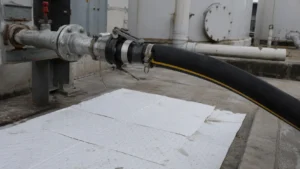
Oil-only absorbents are not only for active spills; they are excellent for prevention where water is also present. Placing oil-only pads or a mat under a machine that drips oil in a wet area catches the oil without soaking up wash water, keeping the pad working longer. This is a common, cheap way to protect floors and drains.
Socks laid along the base of equipment or around a drain build a standing oil barrier that ignores rainwater and coolant. For outdoor storage and transfer points exposed to weather, this water-rejecting prevention is far more practical than a universal product that would saturate with rain.
We compare durable and single-use options in our guide on are oil absorbent pads reusable.
Buying Oil Only Absorbents in Bulk and OEM
For distributors and high-volume users, consistency is what makes oil-only absorbents perform as promised. Reliable GSM, clean meltblown fiber, low lint, and dependable hydrophobicity batch to batch are the specs to confirm, because inconsistent treatment is a common reason a “white” pad starts unexpectedly taking on water. Verify these before committing to an order.
As a Shenzhen-based manufacturer, AbsorbentX produces oil-only absorbents in every format — pads, rolls, socks, booms, and pillows — with private-label and OEM options for bulk orders. Matching product and format to your customers’ real spills is what drives repeat business. Browse the range on our absorbent pads collection, or read how to choose an oil absorbent pads supplier before ordering at volume.
For private-label buyers, the hydrophobic property is the spec that matters most and the one to test on every batch. A simple water-bead check on incoming stock confirms the treatment is intact before the product reaches your customers. Building that quick check into your receiving process protects your brand from the most common oil-only complaint.
The Bottom Line
Oil only absorbents are the white, hydrophobic, buoyant choice for capturing oil while rejecting water. Use them whenever the target is a hydrocarbon and water is present or unwanted in the waste — on water, outdoors, on wet floors, or on pure oil spills where clean, high-capacity recovery matters.
Avoid them for water-based and aggressive chemical spills, where universal and hazmat grades belong. Match the grade to the liquid and the format to the spill, and oil-only absorbents will handle their jobs more efficiently than any other product.
If your site has any real exposure to fuel or oil near water — an outdoor yard, a loading bay, a marina, a workshop that gets washed down — oil-only absorbents belong in your spill plan. They are inexpensive, easy to store, and irreplaceable in the one situation where a universal product simply cannot cope. Keeping a supply on hand means you are ready for the spill that would otherwise be the hardest to clean.
Frequently Asked Questions
What are oil only absorbents?
White, hydrophobic sorbents made from untreated polypropylene that absorb oil and hydrocarbons while repelling water. They float, so they can recover oil from the surface of water, and come as pads, rolls, socks, booms, and pillows.
When should I use oil only absorbents?
Whenever the target is a hydrocarbon and water is present or unwanted in the waste — spills on or near water, outdoors, on wet floors, around drains, and on pure oil, fuel, or lubricant spills.
Why do oil only absorbents float?
They are made of low-density, hydrophobic polypropylene, so they reject water and stay buoyant even when loaded with oil — ideal for skimming a slick off the surface of water.
When should I not use oil only absorbents?
For water-based fluids like coolant, mixed water spills, and aggressive chemicals. Use universal absorbents for mixed and water-based liquids, and chemical (hazmat) absorbents for acids, caustics, and reactive substances.
What formats do oil only absorbents come in?
Pads and rolls for everyday spills and wipe-downs, socks and booms for containment and on-water use, and pillows for deep puddles and under leaking valves.