It is one of the most common questions buyers ask before placing an order: do oil absorbent pads absorb water? The answer depends entirely on the type of pad. True oil-only pads are hydrophobic — they repel water and absorb only oil and other hydrocarbons, which is exactly why they can float on a puddle and pull up a fuel slick without filling with water. Universal pads, on the other hand, are designed to soak up both. This guide explains the difference, the simple science behind it, and how to be certain you are buying the right pad for the job.
The Short Answer
Oil-only pads (usually white) do not absorb water. They are built to reject it and capture only oil-based liquids such as motor oil, diesel, gasoline, and lubricants. Universal pads (usually gray) do absorb water along with oil, which makes them better for general spills but useless when you need to keep water out. So when someone asks whether oil absorbent pads absorb water, the honest answer is: it depends on which kind you are holding. If your goal is to clean oil off a wet surface or off the surface of water, a water-rejecting oil-only pad is what you want. If you simply need to soak up whatever is on the ground, a universal pad will do the job. Everything else in this article is really about helping you tell those two apart with confidence and pick the right one the first time.
Why Oil-Only Pads Repel Water
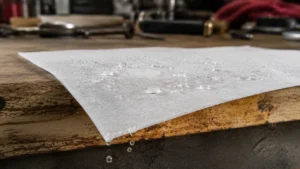
The behavior comes down to two properties built into the fibers. Oil-only pads are made from melt-blown polypropylene, a plastic that is naturally hydrophobic, meaning “water-fearing.” Water has a high surface tension and cannot wet the polypropylene surface, so it beads up and rolls off instead of soaking in. At the same time the same material is oleophilic, or “oil-loving,” because its non-polar chemistry is compatible with the non-polar molecules in oils and fuels. Oil is drawn onto the fibers and wicked inward by capillary action, while water is pushed away.
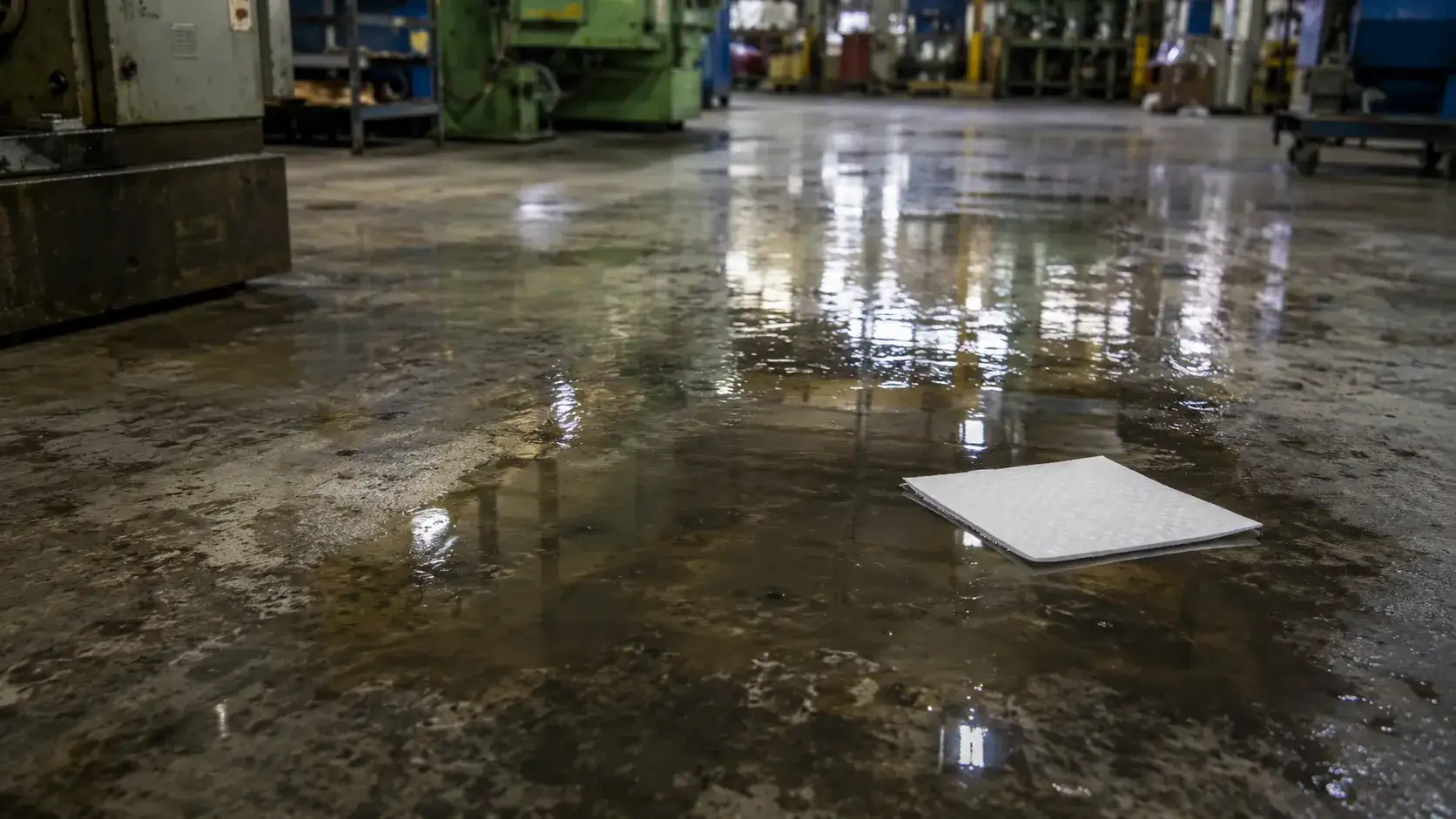
That combination is what lets an oil-only pad sit on a film of diesel floating on rainwater, lift the diesel, and stay buoyant when the job is done. The pad is essentially selective: it says yes to oil and no to water at the molecular level. It is worth stressing that this is not a coating that wears off after one use but a property of the polypropylene itself, so a quality oil-only pad keeps rejecting water for its entire working life rather than slowly turning into a sponge for everything.
The fine structure of the material amplifies the effect. Melt-blown polypropylene is spun into thousands of microscopic fibers packed into a lofty, tangled web, which creates an enormous internal surface area and a network of tiny pores. Oil that touches a fiber is wicked into those pores and held, while water, unable to wet the fibers in the first place, never gets a foothold to travel inward. The result is a pad that can hold many times its own weight in oil yet shed water almost completely. For a deeper look at the materials behind this, see our guide on what oil absorbent pads are made of and the companion piece on how oil absorbent pads work.
Oil-Only vs. Universal Pads — The Key Difference
Almost every confusion about water absorption disappears once you know which of the three main pad types you are dealing with. The color code is your fastest clue:
| Pad type | Absorbs water? | Best use |
| Oil-only (white) | No — repels water | Oil/fuel spills on water, wet floors, outdoor and marine work |
| Universal (gray) | Yes — oil and water | Coolants, solvents, general maintenance where water is acceptable |
| Hazmat (yellow) | Yes — including aggressive fluids | Acids, bases, and chemical handling |
In short, if you specifically do not want water in your pad, you need white oil-only. If you want to mop up whatever is on the floor regardless of what it is, a gray universal pad is the more forgiving choice. We compare the two in detail in oil-only vs. universal pads.
How to Tell Which Pad You Actually Have
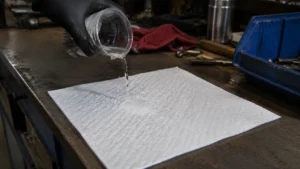
Labels get lost and pads end up loose in a bin, so it helps to be able to check. Color is the first signal — white almost always means oil-only, while gray means universal — but the surest method is a quick water test. Drop a little clean water on the pad and watch what happens. If the water beads up and sits on the surface or rolls off, you are holding a hydrophobic oil-only pad. If the water sinks in and the spot darkens and softens, the pad is a universal type that will absorb water. Thirty seconds with a cup of water removes all doubt before you commit a whole pallet to a job.
Why Repelling Water Is a Feature, Not a Limitation
It can sound like a drawback that a pad refuses to absorb water, but in oil-spill work it is the entire point. When oil leaks onto a rain-soaked yard, into a harbor, or across a wet plant floor, the real challenge is separating the oil from the water around it. A pad that grabs everything would fill with water within seconds and have little room left for the oil you actually need to remove, turning a small spill into a pile of soggy, half-useful pads. An oil-only pad ignores the water and keeps loading oil until it is saturated, so every gram of its capacity goes toward the contaminant rather than the harmless liquid beneath it.
That selectivity is why these pads are the default choice for spills on or near water, and why a saturated pad can be skimmed off a pond while still floating. It also makes disposal cleaner, since a pad full of oil and very little water is easier to handle as oily waste than one swollen with both. In other words, the same property that makes people ask “but does it absorb water?” is precisely what makes the pad valuable.
Common Real-World Situations
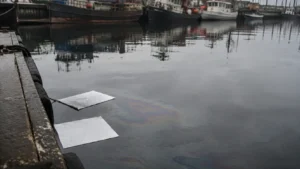
A few scenarios come up again and again. After heavy rain, an outdoor equipment yard may have oil sheen sitting on standing water; oil-only pads laid on the surface lift the sheen and float free for easy retrieval, leaving the water behind. In a boat bilge, where a thin layer of diesel or engine oil rides on top of collected water, oil-only pads and socks pull the hydrocarbon out without bailing the water with it, which keeps overboard discharge cleaner and simplifies the job. On a wet workshop floor after a wash-down, oil-only pads target a fresh lubricant leak without soaking up the cleaning water around it, so a single pad goes much further. Around docks and shorelines, the same selectivity makes oil-only pads, socks, and booms the standard tools for containing fuel and oil on open water.
By contrast, a coolant or water-based solvent spill on a dry floor calls for a universal pad, because there the water content is exactly what you want to capture. The lesson in every case is the same: match the pad to the liquid you are trying to remove, not just to the word “absorbent” on the box. Once you think in terms of “is the contaminant oil-based or water-based,” the choice becomes obvious and you stop wasting material on the wrong tool.
Can an Oil-Only Pad Ever Take On Water?
In normal use, a genuine oil-only pad will not absorb water — but a few edge cases are worth knowing. If a pad has already absorbed a large amount of oil and that oil is itself mixed with emulsified water, some water can ride along with the oil it captures. Heavily contaminated or detergent-laden water can also behave differently, because surfactants lower water’s surface tension and can let small amounts wet a surface that would otherwise repel clean water. And a poorly made pad with inconsistent or missing hydrophobic treatment may take on water it was never supposed to, which is one more reason batch consistency matters when buying in volume. None of these change the rule for everyday spills: a quality oil-only pad rejects ordinary water and holds oil.
What Happens If You Use the Wrong Pad
Choosing the wrong type rarely damages anything, but it wastes material and time. Put a universal pad on an oily puddle of rainwater and it greedily absorbs the water first, saturating long before it has captured much oil; you end up using far more pads than the job should need. Put an oil-only pad on a spilled bucket of water-based coolant and almost nothing happens, because the pad is doing its job and rejecting the water. Neither outcome is dangerous, but both cost money and create avoidable cleanup delays — which is exactly why confirming the pad type up front matters.

Choosing the Right Pad for Bulk and OEM Orders
For distributors and high-volume buyers, the water question becomes a specification question. Consistent hydrophobicity across every batch is what keeps oil-only pads performing as promised, and inconsistent treatment is a common reason a “white” pad starts unexpectedly taking on water. Reliable GSM and clean melt-blown fiber matter just as much, because a pad that drifts in weight or fiber quality across a container load creates complaints no matter how good the sample looked. As a Shenzhen-based manufacturer, AbsorbentX supplies oil-only, universal, and chemical pads to spec, with private-label and OEM options for bulk orders. Browse grades and request samples on our oil absorbent pads collection, or read how to choose an oil absorbent pads supplier before ordering at volume.
The Bottom Line
So, do oil absorbent pads absorb water? Oil-only pads do not — they repel it by design and capture only oil, which is what makes them the right tool for spills on or near water. Universal pads do absorb water, and that is exactly what you want for general, water-based cleanup. Identify the pad by its color and a quick water test, match it to whether your spill is oil-based or water-based, and you will use fewer pads, finish faster, and avoid the most common and costly mistake in spill cleanup.
Frequently Asked Questions
Do oil absorbent pads absorb water?
Oil-only (white) pads do not — they are hydrophobic and repel water while absorbing only oil and hydrocarbons. Universal (gray) pads do absorb both oil and water.
Why do oil-only pads float on water?
They are made of low-density, hydrophobic polypropylene that rejects water and stays buoyant even when loaded with oil, which makes them ideal for spills on water.
How can I tell if my pad absorbs water?
Check the color (white usually means oil-only, gray means universal) and run a quick test: pour a little water on it. If it beads and rolls off, it is oil-only; if it soaks in, it is universal.
Which pad should I use for a spill on rainwater or in a bilge?
An oil-only pad. It lifts the oil while ignoring the water, so your capacity is not wasted absorbing the water underneath.
Will an oil-only pad clean up a coolant or water-based spill?
Not well — it repels water-based fluids. For coolants and water-based solvents, use a universal pad instead.