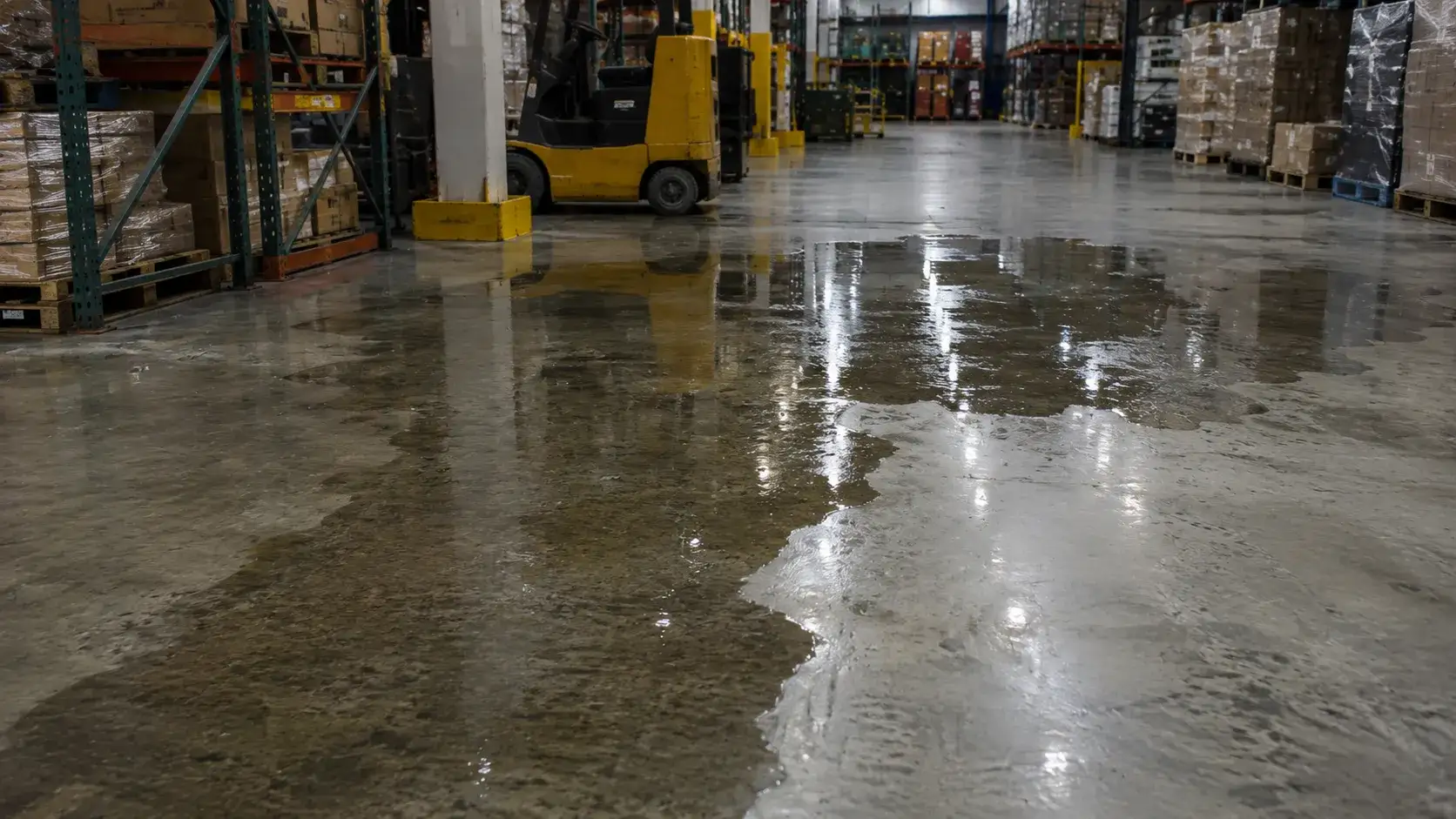
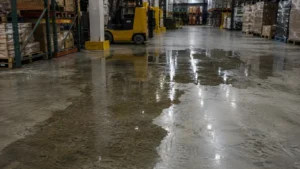
Water is the spill people take least seriously and the one that causes the most injuries. There is no smell, no stain, and no environmental paperwork, so a puddle on a warehouse floor gets stepped around rather than dealt with. It is also nearly invisible on polished concrete under overhead lighting, which is exactly what makes it dangerous.
A water spill cleanup is genuinely simple once you have the right materials on hand. The problem in most facilities is not technique but supply: the absorbents stocked for oil are the wrong product for water, and nobody notices until someone tries to mop up a puddle with an oil-only pad and watches the water bead straight off it.
This guide covers where workplace water spills come from, which tools and absorbent grades actually work, a step-by-step cleanup process that includes drying and verification, and the prevention measures that stop the same puddle appearing every week. It applies to plain water and to the water-based liquids — coolant, condensate, washdown — that behave much the same way underfoot.
Why Water Spills Deserve More Attention Than They Get
Slips on wet surfaces are among the most common causes of workplace injury, and the mechanism is almost always the same: a spill that someone saw, decided was not urgent, and left for later. Unlike an oil spill, a water spill carries no visual warning — no sheen, no dark stain — so the person who walks into it a minute later often has no idea it is there.
The cost is disproportionate to the effort of cleaning it up. A slip resulting in a fractured wrist or a back injury generates lost time, an investigation, an insurance claim, and potential enforcement action, all traceable to a puddle that would have taken ninety seconds to absorb. Very few workplace hazards have that ratio of consequence to prevention effort.
There is a legal dimension too. The OSHA standard on walking-working surfaces (29 CFR 1910.22) requires that workroom floors be kept clean and, so far as feasible, dry — a standing wet floor with no control in place is a straightforward compliance gap, not merely bad housekeeping.
Where Workplace Water Spills Actually Come From
Most facilities have a small number of repeat sources rather than random spills. Leaking pipework, dripping HVAC units and condensate lines, failing roof seals, and overflowing floor drains produce the same puddle in the same place week after week, which makes them the easiest to eliminate and the most frustrating to keep cleaning.
Process water is the second group: washdown operations, cooling systems, coolant carry-out from machining, ice melt around cold storage, and condensation on chilled surfaces and pipes. These are not faults to be fixed but ongoing conditions to be managed with drainage, matting, and stationed absorbents.
Then there is water brought in from outside. Rain and snow carried on footwear and forklift tyres soaks entrance areas during bad weather, and this is consistently where the highest concentration of slips occurs, because people are moving from a low-traction wet zone onto smooth internal flooring without adjusting their pace.
Why Oil-Only Absorbents Are the Wrong Choice for Water
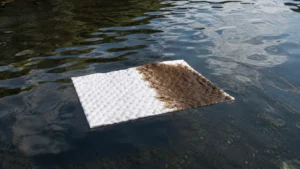
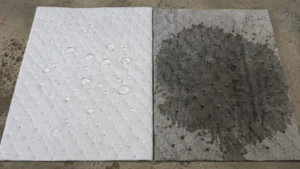
This is the single most common product mistake in facilities that handle both. Oil-only absorbents are treated to be hydrophobic — they actively repel water so that they use their full capacity on oil, which is exactly what you want in an outdoor oil spill and exactly what you do not want facing a puddle. Water beads off the surface and the pad stays dry.
Universal absorbents are the correct grade for water and water-based liquids. Usually grey, they are untreated and will take up whatever liquid they meet — water, coolant, mild solvents, general mixed liquids — without needing to identify it first. For a general-purpose spill station in a workshop or warehouse, universal grade is the sensible default.
If you are not sure which grade you are holding, the test takes ten seconds: drip clean water onto the pad. If it beads and rolls off, it is oil-only and useless for this job; if it soaks straight in, it is universal. Keeping the two grades visibly separated and clearly labelled prevents the mistake entirely.
We cover this behaviour in depth in do oil absorbent pads absorb water, and the full grade comparison sits in our universal absorbents guide.
Tools for Water Spill Cleanup
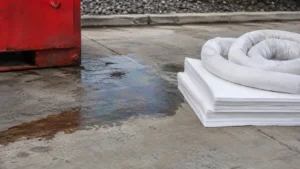
For everyday spills, universal absorbent pads are the workhorse. They lie flat, wick the water up without being pushed around, and lift out cleanly with the liquid held inside rather than squeezing it back onto the floor. Universal socks contain the leading edge and stop a spill spreading under racking or equipment where it becomes far harder to reach.
For larger volumes, a universal roll lets you tear off exactly the length needed and cover a long spill in one pass, while a wet vacuum handles standing water far faster than absorbents can. A squeegee is useful for moving bulk water toward a drain before absorbing the remainder, provided the drain is an appropriate destination for it.
Round the station out with the supporting items that get forgotten: wet floor signs to warn people while you work, gloves, a mop and bucket for the final residue, and a fan or air mover for the drying stage. The signs matter more than they seem, because the highest-risk moment is often while the cleanup is still in progress.
Our absorbent pads guide explains how pad weight and GSM affect capacity, which is worth reading before deciding how much to stock at each station.
Step-by-Step Water Spill Cleanup
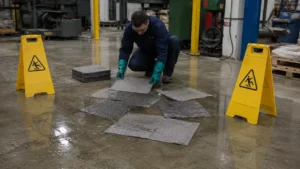
Start by making the area safe rather than by cleaning. Put out wet floor signs at both approaches, and cordon the area if it is large or in a traffic route. This takes seconds and it is what protects the person walking around the corner while you are bent over the puddle with your back to them.
Stop the source if there is one. A dripping pipe, a leaking machine, or an overflowing drain will refill the area faster than you can absorb it, so isolating the supply or placing a drip container first saves repeating the whole job ten minutes later. If the source cannot be stopped, place a container to catch it and report it for maintenance.
Contain, then absorb. Ring the spill with universal socks if it is spreading, then lay pads flat over the water and let them wick rather than pushing them around, replacing each as it becomes heavy. For standing water, remove the bulk with a wet vacuum or squeegee first and use absorbents only for the remaining film.
Finish by drying and verifying, which is the step most guides omit. A floor that is merely damp is still a slip risk and still looks dry from a distance, so use a dry mop or air mover to finish the surface, then check by walking it before removing the signs. Only take the signs down once the floor is genuinely dry underfoot.
Handling Larger Water Releases
A burst pipe, sprinkler discharge, or tank overflow is a different scale of problem, and absorbents alone are the wrong tool. Isolate the water supply first, then move to bulk removal with wet vacuums, pumps, or squeegees directed to a suitable drain, using absorbents only once the standing water is gone.
Protect what the water can damage before you worry about the floor itself. Move stock and cardboard packaging off the floor, keep water away from electrical panels and equipment bases, and de-energise circuits in the affected area if water is approaching them. Water damage to inventory usually costs far more than the cleanup.
Drying is the long tail of a large release. Trapped moisture under racking, in floor joints, and beneath stored goods leads to mould and lingering damp, so bring in air movers and dehumidifiers rather than assuming the floor will dry on its own overnight in a sealed building.
Preventing Water Spills
Because water spills cluster around known sources, prevention is unusually effective. Fixing leaking pipework and roof seals, servicing HVAC condensate lines, and clearing blocked floor drains removes entire categories of recurring puddle permanently, and these are maintenance jobs rather than safety projects.
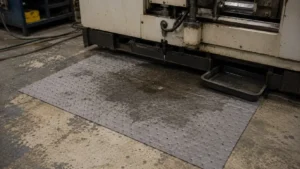
Where water is a normal part of the process, manage it by design. Adequate drainage, correctly graded floors, drip trays under machines that carry water or coolant out, and permanent absorbent matting at known drip points turn a daily cleanup task into a background condition that maintains itself.
Regulatory guidance points the same way: the OSHA sanitation standard (29 CFR 1910.141) requires that where wet processes are used, drainage is maintained and dry standing places such as platforms or mats are provided where practicable.
Keep a simple log of where spills occur. Three entries at the same location in a month is not a housekeeping problem, it is a maintenance ticket, and treating the log as a diagnostic tool rather than a record-keeping chore is what turns repeated cleanups into permanent fixes.
Entrance Matting and Wet Weather
Rain and snow tracked in on footwear and tyres is the largest single source of water on internal floors, and it concentrates in exactly the areas with the most foot traffic. Proper entrance matting — long enough for several footfalls, not a token square by the door — removes most of that moisture before it reaches smooth flooring.
Wet weather deserves a standing procedure rather than an improvised response. Increased mat coverage, more frequent checks of entrance areas, signage during heavy rain, and stationed absorbents near doors handle the predictable seasonal spike without anyone needing to decide what to do each time.
Do not overlook forklift and pallet-truck routes from yard to building, since tyres carry a surprising volume of water well past the entrance and lay it down on the smoothest, fastest-moving part of the floor. Matting or a dedicated wet-weather absorbent run along that route addresses a risk that entrance mats alone will miss.
Water-Based Liquids Beyond Plain Water
Much of what looks like a water spill in an industrial setting is not purely water. Machine coolant, cutting fluid, condensate carrying traces of oil, and washdown water with detergent all behave similarly underfoot but differ in how they must be absorbed and disposed of.
Universal absorbents handle all of them on the floor, which is their main advantage — you do not need to identify the liquid before responding. What changes is the disposal route, since coolant and oily condensate may need to be handled as contaminated waste rather than wrung out down a drain, depending on local rules and what is in it.
A water-and-oil mix deserves particular care because it is deceptive. The surface may look like plain water while a thin oil layer sits on top, making the floor far more slippery than water alone and leaving a residue that stays slick after the water has evaporated. In mixed areas, absorb fully rather than letting it dry off.
Our maintenance absorbents guide covers the everyday drips and mixed leaks that fall into this category, and why oily floors are a major safety risk explains the traction problem in more detail.
Choosing Absorbents for Water and Water-Based Spills
For water, look for genuine capacity and wet strength rather than headline absorbency figures. A universal pad needs to hold the liquid when lifted and not tear or shed fibre when heavy and saturated, because a pad that falls apart mid-lift puts the water straight back on the floor and doubles the job.
Match the format to how spills actually happen on your site. Pads suit scattered small spills, rolls suit long runs and washdown areas, socks handle containment under racking and machinery, and permanent matting suits known drip points. Most facilities need a mix rather than a single product bought in bulk.
As a Shenzhen-based manufacturer, AbsorbentX produces universal and oil-only grades across pads, rolls, socks, booms, and pillows to consistent specification, with private-label and OEM options for bulk buyers. Browse the absorbent pads range for general spill stations, or the absorbent rolls range for covering longer runs and wet process areas.
Warehouses and distribution sites planning absorbent placement across a large floor area will find our warehousing and distribution application guidance a useful starting point.
The Bottom Line
Water spills are simple to clean and easy to underestimate, and that combination is precisely why they cause so many injuries. Sign the area first, stop the source, contain and absorb with universal grade, then dry and verify before removing the warnings.
Stock the right product before you need it. An oil-only pad will not touch a puddle, and discovering that during a spill wastes the material and the time. Keep universal absorbents at general-purpose stations and reserve oil-only grades for hydrocarbons.
Most importantly, treat repeat spills as a maintenance signal. If the same puddle appears every week, the answer is a fixed leak, a drip tray, or better drainage — not a bigger box of pads and a standing instruction to keep mopping.
For the wider picture of keeping industrial floors safe and dry, our guide on how to keep work floors safe from contamination covers the housekeeping and product side together.
Frequently Asked Questions
What absorbent should I use for a water spill?
Use universal grade absorbents, usually grey. They are untreated and take up water and water-based liquids readily. Do not use white oil-only pads, which are deliberately hydrophobic and will repel water rather than absorb it.
Why won’t my oil absorbent pad soak up water?
Because it is working as designed. Oil-only pads are treated to repel water so their full capacity goes to oil, which matters when cleaning an oil spill on a wet surface or on open water. For water you need a universal pad instead.
How do you clean up a large water spill at work?
Isolate the water source, warn and cordon the area, then remove standing water with a wet vacuum, pump, or squeegee before using absorbents on the remaining film. Protect stock and electrical equipment, then dry thoroughly with air movers to prevent damp and mould.
Is a wet floor a serious workplace hazard?
Yes. Slips on wet surfaces are among the most common causes of workplace injury, and water is especially dangerous because it gives no visual warning. OSHA requires workroom floors to be kept clean and, so far as feasible, in a dry condition.
How do you stop water spills from happening repeatedly?
Identify the source rather than repeating the cleanup. Most recurring water on industrial floors comes from leaking pipework, HVAC condensate, blocked drains, tracked-in rain, or process carry-out. Fix the leak, add drip trays or matting at known points, and improve entrance matting for wet weather.
Can universal absorbents handle coolant and washdown water?
Yes. Universal absorbents take up coolant, cutting fluid, condensate, and detergent washdown water as readily as plain water, which is why they suit general-purpose spill stations. The difference is disposal — contaminated coolant or oily water may need to be handled as regulated waste rather than drained.