A gasoline spill is not simply a smaller, smellier version of an oil spill. Gasoline evaporates fast, releases heavy vapours that travel along the ground, and ignites at temperatures far below anything you will encounter on a normal working day. That combination means the first minute of a gasoline spill cleanup is about controlling ignition risk, not about soaking up liquid.
The good news is that the actual cleanup is straightforward once the hazard is under control. The same meltblown polypropylene absorbents used for oil work well on fuel, and the sequence of contain, absorb, treat residue, and dispose is familiar to anyone who has handled a spill before. What changes is the urgency of the safety steps that come first.
This guide covers why gasoline behaves the way it does, how to control vapour and ignition risk, which absorbents actually work on fuel, the step-by-step cleanup process for concrete and asphalt, and how to dispose of fuel-soaked waste correctly. It is written for workshops, fleet yards, fuel transfer points, and forecourts, though the same principles apply to a spill on a driveway.
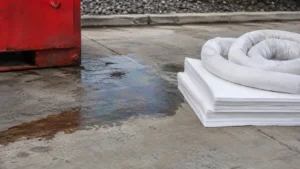
Why Gasoline Spills Are Different From Oil Spills
The single most important difference is flash point. Gasoline has a flash point around minus 45°C, meaning it gives off ignitable vapour at essentially any ambient temperature, while motor oil sits well above 200°C and will not ignite from a stray spark on a workshop floor. A spill that would be a nuisance in oil is a genuine fire risk in fuel.
Gasoline is also far thinner than oil, so it spreads faster and further across a flat surface and soaks into porous concrete more readily. It finds floor cracks, expansion joints, and drain channels within seconds rather than minutes, which is why containment has to happen almost immediately rather than after you have finished assessing the situation.
Then there is the vapour itself. Gasoline vapour is heavier than air, so it sinks and pools in pits, trenches, basements, and drain openings rather than dispersing upward. A vapour cloud can travel a surprising distance along the ground to an ignition source and flash back to the spill, which is the mechanism behind most fuel-spill fires.
Safety First: Controlling Fire and Vapour Risk
Before any absorbent touches the fuel, eliminate ignition sources across a generous radius. That means stopping engines and vehicle movement, switching off electrical equipment and battery chargers rather than unplugging them at the socket, banning smoking and hot work, and keeping non-rated portable equipment well away from the area. Do not switch anything on either, since the spark from a light switch or a motor starting is exactly what causes ignition.
Ventilate the area if the spill is indoors, opening doors and using explosion-rated ventilation to disperse the vapour rather than relying on it to evaporate on its own. Because the vapour sinks, pay particular attention to pits, inspection trenches, and floor-level drains, since these are where an invisible pocket of ignitable vapour can sit long after the surface looks dry.
Personal protection matters more than with oil. Gasoline degrades many common glove materials and readily absorbs through skin, so use gloves rated for hydrocarbon fuel rather than thin general-purpose nitrile, along with eye protection and appropriate respiratory protection in enclosed spaces. Fuel-soaked clothing should be removed and dealt with rather than worn until it dries.
Workplace requirements for handling and storing fuel are set out in the OSHA standard on flammable liquids (29 CFR 1910.106), which is worth reviewing if your site stores or transfers gasoline in any quantity.
What to Use — and What Never to Use — on a Gasoline Spill
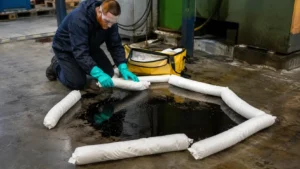
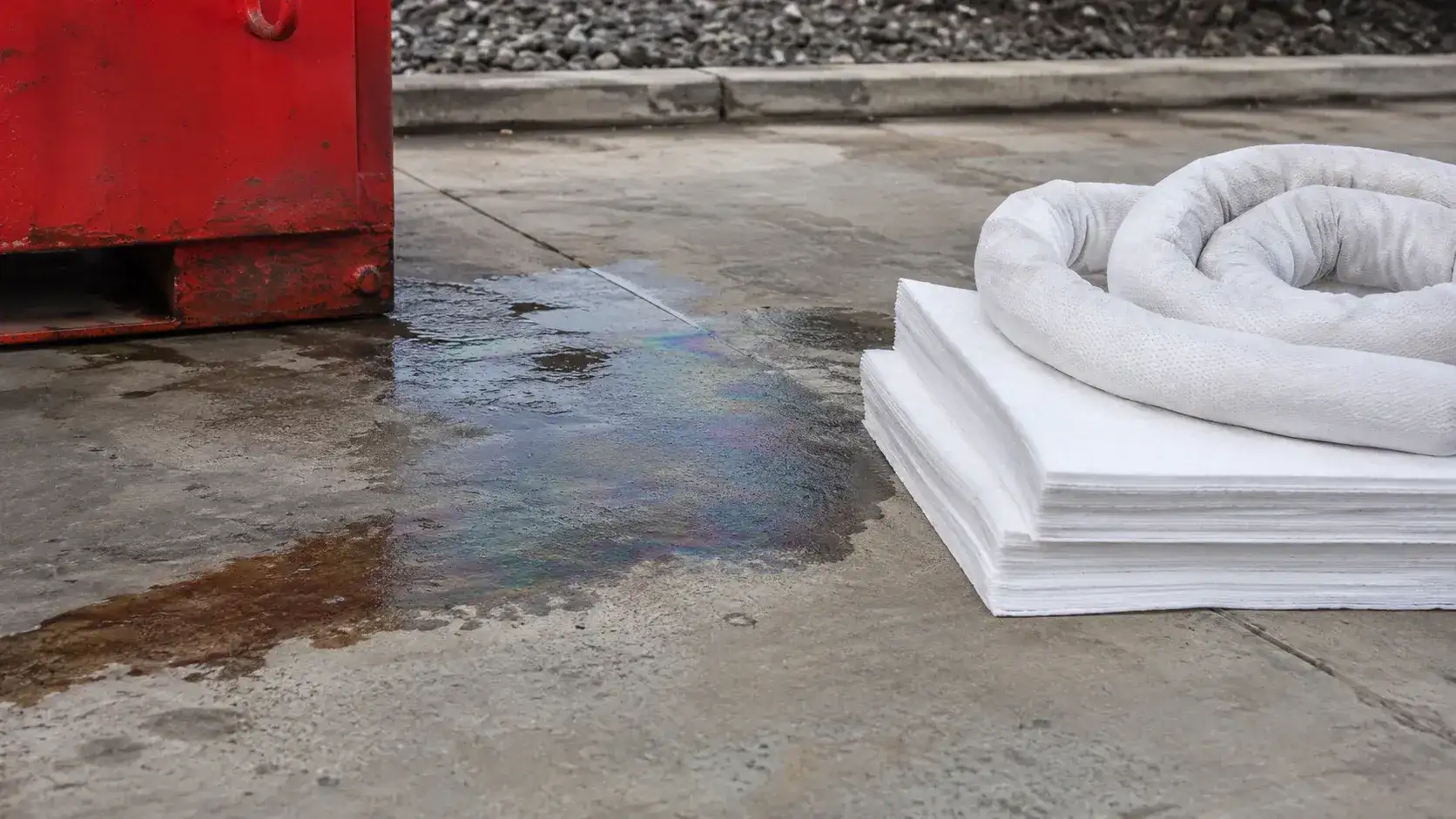
Meltblown polypropylene absorbents are the practical choice for fuel. They are oleophilic and hydrophobic, meaning they pull in hydrocarbons and repel water, so on a wet forecourt or a rain-soaked yard every gram of capacity goes toward the gasoline rather than the puddle underneath it. Pads handle the flat spill, socks build a barrier, and pillows deal with deeper pools.
Loose granular absorbents such as clay, kitty litter, or organic products do work, and they are common because they are cheap and available. The trade-off is that they absorb a fraction of their own weight compared with polypropylene, leave a gritty residue that has to be swept and disposed of, and generate several times the waste volume for the same spill. For a driveway they are fine; for a site cleaning up fuel regularly, the disposal cost usually outweighs the lower purchase price.
What matters most is what you must not use. Never run a shop vacuum or wet vac over gasoline, because the motor brushes provide an ignition source inside a container full of fuel vapour. Never use a pressure washer or hose the spill toward a drain, since that atomises the fuel and pushes the problem into the sewer. And do not sweep dry, hoping it will evaporate, when the spill is anywhere near a pit or drain.
For a fuller comparison of hydrophobic fuel-grade absorbents against general-purpose alternatives, see our guide on when to use oil-only absorbents and the broader oil absorbents guide.
Step-by-Step Gasoline Spill Cleanup
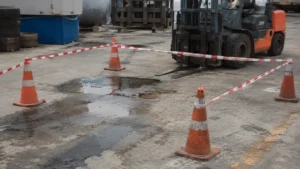
Start by stopping the source if it is safe to reach — righting a container, closing a valve, or shutting down a transfer pump. Then clear people from the area and remove ignition sources as described above, cordoning off a radius wide enough to account for vapour travelling along the ground rather than just the visible wet patch.
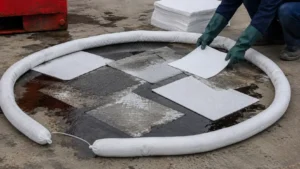
Contain before you absorb. Place absorbent socks around the leading edge of the spill and cover any drain within reach, working from the outside inward so you are not pushing fuel ahead of you. This is the step people skip under pressure, and it is the one that decides whether the spill stays a floor problem or becomes a drainage and environmental problem.
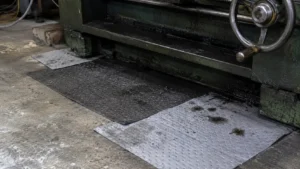
Now absorb. Lay pads flat over the fuel and let them wick it up rather than pushing them around, replacing each one as it saturates. Gasoline saturates absorbents faster than oil does and gives less visual warning because it does not darken the pad the way used oil does, so judge by weight and feel rather than colour, and use more pads than the spill size suggests.
Finally, treat the residue and check the area. Once no free liquid remains, a fuel-safe degreaser will lift what soaked into the surface, and the area should stay ventilated and cordoned until the vapour has genuinely dispersed rather than just until the floor looks dry.
 3
3
Cleaning Gasoline Off Concrete and Asphalt
Concrete is porous, so a gasoline spill left for even a short time will soak below the surface and leave both a stain and a lingering smell after the free liquid is gone. Absorb as much as possible first, then apply a fuel-appropriate degreaser or a poultice that draws the residue back out of the pores rather than simply washing the surface.
Asphalt needs more care, because gasoline is a solvent for the bitumen binder that holds asphalt together. A fuel spill left sitting on asphalt softens and dissolves the surface, leaving a permanently pitted or crumbling patch, which makes fast absorption on asphalt a matter of protecting the pavement as much as cleaning it.
Avoid the instinct to hose the area down at the end. Rinsing spreads dissolved fuel across a wider area and carries it toward drains, and on a site with any environmental controls in place that turns a contained cleanup into a reportable discharge.
Our step-by-step guide on how to clean oil off a concrete floor covers the poultice and degreaser methods in detail, and the same techniques apply to fuel residue once the liquid is absorbed.
Disposing of Gasoline-Soaked Absorbents
Fuel-soaked absorbents are not ordinary waste. Because gasoline has a flash point far below the regulatory threshold, absorbents saturated with it generally carry the ignitability characteristic and must be handled as hazardous waste rather than sent to general disposal alongside used oil pads.
The US Environmental Protection Agency assigns waste code D001 to ignitable wastes, defined to include liquids with a flash point below 60°C, as set out in its guidance on defining hazardous waste characteristics. Gasoline sits far below that line, so treat fuel-soaked material as hazardous unless your waste contractor confirms otherwise.
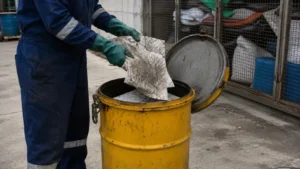
Store the used absorbents in a sealed, labelled metal container kept outdoors and away from ignition sources, not in an open bag inside a workshop. Vapour continues to come off saturated pads for a considerable time, and a bin bag of fuel-soaked absorbents sitting in a corner is a genuine hazard rather than a tidy solution.
Never put fuel-soaked absorbents in general trash, never send them down a drain, and do not attempt to dry them out for reuse. Arrange collection through a licensed hazardous-waste contractor and keep the paperwork, since fuel waste is exactly the sort of stream an inspection will ask about.
Our detailed walkthrough on how to dispose of oil absorbent pads explains the free-liquid test and interim storage rules that apply here too, with the important difference that fuel waste is almost always the hazardous route.
Fuel Spills at Transfer Points and Forecourts
Most workplace gasoline spills are not dramatic tank failures. They are the small, repeated releases that happen at the same handful of places: nozzle drips at a dispenser, overfills during container filling, hose disconnections at a transfer point, and spillage while decanting into portable cans. The volume per event is small, but the frequency makes it a real cost and a persistent ignition risk.
These locations benefit from having absorbents permanently stationed rather than fetched from a central store. A small station with pads, a sock, gloves, and a sealed waste container at each dispenser or transfer point turns a five-minute walk into a ten-second response, which is the difference between a wiped-up drip and a spreading spill.
For forecourts and yards, drain protection deserves particular attention because these areas usually drain to a surface-water system rather than a treatment works. A drain cover or sock placed before fuel transfer begins, not after a spill starts, is a cheap way to keep a routine drip from becoming an environmental incident.
Sites that store or dispense fuel in bulk will find our oil and fuel storage application guidance useful for planning absorbent placement, and the oil spill kits guide covers how to size a kit for each station.
Preventing Gasoline Spills
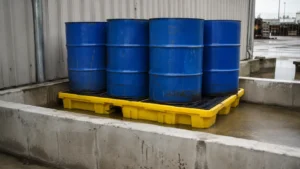
Prevention beats response on every measure that matters, and fuel spills are unusually preventable because they cluster around known activities. Drip trays under dispensing points, automatic shut-off nozzles, and properly specified fuel cans with sealing spouts eliminate a large share of routine spillage for very little money.
Procedure matters as much as equipment. Filling containers on the ground rather than on a vehicle bed or truck liner, never leaving a filling operation unattended, and training staff to stop at the shoulder of the container rather than filling to the brim all reduce overfill events, which are the most common single cause of small fuel spills.
Finally, review the spills you do have. If the same transfer point produces a spill every few weeks, the answer is a hardware or procedure fix at that point, not a larger stock of absorbents. Treating repeat spills as a maintenance signal rather than a cleaning task is what actually brings the numbers down.
Choosing Absorbents for Fuel Spills
For fuel, consistency is worth paying for. A pad with reliable GSM and clean meltblown fibre absorbs a predictable volume and holds it under handling, while a variable, poorly bonded pad sheds fibre, releases fuel when lifted, and forces responders to use more of it than they planned for. During a fuel spill is the worst possible time to discover a pad underperforms.
Choose white oil-only grades for gasoline rather than universal absorbents, particularly outdoors or on wet surfaces, since the hydrophobic treatment is what keeps the pad working when the ground is already wet. Match weight to the job as well: a heavier pad clears a transfer-point spill in one pass, while lighter pads suit nozzle drips and wipe-downs.
As a Shenzhen-based manufacturer, AbsorbentX produces oil-only pads, socks, booms, and pillows to consistent specification, with private-label and OEM options for bulk buyers. Browse the oil-only absorbent pads range for flat-surface fuel spills, or the oil absorbent socks range for containment and drain protection at transfer points.
The Bottom Line
Gasoline spill cleanup is oil spill cleanup with the safety steps moved to the front and made non-negotiable. Kill ignition sources, ventilate, and cordon a radius that accounts for vapour travelling along the ground, and only then contain and absorb with hydrophobic oil-only products.
Treat the waste as hazardous, store it sealed in metal outdoors, and route it through a licensed contractor rather than the general bin. Skipping that step is where an otherwise competent cleanup turns into a compliance problem or, worse, a fire in a waste store.
Above all, respect the limits of an in-house response. A container-sized spill in a ventilated yard is routine work for a trained team with the right absorbents, but a large release, a spill reaching a drain or watercourse, or fuel in a confined space calls for evacuation and specialist response rather than a determined effort with a box of pads.
Keep a short version of this sequence posted at every fuel transfer point, alongside the absorbents themselves. For the wider picture of spill response across a site, our oil spill guide covers containment, cleanup, and control in full.
Frequently Asked Questions
What should you put on a gasoline spill?
Use hydrophobic meltblown polypropylene absorbents — oil-only pads for the flat spill, socks to contain the edge and cover drains, and pillows for deeper pools. Loose granular absorbent such as clay or kitty litter also works but absorbs far less per kilogram and creates several times the waste volume.
Is it safe to vacuum up spilled gasoline?
No. A shop vacuum or wet vac is one of the most dangerous things you can use on fuel, because the motor brushes create sparks inside a container filling with gasoline vapour. Never vacuum liquid fuel or fuel-soaked absorbents, and do not use a pressure washer, which atomises the fuel into the air.
How long does spilled gasoline stay dangerous?
The visible liquid may evaporate within hours, but vapour is heavier than air and pools in pits, trenches, and floor drains where it can remain ignitable long after the surface looks dry. Keep the area ventilated and cordoned until the vapour has genuinely dispersed, not just until the floor appears clean.
How do you dispose of gasoline-soaked absorbent pads?
Treat them as hazardous waste. Gasoline has a flash point far below the 60°C regulatory threshold, so saturated absorbents generally carry the ignitability characteristic. Seal them in a labelled metal container stored outdoors away from ignition sources and arrange collection through a licensed hazardous-waste contractor.
Does gasoline damage concrete or asphalt?
Gasoline stains and penetrates porous concrete and leaves a lingering odour, but it does not structurally damage it. Asphalt is different — gasoline dissolves the bitumen binder, so a fuel spill left sitting on asphalt will soften and pit the surface permanently. Absorb spills on asphalt immediately.
Can you use oil absorbent pads on gasoline?
Yes. Oil-only meltblown polypropylene pads work well on gasoline and are the preferred choice outdoors or on wet ground, because they repel water and use their full capacity on the fuel. Expect them to saturate faster than with heavy oil, and judge saturation by weight rather than colour since fuel does not darken the pad.