Oil spill kits are purpose-built for one job: recovering oil, fuel, and other hydrocarbons quickly, including from the surface of water. What sets them apart from a general-purpose kit is the sorbent inside — white, hydrophobic, and buoyant, so it absorbs oil while repelling water and staying afloat. That single property shapes everything about how these kits are built and used.
This guide covers exactly what belongs in an oil spill kit, the formats and sizes available, how to select the right one for your site, and how to deploy it on land and on water. Whether you are outfitting a fuel-transfer point, a marina, or a service vehicle, the same decisions apply. By the end you will know what a complete kit looks like and which size you actually need.
What Is an Oil Spill Kit?
An oil spill kit is a pre-assembled package of oil-only absorbents, containment items, protective equipment, and disposal materials, stored in a container for immediate response to a hydrocarbon spill. Rather than gathering pads and gloves while oil spreads, staff grab a single kit and begin work. The absorbents inside are white, following the industry colour code for oil-only products.
The defining feature is selectivity. The sorbents are hydrophobic, meaning they repel water, and oleophilic, meaning they attract oil, so they capture the hydrocarbon and leave the water behind. They are also buoyant, which lets them float and recover oil from the surface of a puddle, a bilge, or a harbor.
That combination is what makes an oil spill kit the right tool near waterways, on wet ground, and outdoors in the rain. For the science behind it, see our guide on do oil absorbent pads absorb water.
Why Oil-Only Sorbents Change Everything
In a general-purpose kit, the gray universal sorbents soak up whatever they touch, which is fine on a dry indoor floor. Put those same sorbents on an oily puddle of rainwater and they fill with water long before they capture much oil, wasting most of the kit. This is the single most common and costly mistake in spill response.
Oil-only sorbents ignore the water entirely, so every gram of capacity goes toward the oil you actually need to remove. Because they float, a saturated pad or boom can be skimmed off the surface rather than fished from the bottom. Disposal is cleaner too, since the recovered material holds oil rather than a heavy mix of oil and water.
If your spill risk involves fuel, lubricants, or hydraulic oil anywhere near water or wet ground, an oil spill kit is not merely preferable — it is the only kit that will work properly. The upfront cost difference is small, and the difference in performance during an actual spill is considerable.
Oil Spill Kit Contents: The Full Checklist
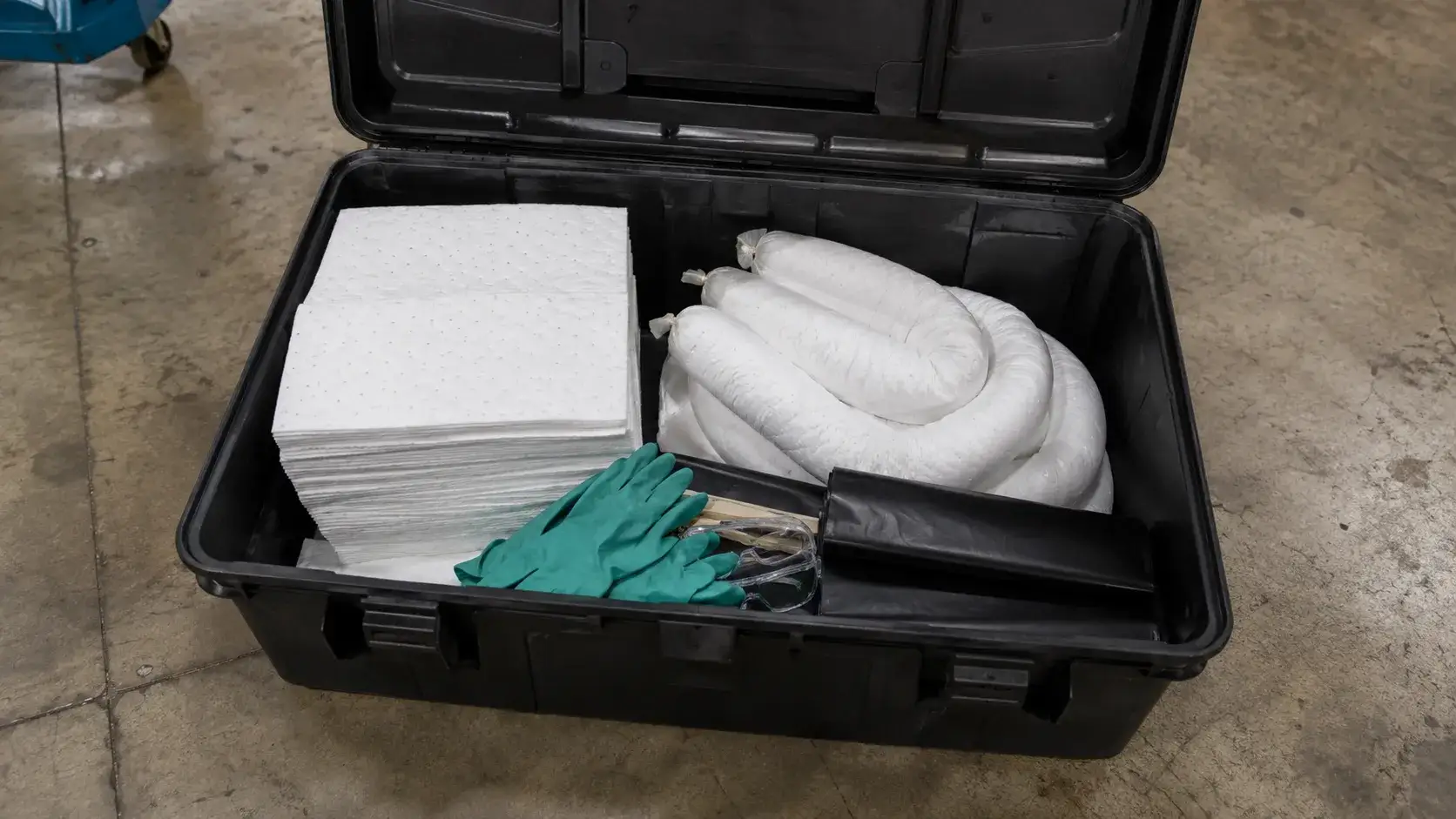
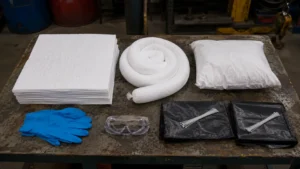
A complete oil spill kit contains oil-only absorbent pads for the bulk of the liquid, oil-only socks or booms to contain and isolate the spill, and oil-only pillows for deep puddles and leaking valves. Larger kits add rolls for covering long runs or wide areas. All of these should be white, confirming they are the hydrophobic grade.
Personal protective equipment is essential and is where cheaper kits cut corners. Every kit needs chemical-resistant gloves, safety goggles rather than plain safety glasses for splash protection, and a disposable apron or coveralls. These items should be inspected and replaced as diligently as the absorbents themselves.
Disposal belongs inside the kit, not as an afterthought. Include at least two heavy-duty disposal bags with ties so contaminated sorbents can be sealed on the spot, plus an instruction card and an inventory list. Our spill kits guide compares oil-only kits with universal and hazmat versions.
Kit Formats and Sizes
Oil spill kits come in a range of formats scaled to the spill you realistically face. Small economy bag kits and five-gallon bucket kits suit vehicles, service vans, and single workstations where a modest leak is the risk. They are portable, inexpensive, and easy to keep close to the point of use.
Medium kits are typically twenty- to thirty-gallon drums, holding enough sorbent for a substantial leak, while large kits run to fifty-five, sixty-five, or ninety-five gallon drums packed with dozens or even hundreds of pads plus booms, socks, and disposal bags. Overpack drum kits double as a container for a leaking drum, and truck or vehicle kits are configured for mobile response.
Sorbent counts vary widely with size. A compact kit might hold around thirty standard pads, while a large drum kit can carry two hundred pads alongside multiple booms, socks, and disposal bags. The table below shows how the common formats line up against spill size, so you can see where your operation fits.
| Format | Typical scale | Best for |
| Bag / economy kit | Small | Vehicles, service vans, single workstations |
| Bucket kit (5 gal) | Small | Workshops, point-source drips, quick grab |
| Drum kit (20–30 gal) | Medium | Production floors, transfer points, fuel handling |
| Drum kit (55–95 gal) | Large | Bulk storage, fuel depots, large facilities |
| Overpack drum kit | Medium–large | Doubles as containment for a leaking drum |
| Truck / vehicle kit | Varies | Mobile and marine response teams |
How to Choose the Right Oil Spill Kit
Selection starts with your worst credible spill, not your average one. Look at the largest container of oil or fuel stored or moved in the area, and size the kit so it can absorb that volume without running out mid-response. A kit that empties halfway through is little better than no kit at all, and topping it up mid-spill is rarely an option when oil is moving toward a drain.
Next consider the setting. Outdoor areas, wet floors, drains, and anywhere near a waterway demand oil-only sorbents that float and reject water. Indoor floors with mixed liquids may be better served by a universal kit, and aggressive chemicals require a hazmat kit instead.
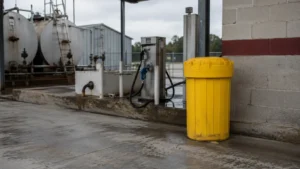
Finally, think about mobility and placement. A bucket kit at each risk point plus one large drum kit centrally is a common, effective arrangement. Kits belong where spills actually happen — beside transfer points, storage areas, and loading bays — clearly marked, easy to see, and never blocked by pallets or equipment.
How to Deploy an Oil Spill Kit
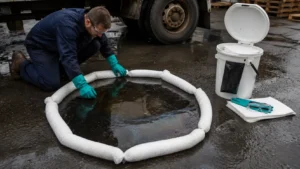
Response follows a consistent order. Put on the PPE first, then use the socks or booms to surround the spill, working from the outside in so the oil cannot reach drains, soil, or open water. Containment before absorption is the habit that keeps a small spill small.
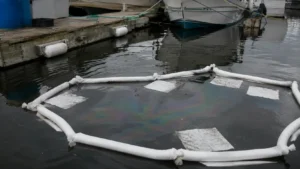
With the perimeter set, lay pads over the oil and add pillows to deep puddles, letting the sorbents wick the liquid up rather than scrubbing it around. On water, place booms at the leading edge of the slick and let the floating pads load with oil before retrieving them. Replace saturated items as they darken and stop absorbing.
Finish by sealing the used sorbents and your PPE in the disposal bags, then handle the waste according to what was absorbed and your local rules. Our guide on how to dispose of oil absorbent pads covers that final step in detail.
Restocking and Staying Inspection-Ready
A kit is only useful if it is complete, and the most common failure is a kit raided for pads and never refilled. Restock immediately after any use, replacing every sorbent, bag, and piece of PPE consumed. A sealed or tagged kit makes it obvious at a glance whether it has been opened.
Inspect on a regular schedule to confirm the contents match the inventory list, that PPE has not degraded, and that the kit remains correctly placed and unobstructed. Recording those checks gives you an audit trail if an inspector asks.
Treating the kit as standing safety equipment rather than a box of supplies is what keeps a site genuinely prepared. It costs little and prevents the worst kind of surprise, which is reaching for a kit during an incident and finding it half empty.
Buying Oil Spill Kits in Bulk and OEM
For distributors and multi-site operators, kit performance comes down to the sorbents inside. Consistent GSM, clean meltblown fiber, low lint, and dependable hydrophobicity batch to batch are what make an oil-only kit behave as promised. A kit built from inconsistent sorbents will disappoint regardless of how sturdy the container looks.
As a Shenzhen-based manufacturer, AbsorbentX produces the oil-only absorbents behind these kits — pads, socks, pillows, booms, and rolls — with private-label and OEM options for bulk orders and custom kit configurations. Building kits around reliable sorbents is what earns repeat business. Browse the range on our absorbent pads collection, or read how to choose an oil absorbent pads supplier before ordering at volume.
The Bottom Line
Oil spill kits work because their sorbents are white, hydrophobic, and buoyant, capturing oil while rejecting water and floating on the surface. Stock them with oil-only pads, socks, and pillows, proper PPE, and disposal bags, and you have a complete response package for any hydrocarbon spill.
Size the kit to your worst credible spill, place it where the spill would happen, deploy it containment-first, and restock it the moment it is used. Do that, and an oil spill becomes a routine, contained job rather than an emergency you were not ready for.
If you are buying your first kit, start with a bucket or bag kit at the point of greatest risk, then scale up to a drum kit as your stored volumes grow. Keeping the sorbents consistent across kits means staff learn one colour code and one routine. That consistency, more than any single product, is what makes a response go smoothly.
Frequently Asked Questions
What is in an oil spill kit?
Oil-only absorbent pads, socks or booms, and pillows (all white and hydrophobic), plus PPE including chemical-resistant gloves and safety goggles, heavy-duty disposal bags with ties, an instruction card, and a storage container.
Why are oil spill kit absorbents white?
White is the industry colour code for oil-only sorbents. They are hydrophobic and oleophilic, so they repel water, absorb only hydrocarbons, and float — which is what allows them to recover oil from the surface of water.
What sizes do oil spill kits come in?
From small economy bag and 5-gallon bucket kits for vehicles and workstations, to 20–30 gallon drum kits for medium spills, up to 55, 65, and 95 gallon drum kits for large facilities. Overpack and truck kits serve special cases.
How do I choose the right oil spill kit?
Size it to your worst credible spill — usually the largest container of oil stored nearby — then match the setting. Use oil-only kits outdoors, on wet ground, and near waterways; universal kits for mixed indoor fluids; hazmat kits for aggressive chemicals.
Can I use a universal spill kit for oil?
You can, but on wet ground or water it performs poorly because the gray sorbents absorb water before they capture the oil. For oil near water, an oil-only kit is the correct choice.
How often should an oil spill kit be restocked?
Immediately after any use, replacing every sorbent, bag, and PPE item consumed. Inspect on a regular schedule to confirm the contents match the inventory list and the kit remains accessible.