Oil absorbents are the front line of spill control, and choosing the right one turns a messy, high-risk leak into a quick, contained cleanup. From a single pad under a leaking machine to booms strung across a harbor, every format is designed to capture oil while leaving water and clean surfaces behind. Getting the choice right saves material, time, and money on every spill.
This guide walks through the full family of oil absorbents — what they are made of, the main types and where each one fits, the color-coded grades, and a simple framework for selecting the right product. Whether you run a two-bay garage or a multi-site operation, the same principles apply. By the end you will be able to read an absorbent by its type and grade rather than guessing.
What Are Oil Absorbents?
Oil absorbents are materials engineered to soak up oils, fuels, and other hydrocarbons from surfaces and water. Most professional oil absorbents are made from meltblown polypropylene, a synthetic that is both hydrophobic (repels water) and oleophilic (attracts oil). That combination lets them pull in oil while pushing water away, which is why they work on wet floors and even floating on water.
A smaller share of absorbents use natural materials such as clay, cellulose, cotton, or peat. These have their place in light or eco-focused cleanups, but they tend to absorb water along with oil and hold less per kilogram. For industrial spill control, polypropylene remains the standard because of its high capacity and water resistance.
For a deeper look at the material itself, see our guide on what oil absorbent pads are made of. Understanding the base material makes the differences between product types much easier to follow.
The Main Types of Oil Absorbents
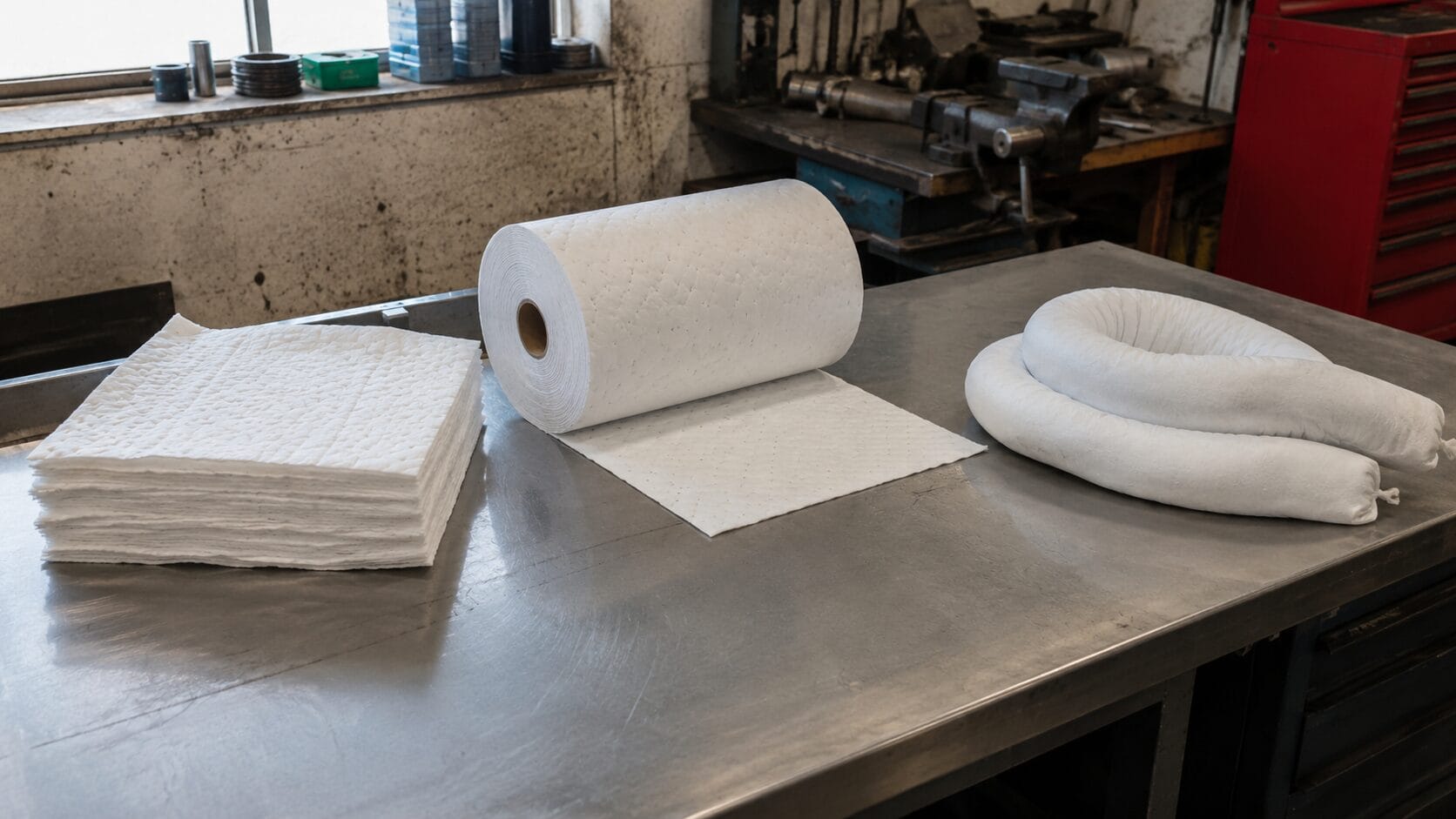
Oil absorbents come in several formats, each shaped for a different job. Pads and rolls are the flat, everyday workhorses; socks and booms are long tubes for containment; pillows target concentrated drips; and granular absorbents cover rough or uneven ground. Choosing well usually means combining a few of these rather than relying on one.
The table below summarises the core types and where each one performs best. Below it, we look at each format in more detail so you can see why a busy facility usually keeps several on hand.
| Type | Form | Best for |
| Pads | Flat sheets | Everyday spills, drips, wipe-downs, floors |
| Rolls | Continuous sheeting | Large-area coverage, custom lengths, walkways |
| Socks | Flexible tubes | Surrounding machines, drains, containment lines |
| Booms | Large floating tubes | On-water spills, harbors, containment at scale |
| Pillows | Filled cushions | Concentrated drips, sumps, tight spaces |
| Granular | Loose particles | Rough ground, cracks, uneven outdoor surfaces |
Pads and Rolls: The Everyday Workhorses
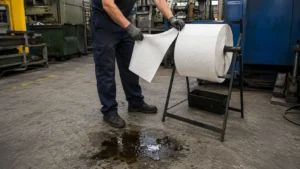
Pads and rolls are the most widely used oil absorbents because they are versatile and simple. Pads are flat sheets you place directly on a spill or use to wipe down a surface, and they come in light, medium, and heavy weights for different spill sizes. Rolls are the same material in continuous form, so you can tear off exactly the length you need or line a whole work area.
Weight matters here: a light pad suits drips and housekeeping, while a heavyweight pad or roll handles bigger leaks without saturating instantly. Matching the weight to the job avoids both waste and the frustration of a pad that fills too fast. Perforated pads and rolls let crews tear pieces to size, cutting waste further.
For most workshops and production floors, pads and rolls cover the majority of daily spills. We explain their absorption mechanism in our guide on how oil absorbent pads work.
Socks and Booms: Containment First
Socks and booms are long, tubular absorbents built to contain a spill before it spreads. Socks are flexible tubes you snake around machinery, along the base of shelving, or in front of drains to build a barrier that both blocks and absorbs oil. They are ideal for creating a perimeter so a leak stays where you can deal with it.
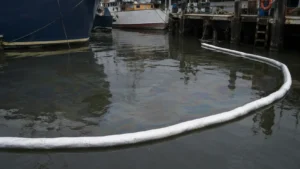
Booms are the larger, heavier-duty relatives, designed to float and corral oil on open water. Strung across a harbor entrance or around a fuel-transfer point, they contain a slick and absorb it at the same time. Because they ride on the surface and reject water, oil-only booms are a staple of marine spill response.
Used together, socks and booms turn an uncontrolled spread into a defined area you can then clean with pads. Containment first, absorption second, is the professional habit that keeps small spills small.
Pillows and Granular Absorbents: Special Situations
Pillows are filled absorbent cushions made for concentrated, ongoing drips and awkward spots. Tucked under a leaking fitting, into a sump pit, or beside machinery, they hold a large volume relative to their footprint and catch oil before it becomes a floor spill. They are the quiet workhorse for known, recurring leak points.
Granular absorbents are loose particles — often clay or a lighter mineral — that you scatter over a spill. Their strength is coverage on rough, uneven, or cracked ground where a flat pad cannot make full contact, because the granules settle into gaps and low spots. The trade-off is a dustier, heavier residue that must be swept up and disposed of.
Between them, pillows and granular absorbents fill the gaps that pads and socks leave. A well-stocked facility keeps a few of each for the situations where the flat formats fall short.
Oil-Only vs. Universal vs. Chemical Grades
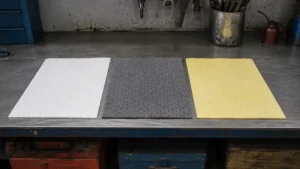
Beyond format, oil absorbents come in grades that determine which liquids they handle, and an industry color code makes them easy to grab. Oil-only absorbents are usually white; they repel water and capture only oil and hydrocarbons, making them the choice for spills on or near water. Universal absorbents are typically gray and, thanks to a surfactant treatment, soak up both oil and water-based fluids.
Chemical absorbents are generally yellow and built to handle aggressive liquids such as acids, bases, and solvents. Using the wrong grade wastes material — a universal pad on a wet floor fills with water, while an oil-only pad does nothing for a water-based coolant. The color code exists so crews can match grade to spill at a glance.
If you routinely handle mixed liquids, keeping all three grades on hand prevents cross-use mistakes. Our guide on do oil absorbent pads absorb water explains the oil-only versus universal distinction in depth.
How to Choose the Right Oil Absorbent
Selecting an oil absorbent comes down to three questions: how big is the spill, where is it, and what is the liquid. Small, localised spills are handled by pads, rolls, or pillows, while larger or spreading spills call for socks, booms, or granular absorbents to contain them first. Matching format to spill size is the starting point, and it prevents both under-buying and over-buying for the job.
Location refines the choice. Indoor, smooth floors suit pads and pillows; outdoor or uneven ground favours socks and granular absorbents; and anything on or near water demands oil-only booms and pads that float and reject water. Then the liquid sets the grade — oil-only, universal, or chemical — so nothing is wasted absorbing the wrong thing.
Get those three right and the rest is about weight and volume: heavier GSM for big leaks, lighter for drips. Match format, location, grade, and weight, and you will rarely reach for the wrong product.
Prevention: Stopping Spills Before They Spread
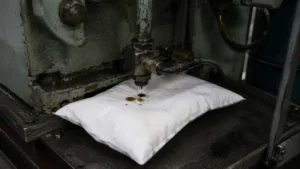
The cheapest spill to clean is the one that never reaches the floor, so prevention belongs in any absorbent strategy. Placing pads, mats, or pillows under known drip points catches oil at the source, while socks around machinery build a standing barrier for the inevitable leak. These small measures cut both cleanup time and the risk of a slip or a reportable release.
A stocked, clearly marked spill station keeps the right absorbents within reach when something does go wrong. Pairing prevention with fast response is what separates a tidy operation from one that is always mopping up. For continuous drips, a durable reusable mat can be more economical than repeated single-use pads.
We compare durable and single-use options in our guide on are oil absorbent pads reusable, which is worth a read before you standardise on one approach.

Buying Oil Absorbents in Bulk and OEM
For distributors and high-volume users, consistency is everything. Reliable GSM, clean meltblown fiber, low lint, and dependable hydrophobicity batch to batch are what keep absorbents performing as promised across a full container load. A product that tests well as a single sample but drifts in quality generates complaints no matter how low the unit price.
As a Shenzhen-based manufacturer, AbsorbentX produces the full range of oil absorbents — pads, rolls, socks, booms, pillows, and spill kits — in oil-only, universal, and chemical grades, with private-label and OEM options for bulk orders. Matching product and grade to your customers’ real spills is what drives repeat business. Browse the full range on our oil absorbent pads collection, or read how to choose an oil absorbent pads supplier before ordering at volume.
The Bottom Line
Oil absorbents are a system, not a single product. Pads and rolls handle everyday spills, socks and booms contain and tackle larger or on-water events, and pillows and granular absorbents cover the special cases — all in oil-only, universal, or chemical grades matched to the liquid.
Choose by spill size, location, and liquid, back it up with prevention, and buy on consistency rather than price alone. Do that, and whatever the spill, you will already have the right oil absorbent within reach.
If you are outfitting a facility from scratch, start with a core of pads and a roll for daily use, add socks for containment, and keep a few pillows and a bag of granular absorbent for the awkward spots. From there, tune the grades and weights to the liquids you actually handle. That balanced kit covers the vast majority of real-world spills, and it scales cleanly as your operation grows.
Frequently Asked Questions
What are oil absorbents made of?
Most professional oil absorbents are made of meltblown polypropylene, a synthetic that is hydrophobic (repels water) and oleophilic (attracts oil). Some use natural materials like clay, cellulose, or cotton for lighter or eco-focused cleanups.
What are the main types of oil absorbents?
Pads and rolls for everyday spills, socks and booms for containment and on-water use, pillows for concentrated drips and tight spaces, and granular absorbents for rough or uneven ground.
What is the difference between oil-only and universal absorbents?
Oil-only absorbents (white) repel water and capture only oil, ideal for spills on or near water. Universal absorbents (gray) are treated to soak up both oil and water-based fluids.
How do I choose the right oil absorbent?
Match three things: spill size (pads for small, booms/socks for large), location (pads indoors, booms on water, granular on rough ground), and liquid type (oil-only, universal, or chemical grade). Then pick the weight to suit the volume.
Which oil absorbent is best for spills on water?
Oil-only booms and pads, because they float, repel water, and absorb only the oil, letting you recover a slick without soaking up the water beneath it.