An oil spill, whether a small leak on a workshop floor or a larger release near water, is a safety, environmental, and compliance problem that needs a fast, controlled response. Handled well, most industrial oil spills are routine to clean up in a matter of minutes; handled poorly, they spread quickly, contaminate drains, and become costly, reportable incidents. The difference is having a clear process and the right products ready before the spill happens, not after.
This guide covers how to clean up an oil spill step by step, the safety essentials, and the containment and control methods that keep a spill from spreading. Whether you manage a garage, a factory, or a site near water, the same principles apply. By the end you will know how to respond to, contain, and prevent oil spills with confidence, and how to scale the response to the spill in front of you.
What Is an Oil Spill?
An oil spill is any uncontrolled release of oil, fuel, or other hydrocarbons onto a surface or into water. In an industrial setting that ranges from a slow drip under a machine to a burst hydraulic hose, a tank overflow, or a fuel spill during a transfer operation at a busy site. Each needs a response scaled to its size and location, from a quick wipe to a full containment effort.
The reason oil spills matter is that they create several problems at once. They are a slip hazard, a fire risk with fuels, an environmental threat if they reach soil or water, and often a reportable compliance event with real financial consequences. A quick, correct response limits all of these at once, which is why a practised process is so valuable.
Most facility oil spills are small and manageable with the right kit and process. The larger the spill and the closer it is to water or drains, the more urgent containment becomes.
It also helps to think about oil spills in categories before one happens. A contained drip on a dry floor is a housekeeping task; a fuel spill near a drain is an emergency. Knowing in advance which of your likely spills fall into which category lets you stock the right products and set clear rules for when staff should act and when they should escalate.
How to Clean Up an Oil Spill: Step by Step
A good cleanup follows a consistent order. First, put on the right PPE and assess the spill — what was spilled, how much, and whether it is heading toward a drain or waterway. If it is beyond your training or too large to handle safely, stop and escalate rather than proceeding.
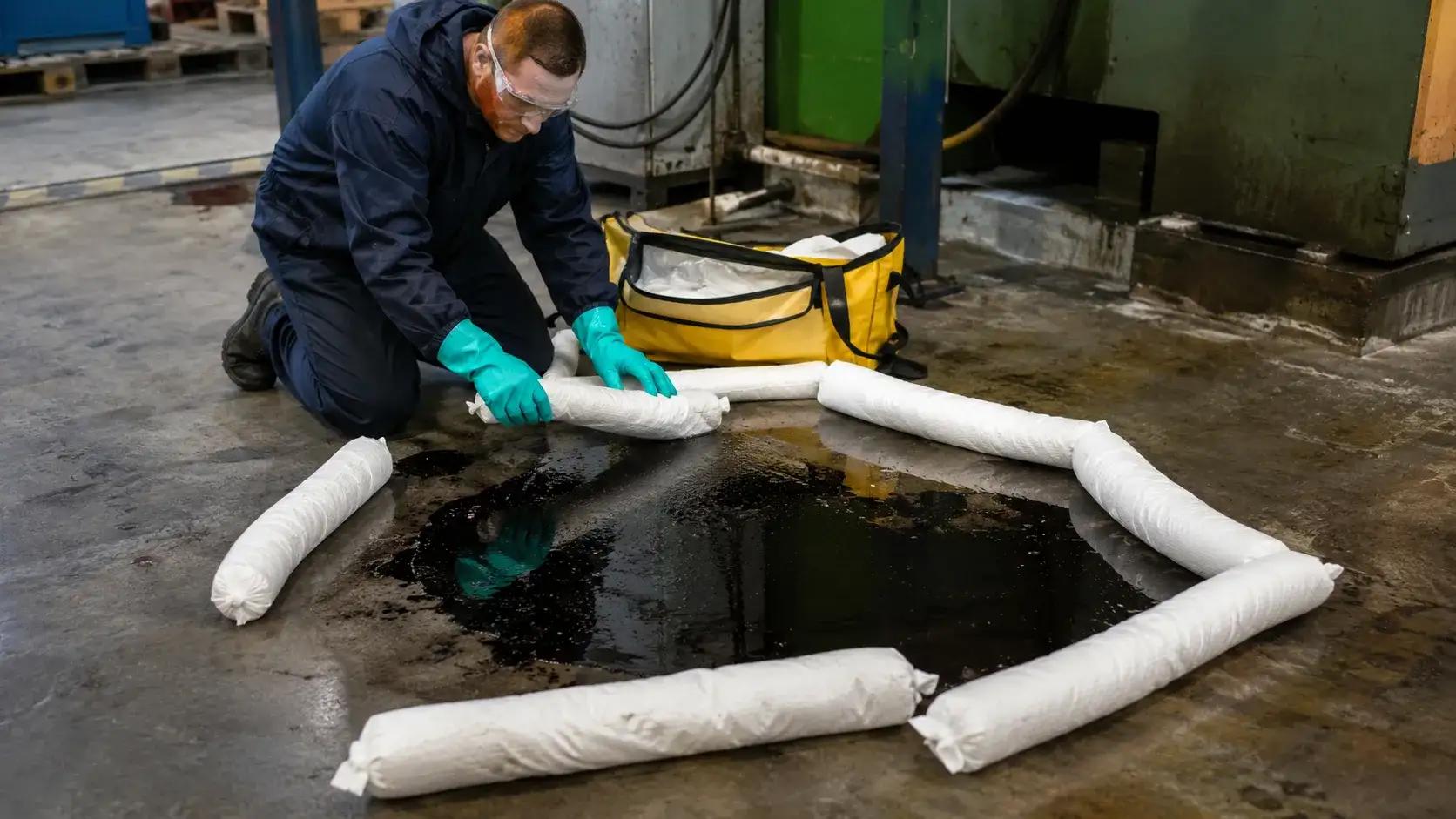
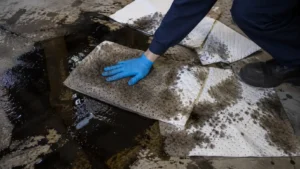
Next, contain before you absorb. Use socks or booms to surround the spill and block its path to drains, working from the outside in so it cannot spread further. Then absorb the oil with pads and pillows, letting the sorbents wick it up rather than scrubbing, and replacing them as they saturate and darken.
Finally, clean the residue and handle the waste. Once the free oil is absorbed, treat any remaining film on the surface, then seal the used absorbents in bags for disposal as oily waste under your local rules. Our guide on how to dispose of oil absorbent pads covers that last step.
Oil Spill Safety Essentials
Safety comes before speed in any oil spill response. Wear gloves and eye protection, and with fuels or in enclosed spaces, ensure ventilation and keep all ignition sources — sparks, flames, hot work — well away, since fuel vapours are flammable. A spill is not worth an injury or a fire, and rushing without protection is how minor incidents become serious ones.
Protect drains and waterways as a priority, because oil reaching them turns a contained spill into an environmental and legal problem. Never hose a spill down a drain, and place drain covers or socks to block them early, before the oil can reach them. If oil does reach water or soil, treat it as a serious incident and escalate.
Documentation is part of safety too. Recording what was spilled, how much, how it was handled, and where the waste went protects both people and the business if questions arise later. In many settings a spill above a certain size is reportable, so knowing your local thresholds in advance is part of being genuinely prepared.
Know your limits. Small, familiar spills are routine, but large releases, unknown substances, or anything giving off strong vapours call for evacuation and specialist response. There is no shame in stopping and calling for help when a spill exceeds your training or resources.
Containment and Control Methods
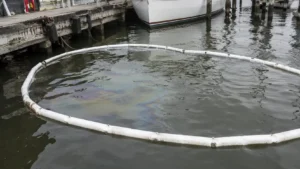
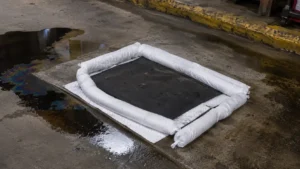
Containment is what keeps a small spill small, and several tools do the job. Absorbent socks build a quick barrier indoors around machines and along the base of shelving, while booms float and corral oil on water, making them the standard for spills on ponds, bilges, and harbors. Both contain and absorb at the same time.
For larger or outdoor spills, berms and secondary containment hold liquid in a defined area, and drain covers or mats seal off drains to stop oil escaping. Granular absorbents can dam and soak up oil on rough ground where flat products cannot make contact. Together these turn an uncontrolled spread into a manageable area.
The order of operations matters as much as the tools. Blocking drains and building a perimeter before you start soaking up oil stops the spill escaping while your attention is on the cleanup. Absorbing first and containing later is a common mistake that lets a manageable spill reach a drain and become a far bigger problem.
Our guides on oil absorbents and oil spill kits cover the products behind these methods in detail.
Cleaning Up Oil on Water vs. Land
Oil on water and oil on land call for slightly different approaches. On water, the priority is containment with booms to stop the slick spreading, followed by recovery with floating oil-only pads that lift the oil while ignoring the water beneath. Because oil-only sorbents float, they can be skimmed off still loaded with oil.
On land, the concern is stopping the oil reaching drains and soaking into porous surfaces like concrete. Contain with socks, absorb with pads, then treat any stain left behind in the surface itself. A spill on a wet outdoor floor still calls for oil-only sorbents so you capture the oil, not the water.
The environmental stakes differ between the two as well. Oil on water spreads fast into a thin, wide sheen and can travel a long way, so speed and containment are everything. Oil on land moves more slowly but soaks into porous surfaces and can reach groundwater through drains, so blocking those pathways early is the priority.
Our guide on how to clean oil off concrete floor covers the surface-stain side of a land spill in detail.
Preventing Oil Spills
The best oil spill is the one that never happens, so prevention belongs in any spill strategy. Regular maintenance of hoses, seals, and fittings stops many leaks before they start, and placing pads or mats under drip-prone equipment catches the small ones that slip through. These habits cut both mess and risk.
Secondary containment around tanks and drums, clear procedures for fuel transfer, and drain protection at known risk points prevent a small leak becoming a large release. A stocked, well-placed spill kit means that when something does go wrong, a fast response is always possible without scrambling for supplies.
Prevention and preparedness together are what keep spills rare and minor. Our guide on maintenance absorbents covers the daily-leak side of prevention.
Training completes the picture. Staff who know where the kit is, how to use it, and when to escalate will respond in the crucial first minutes, when a spill is still small and easy to contain. A short, practised routine turns an alarming event into a familiar one, and that confidence is worth as much as any product on the shelf.
Choosing Products for Oil Spill Response
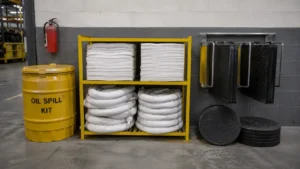
The right products make oil spill response fast and reliable. Oil-only pads, socks, and booms are the core, since they capture oil while rejecting water and float for on-water recovery, and a complete spill kit gathers them with PPE and disposal bags for a grab-and-go response. Match the kit size to your worst credible spill, and keep smaller kits at individual risk points with a larger one held centrally.
As a Shenzhen-based manufacturer, AbsorbentX produces the full range of oil spill response products — oil-only pads, rolls, socks, booms, pillows, and spill kits — with private-label and OEM options for bulk orders. Matching product and kit size to your real risks is what keeps a response effective. Browse the range on our absorbent pads collection, or read how to choose an oil absorbent pads supplier before ordering at volume.
The Bottom Line
An oil spill is a manageable event with the right process and products. Put on PPE and assess, contain before you absorb, recover the oil with the right sorbents, protect drains and waterways, and dispose of the waste correctly — scaling the response to the size and location of the spill in every case.
Back it up with prevention, a stocked spill kit, and clear limits on what your team should handle. Do that, and most oil spills stay small, controlled, and routine rather than becoming costly, reportable incidents.
The single biggest factor in a good outcome is speed, and speed comes from preparation. A team that has the right kit within reach, knows the steps, and understands its limits will handle a spill in minutes that an unprepared team would let spread for an hour. Preparation, more than any single product, is what keeps oil spills manageable.
Frequently Asked Questions
How do you clean up an oil spill?
Put on PPE and assess the spill, contain it with socks or booms before absorbing, soak up the oil with oil-only pads and pillows, treat any residue, and dispose of the used absorbents as oily waste. Escalate if the spill is too large or beyond your training.
What is the first step in an oil spill response?
Safety and assessment — put on PPE, identify what and how much was spilled, and check whether it is heading toward a drain or waterway. Then contain before you absorb. Escalate large, unknown, or vapour-producing spills.
How do you contain an oil spill?
Use absorbent socks to build a barrier indoors and booms to corral oil on water, protect drains with covers or socks, and use berms or secondary containment for larger volumes, working from the outside in.
How do you clean oil off water?
Contain the slick with oil-only booms, then recover it with floating oil-only pads that absorb the oil while repelling water. Because they float, saturated pads can be skimmed off the surface still holding their oil, which keeps the recovery clean.
How can oil spills be prevented?
Maintain hoses, seals, and fittings, place pads or mats under drip-prone equipment, use secondary containment around tanks and drums, protect drains, and keep a stocked spill kit ready for fast response.