Maintenance absorbents are the everyday products that keep a working floor clean and safe between the big events — the pads, rolls, socks, and mats that handle routine drips, small leaks, and general housekeeping. Most spill control attention goes to major incidents, but it is the daily oil and coolant leaks under machines that quietly create slip hazards and mess. Managing them well is simple, cheap, and easy to overlook, yet it pays off every single day in a cleaner, safer floor.
This guide covers what maintenance absorbents are, the products that suit daily leaks, how to build a low-cost routine, and how to prevent drips from ever reaching the floor. Whether you run a machine shop, a fleet bay, or a production line, the same approach applies. By the end you will know how to keep everyday leaks under control without overthinking it.
What Are Maintenance Absorbents?
Maintenance absorbents are the sorbent products used for the small, routine liquid control of everyday operations rather than large spill response. In practice that means pads, rolls, socks, mats, and pillows kept on hand for drips, minor leaks, and wipe-downs. They are the same materials used in spill kits, simply deployed for daily housekeeping rather than held in reserve for an emergency. The distinction is about how they are used, not what they are made of.
The focus here is different from emergency spill control. Instead of containing a sudden release, maintenance absorbents quietly catch the ongoing drips from machinery, tools, and vehicles before they spread. That everyday role is what keeps floors clean, dry, and safe. It is unglamorous work, but neglected daily leaks are behind a large share of slip incidents and stained, degraded floors, so it matters more than its low profile suggests. A tidy floor also signals a well-run operation to visitors, auditors, and staff alike.
For the wider family of products, see our oil absorbents guide. This article focuses on the maintenance role in detail, and on the practical habits that keep everyday leaks from becoming a problem.
Products for Daily Leaks and Drips
A handful of products cover almost all maintenance needs. Absorbent pads are the flexible default for drips and small leaks, torn to size and placed where needed, while rolls give continuous coverage for benches, walkways, and machine aisles. Both are the everyday workhorses of routine housekeeping, and between them they cover the majority of small leaks a shop sees in a week.
Socks build a low barrier around machines and along shelving to catch and contain seeping leaks, and pillows soak up deeper, concentrated drips under valves and fittings. Absorbent mats, often heavier and sometimes reusable, sit permanently under drip-prone equipment. Together these handle the full range of daily leaks, from a slow seep under a fitting to a quick wipe of an oily surface.
The table below summarises the maintenance products and where each fits. Most facilities keep a mix rather than relying on any one, since a single format rarely covers every kind of daily leak. Pads and a roll are the essential starting point, with socks, pillows, and mats added as specific needs appear.
| Product | Form | Best for |
| Pads | Flat sheets | Drips, small leaks, wipe-downs |
| Rolls | Continuous sheeting | Benches, walkways, machine aisles |
| Socks | Flexible tubes | Barriers around machines and shelving |
| Pillows | Filled cushions | Concentrated drips under valves and fittings |
| Mats | Heavy / reusable sheets | Permanent placement under drip-prone equipment |
Choosing the Right Grade for Everyday Leaks
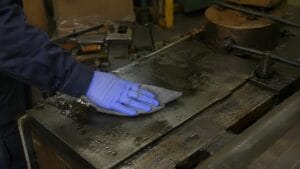
Most daily maintenance leaks are a mix of oil, coolant, and water, so a gray universal absorbent is usually the right everyday choice. It soaks up whatever drips onto the floor without you having to identify the liquid first, which suits the unpredictable nature of routine housekeeping. For most shops, universal is the default maintenance grade.
Where the drips are specifically oil and water is also present — an outdoor bay, a washed-down floor, or near a drain — an oil-only absorbent works better because it ignores the water and keeps capturing oil. And anywhere aggressive chemicals are handled, a chemical-grade product is required even for small routine leaks, because the wrong grade can degrade or react rather than simply absorb.
The colour code makes this easy to manage on a busy floor. Keeping white oil-only, gray universal, and yellow chemical products visibly separated lets staff grab the right one without thinking, and stops a chemical drip ending up on a pad that cannot handle it. For most maintenance settings, gray universal covers the bulk, with the other grades stocked only where their specific risk exists.
Our guide on do oil absorbent pads absorb water explains the grade differences that guide this choice.
Building a Simple Maintenance Absorbent Routine
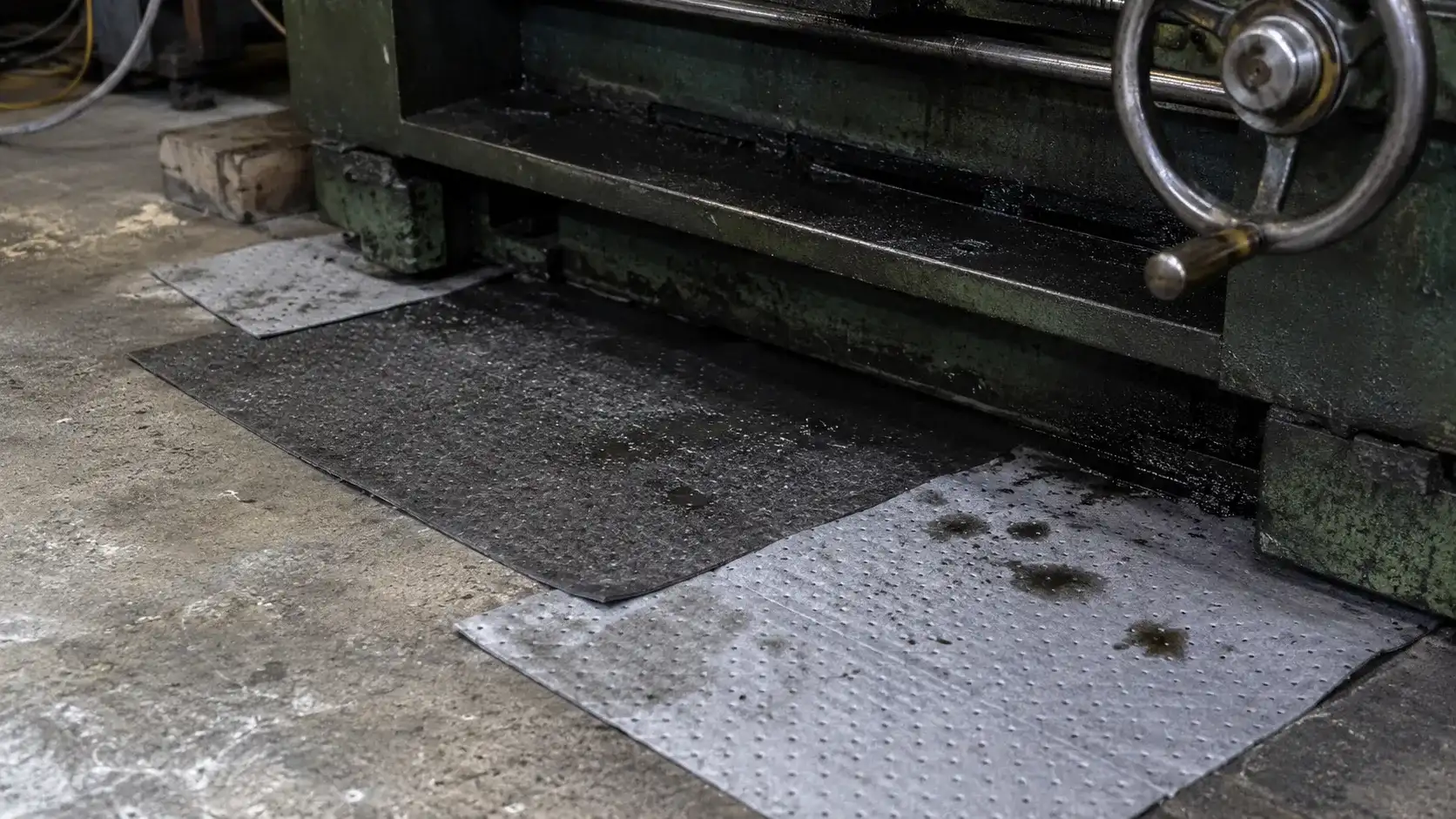
A good maintenance routine is built once and then barely thought about. Start by placing mats or pads under the machines, tools, and vehicles that drip predictably, so the oil is caught at the source before it reaches the floor. This single step prevents most of the mess and slip risk in a typical shop, and it is the highest-value thing you can do with maintenance absorbents.
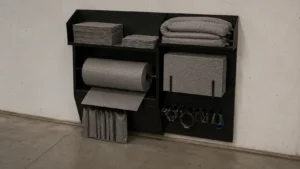
Keep a stocked, clearly marked point of pads, rolls, and socks near the work area so a fresh absorbent is always within reach for the unexpected drip. Replace saturated items promptly rather than letting them sit, and sweep the routine into daily housekeeping checks. Consistency, not effort, is what keeps the floor clean.
It helps to assign the routine to someone rather than leaving it to chance. When a specific person or shift owns restocking the station and checking the mats, nothing quietly runs out, and the floor stays reliably clear. A short line in a daily checklist is usually all the structure this needs.
Finally, decide how you will handle used absorbents, letting oily pads drain and bagging them for disposal under your local rules. Our guide on how to dispose of oil absorbent pads covers that step in detail.
Prevention: Stopping Leaks Before They Spread
The cheapest leak to clean is the one that never reaches the floor, so prevention is the heart of good maintenance absorbency. Placing pads or a mat under a machine that drips catches the oil at the source, while socks around equipment build a standing barrier for the inevitable seep. These small measures cut cleanup time and slip risk every day.
Prevention also protects your floor over the long term, keeping oil out of concrete pores where it stains and softens surfaces. A drip caught on a pad is a two-second job; a stain worked into the slab is a far bigger one. Catching leaks early is simply cheaper than cleaning them late, and it avoids the harder job of lifting a set-in stain from the concrete.
For a leak you cannot yet fix, a well-placed mat buys time while keeping the area safe. Our guide on how to clean oil off concrete floor shows why preventing the soak-in matters so much.
Reusable vs. Single-Use for Continuous Drips
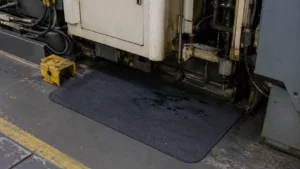
For machines that drip continuously, the choice between reusable and single-use products makes a real difference to cost. A durable, wringable mat under a steady drip can be squeezed out and reused many times, which often works out cheaper than replacing single-use pads every day. It suits predictable, high-volume leak points.
Single-use pads remain the simpler, faster choice for occasional or mixed drips, and for anywhere hygiene or a mixed contaminant rules out reuse. Many shops use both — a reusable mat under the worst offender and single-use pads everywhere else. Matching the product to how often the leak occurs is what keeps costs down.
It is worth doing a rough sum for your worst drip points. Add up how many single-use pads a steady leak consumes in a month and compare that to the cost of one reusable mat and the few minutes needed to wring and dry it. For a genuinely continuous drip, the mat usually wins clearly; for an occasional one, single-use stays simpler and cheaper.
We compare durable and single-use options in depth in our guide on are oil absorbent pads reusable.
Buying Maintenance Absorbents in Bulk and OEM
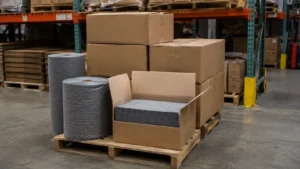
For distributors and high-volume users, maintenance absorbents are bought in the largest quantities, so consistency matters most. Reliable GSM, clean meltblown fiber, low lint, and dependable grade treatment batch to batch are what keep everyday products performing across a full order. Small quality differences add up quickly at maintenance volumes, where a pad that absorbs a little less or sheds lint means using more of them every day.
As a Shenzhen-based manufacturer, AbsorbentX produces the full range of maintenance absorbents — pads, rolls, socks, pillows, and mats — in oil-only, universal, and chemical grades, with private-label and OEM options for bulk orders. Matching product and grade to your customers’ real routines is what drives repeat business, since a maintenance buyer reorders constantly once they trust the product. Browse the range on our absorbent pads collection, or read how to choose an oil absorbent pads supplier before ordering at volume.
The Bottom Line
Maintenance absorbents keep a working floor clean and safe between major spills, handling the daily drips and leaks that quietly create hazards. Use pads and rolls for everyday drips, socks and mats for barriers and prevention, and pillows for concentrated leaks, choosing the grade to match your typical liquid — usually universal for the mixed leaks of everyday work.
Build a simple routine around prevention at the source and a stocked point of supply, and lean on reusable mats where drips are continuous. Do that, and everyday leaks become a quick habit rather than a recurring chore or a slowly growing stain on your working floor.
None of this needs to be complicated or expensive. A handful of the right products, placed where the drips happen and topped up as they are used, keeps a working floor clean and safe with very little effort. That quiet consistency is what good maintenance absorbency really comes down to.
Frequently Asked Questions
What are maintenance absorbents?
Sorbent products — pads, rolls, socks, mats, and pillows — used for the small, routine liquid control of everyday operations, such as drips, minor leaks, and wipe-downs, rather than major spill response.
Which absorbents are best for daily leaks?
Gray universal pads and rolls are the everyday default because they soak up mixed oil-and-water leaks without needing to identify the liquid. Add socks and mats for prevention, and pillows for concentrated drips.
What grade should I use for routine maintenance leaks?
Universal for mixed oil-and-water leaks (most common), oil-only where the drips are oil and water is also present, and chemical grade anywhere aggressive chemicals are handled.
How do I stop machines from leaking onto the floor?
Place pads or a reusable mat under drip-prone machines to catch oil at the source, and use socks as a low barrier. Preventing the soak-in is cheaper and faster than cleaning a stain later.
Are reusable mats worth it for continuous drips?
For a machine that drips steadily, a wringable reusable mat can be squeezed out and reused many times, often cheaper than daily single-use pads. For occasional or mixed drips, single-use pads are simpler.