Most spill advice assumes you already know what you are dealing with. In practice the hardest part of a liquid spill is often the first question: what is this, and which of the products in the cupboard will actually pick it up? Choose wrong and you either waste material on a liquid the pad repels, or you use a product that degrades on contact with something aggressive.
The useful way to think about liquid spills is not by name but by category. Almost every liquid on an industrial site falls into one of three groups — hydrocarbon, water-based, or aggressive chemical — and each group maps to a specific absorbent grade. Get the category right and the product choice follows almost automatically.
This guide covers how to classify a liquid quickly, what the three absorbent grades are for, how to pick the right format for the shape and size of the spill, and the factors like viscosity and temperature that change the job. It is a selection guide rather than a step-by-step response procedure.
Start by Identifying the Liquid
Identification drives everything else, and in most workplaces it is straightforward because the liquid came from a known container or machine. Check the label, the equipment it leaked from, or the safety data sheet before reaching for a product, since thirty seconds spent identifying the liquid usually saves far more in wasted material.
Safety data sheets are the authoritative source, and employers are required to maintain them for hazardous chemicals under the OSHA Hazard Communication standard (29 CFR 1910.1200). Section 6 of an SDS deals specifically with accidental release measures and will often name a suitable absorbent type directly.
When the liquid genuinely cannot be identified, treat it as the most hazardous plausible option and use chemical-grade absorbents with full protective equipment. An unknown liquid is not a reason to guess with a general-purpose pad, and it may be a reason to escalate rather than clean up at all.
The Three Absorbent Grades and What Each Is For
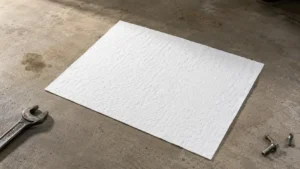
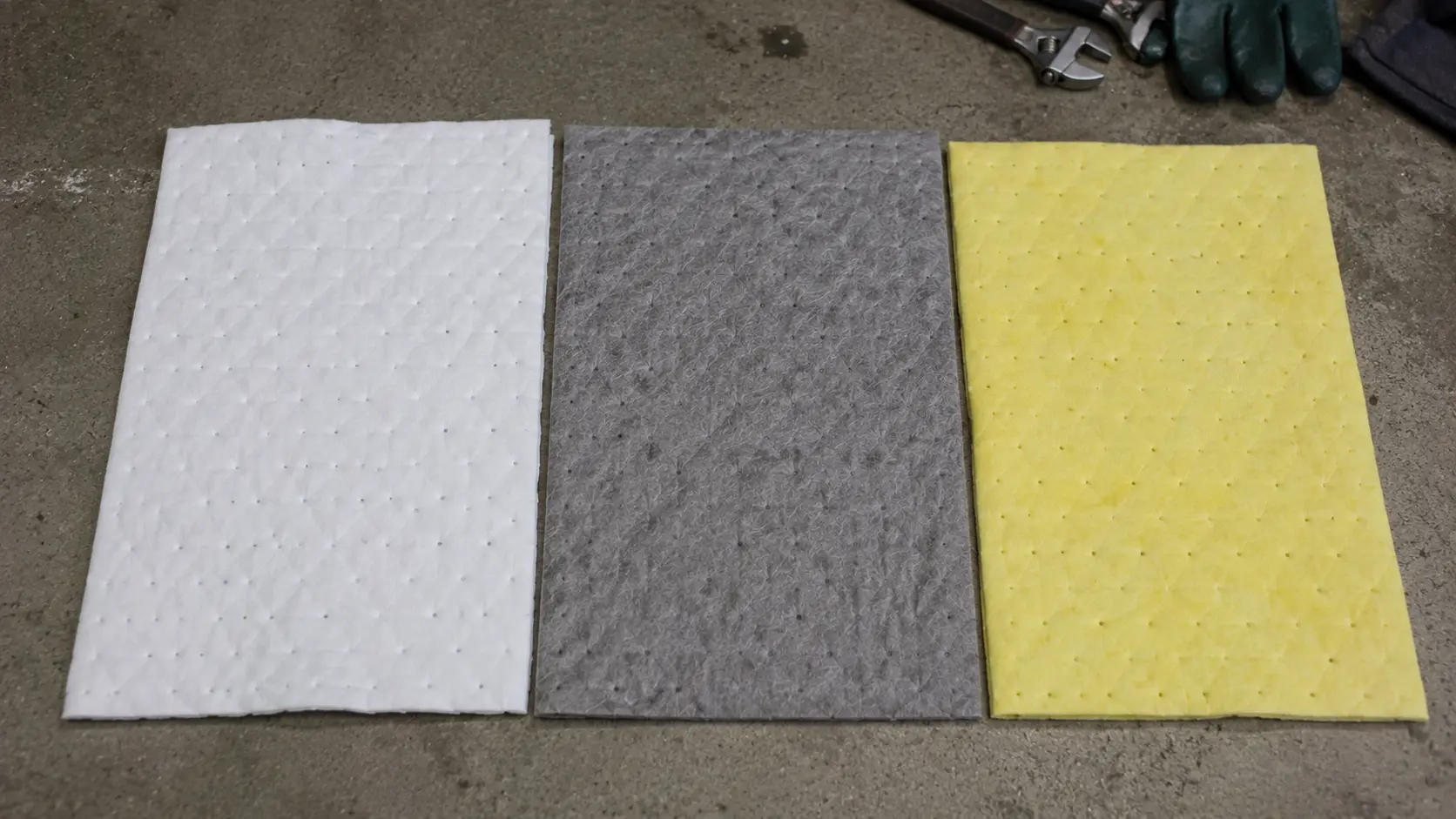
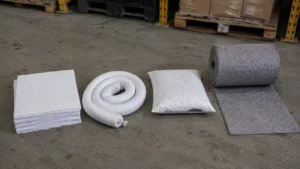
Oil-only absorbents, normally white, are treated to be hydrophobic. They pull in hydrocarbons and actively repel water, which is what makes them the right choice for fuel and oil on wet ground or open water, and completely the wrong choice for a puddle. Their whole value is selectivity.
Universal absorbents, normally grey, are untreated and will take up almost any non-aggressive liquid — water, coolant, mild solvents, and mixed liquids of uncertain composition. They are the sensible default for a general spill station because they do not require you to identify the liquid first.
Chemical absorbents, normally yellow, are made from materials chosen to resist degradation by acids, caustics, and aggressive solvents. The colour coding exists precisely so nobody reaches for the wrong grade under pressure, and keeping the three visibly separated is one of the cheapest risk controls available.
Each grade is covered in depth in our guides on oil-only absorbents, universal absorbents, and chemical absorbents.
Hydrocarbon and Oil-Based Liquid Spills
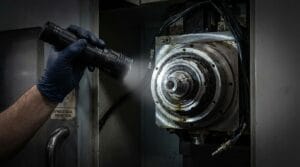
This group covers motor oil, hydraulic fluid, gearbox and cutting oils, diesel, gasoline, kerosene, and lubricants — anything petroleum-derived. It is the most common spill category in workshops, fleet yards, and manufacturing plants, and the one the oil-only grade exists to handle.
The deciding factor for grade choice is whether water is present. On a dry indoor floor a universal pad will handle oil perfectly well, but outdoors, on a wet floor, or anywhere near standing water, the hydrophobic oil-only grade is worth the switch because it will not waste capacity on the water.
Lighter fuels behave differently from heavy oils within the same category. Diesel and gasoline spread fast, penetrate concrete quickly, and saturate absorbents without darkening them much, so judge saturation by weight. Heavy oils move slowly and stay put, giving you more time but requiring more absorbent capacity per square metre.
Water-Based Liquid Spills
Water-based liquids include plain water, machine coolant and cutting fluid, glycol, detergent washdown, condensate, and most general facility liquids. They are usually less of an environmental concern than hydrocarbons but a greater immediate safety concern, because they leave no visual warning on the floor.
Universal grade is the correct product here, and oil-only pads are simply the wrong tool — water will bead off the surface and the pad will stay dry. This is the most common product mismatch on sites that stock both grades, and it almost always happens because the two look similar in an unlabelled box.
Coolant deserves separate mention because it sits between categories. It absorbs like water but often carries tramp oil, so the floor stays slick after the water content evaporates, and the waste may need handling as contaminated rather than general. Absorb it fully rather than letting it dry off.
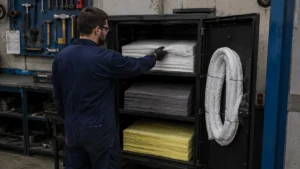
Aggressive Chemical Liquid Spills
Acids, caustics, strong solvents, and reactive substances need chemical-grade absorbents and matched protective equipment. An ordinary polypropylene pad may degrade, dissolve, or in some cases react with the spilled material, which turns a contained spill into a worse and less predictable problem.
Compatibility is specific rather than general, so check the safety data sheet against the absorbent specification rather than assuming a chemical-rated product handles everything. A material that resists acids may not resist strong oxidisers, and the consequences of getting it wrong are considerably more serious than wasted material.
Scale and training matter here more than product choice. Small, identified chemical spills within a trained responder’s competence are manageable with the right kit, while anything large, unidentified, or producing vapour calls for evacuation and specialist response rather than an in-house attempt.
Sites handling aggressive liquids routinely should read our chemical handling areas application guidance alongside the spill kits guide.
Choosing the Right Absorbent Format
Once the grade is settled, format is decided by the shape of the spill rather than the liquid. Pads suit flat, scattered spills and wipe-downs, and are the most-used format in almost every facility. Rolls cover long runs, walkways, and machine-side areas, letting you tear off exactly what the job needs rather than laying out a dozen pads.
Socks and booms are containment rather than absorption tools. A sock rings a spreading spill, blocks a drain, or sits permanently along the base of a leaking machine, while a boom does the same job on water. Neither is efficient for soaking up volume, and using them that way is expensive.
Pillows handle depth. Where liquid pools in a low spot, under a leaking valve, or inside a containment tray, a pillow holds far more volume than the equivalent area of pads. Granular absorbents remain useful for rough or uneven ground where a pad cannot make contact, at the cost of sweeping and greater waste volume.
Our absorbent pads guide explains how GSM and pad weight translate into real capacity, and the industrial absorbents guide compares formats across a whole facility.
Matching Tools to Spill Size and Location
Spill size changes the tool more than people expect. A cupful is a single pad and a wipe. A few litres is pads plus a sock to stop it spreading. Anything approaching a drum volume needs containment first, bulk removal second, and absorbents only for the final film — reaching for pads alone at that scale wastes both time and material.
Location matters just as much. A spill near a drain, doorway, or watercourse is a containment problem before it is an absorption problem, regardless of size. A spill under a machine or behind racking may need socks and a grabber rather than pads, because the issue is access rather than capacity.
Surface type is the factor most often overlooked. Absorbents work best on smooth, hard surfaces where the pad can make full contact, while rough concrete, gravel, and soil hold liquid in voids that a pad cannot reach, which is where granular products and excavation come into play.
Viscosity, Temperature, and Other Complicating Factors
Viscosity changes how fast an absorbent works. Thin liquids like fuel and solvent wick into a pad almost instantly, while heavy grease and thick oils sit on the surface and transfer slowly, so a pad that looks unsaturated may simply not have had time to work. Give thick liquids longer contact time before replacing the pad.
Temperature cuts both ways. Hot liquids can soften or distort polypropylene and pose a burn risk to responders, so let them cool where it is safe to do so. Cold thickens oils considerably, which slows absorption and can make an outdoor winter spill take noticeably more product than the same spill in summer.
Also consider what else is in the liquid. Spills carrying grit, metal swarf, or process debris will clog and tear pads, and a mixed oil-and-water spill needs a decision about which phase you are targeting before you choose a grade. In mixed spills, oil-only products let you lift the hydrocarbon and leave the water behind.
Disposal Differs by Liquid Type
The liquid dictates the waste route, not the absorbent. Used pads carrying ordinary machine oil are frequently non-hazardous once drained of free liquid and can often go to general or specialist oily-waste disposal, subject to local rules and your waste contractor’s classification.
Fuel and solvent waste is different because of flash point. The EPA assigns waste code D001 to ignitable wastes, which its guidance on defining hazardous waste characteristics defines to include liquids flashing below 60°C — so absorbents soaked in fuel or solvent generally take the hazardous route.
Chemical waste follows the classification of whatever was spilled and almost always requires a regulated route with sealed, labelled containers. Keep waste streams physically separate from the moment of cleanup, because mixing a small amount of hazardous waste into a general bin reclassifies the entire container.
Building a Liquid-Ready Spill Station
Most sites do not need every product in bulk. They need the right small selection at the places spills actually happen. A practical general-purpose station holds universal pads as the bulk item, a couple of socks for containment, gloves and goggles, and sealed waste bags — enough to handle the routine majority without over-buying.
Add grade-specific stock only where the risk exists. Oil-only pads belong near fuel transfer, vehicle bays, and outdoor plant, while chemical-grade product belongs only where aggressive liquids are actually handled. Stocking chemical absorbents at every station across a site is a common and expensive mistake.
As a Shenzhen-based manufacturer, AbsorbentX produces all three grades across every format to consistent specification, with private-label and OEM options for bulk buyers. Browse the absorbent pads range, the absorbent socks range for containment, or the absorbent pillows range for pooled liquid and containment trays.
The Bottom Line
Liquid spill cleanup becomes simple once you stop thinking about individual liquids and start thinking in three categories. Hydrocarbon liquids take oil-only grade, water-based liquids take universal, and aggressive chemicals take chemical grade with matched protective equipment.
Format follows the shape of the spill rather than the liquid: pads for flat spills, rolls for long runs, socks for containment, pillows for depth, and granular for rough ground. Getting both choices right is what makes the difference between a quick job and a wasteful one.
When in doubt, identify before you absorb. The safety data sheet, the container label, or a ten-second water test on the pad will tell you what you need to know, and an unidentified liquid is a reason to escalate rather than to improvise with whatever is nearest.
Frequently Asked Questions
What absorbent should I use for an unknown liquid?
Treat it as the most hazardous plausible option: use chemical-grade absorbents with full protective equipment, or escalate rather than clean up if the volume or vapour suggests real risk. Check the container label and safety data sheet first — most unidentified liquids can be identified in under a minute.
What are the three types of absorbents?
Oil-only (usually white) repels water and picks up hydrocarbons only. Universal (usually grey) is untreated and absorbs water, coolant, and most non-aggressive liquids. Chemical (usually yellow) resists degradation by acids, caustics, and aggressive solvents. The colour coding prevents grade mix-ups under pressure.
How do I know which absorbent format to use?
Format follows spill shape rather than liquid type. Use pads for flat scattered spills, rolls for long runs and walkways, socks or booms to contain a spreading spill or block a drain, pillows for pooled liquid and containment trays, and granular absorbents on rough or uneven ground where pads cannot make contact.
Can one absorbent handle all liquid spills?
Universal grade covers the widest range and is the right default for a general spill station, but it is not universal in the literal sense. It should not be used on aggressive chemicals, and it wastes capacity on water when cleaning oil from a wet surface, where oil-only grade performs much better.
Does the type of liquid affect how I dispose of used absorbents?
Yes, and the liquid decides the route rather than the absorbent. Drained oily waste is often non-hazardous, fuel and solvent waste is generally ignitable hazardous waste, and chemical waste follows the classification of the substance spilled. Keep the streams separate, since mixing reclassifies the whole container.
Why is my absorbent pad not picking up the liquid?
Usually a grade mismatch or a viscosity issue. A white oil-only pad will repel water by design, so switch to universal grade. If the liquid is a thick oil or grease, the pad may simply need longer contact time, since heavy liquids transfer into the fibre far more slowly than thin ones.