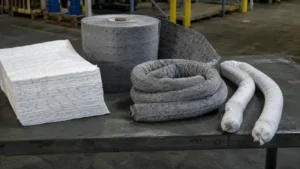
Liquid containment is any barrier, structure, or method that keeps a liquid from spreading beyond a defined area — away from floor drains, soil, groundwater, and waterways. The term covers far more than oil spill response: it spans the concrete curbing under a chemical storage rack, the drum pallet under a row of totes, the boom deployed around a leaking tanker, and the berm built into a loading dock. Because “liquid containment” is used loosely across industries, buyers often conflate very different products and standards, which leads to under-sized or mismatched equipment.
This guide sets out the full landscape: the two fundamental categories of containment, how methods differ across oil, water-based, and corrosive liquids, how to size containment to the volume it protects, the regulatory backdrop in brief, and how containment and absorbent materials work together rather than as substitutes. It also links out to AbsorbentX’s dedicated guides on oil spill response and static storage containment for readers who need depth in either direction.
The Two Fundamental Categories of Liquid Containment
Every containment method on the market falls into one of two categories: passive containment, built and in place before any liquid is released, or active containment, deployed in response to a liquid that is already moving. Confusing the two is the most common planning mistake facilities make — a site can have excellent secondary containment pallets under its drums and still have no plan for a hose rupture in the yard, because that scenario calls for active tools instead.
Passive containment is essentially permanent infrastructure: it does not require a person to notice a spill and react in time, because it is already positioned to catch the liquid. Active containment depends on trained personnel recognizing a release, reaching stored equipment, and deploying it correctly within minutes, which makes training and kit placement as important as the hardware itself.
| Factor | Passive (Preventive) Containment | Active (Reactive) Containment |
|---|---|---|
| When it’s built | Before any spill occurs, as permanent infrastructure | During or immediately after a spill, as an emergency response |
| Typical hardware | Containment pallets, bunds, dikes, curbing, trays | Absorbent socks, containment booms, spill berms, drain covers |
| Deployment time | Zero — already in place and load-tested | Seconds to minutes, depending on training and kit access |
| Governing standard | SPCC 40 CFR 112.8(c)(2), 110% rule, local fire code | Facility spill response plan, HazCom, incident command procedure |
| Best suited for | Drum and tote storage, fixed tanks, loading docks | Forklift leaks, hose ruptures, transport spills, unplanned releases |
| Failure mode if skipped | Slow leaks reach soil or drains unnoticed | A moving spill outruns cleanup before it’s stopped |
Passive (Preventive) Containment in Detail
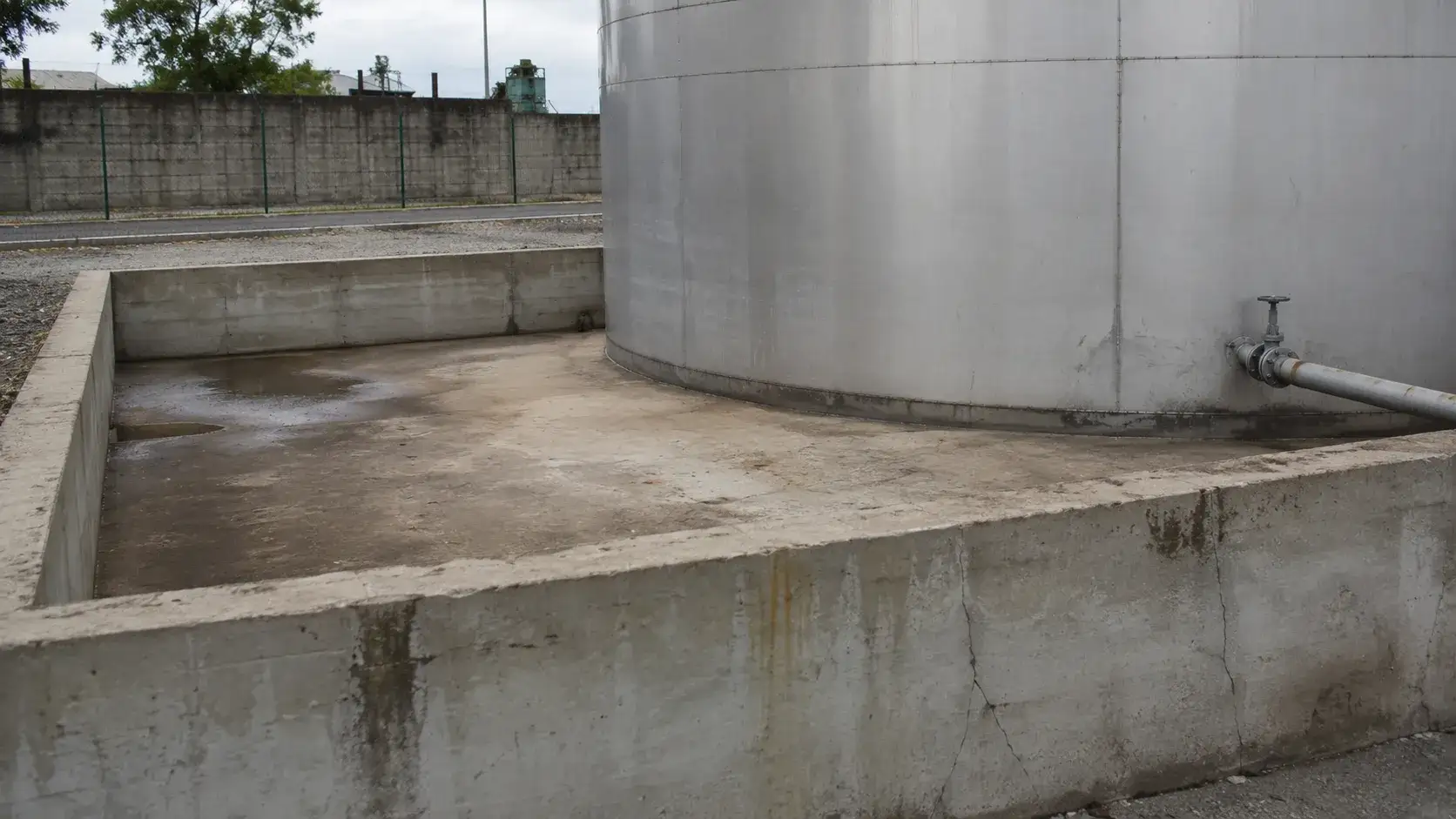
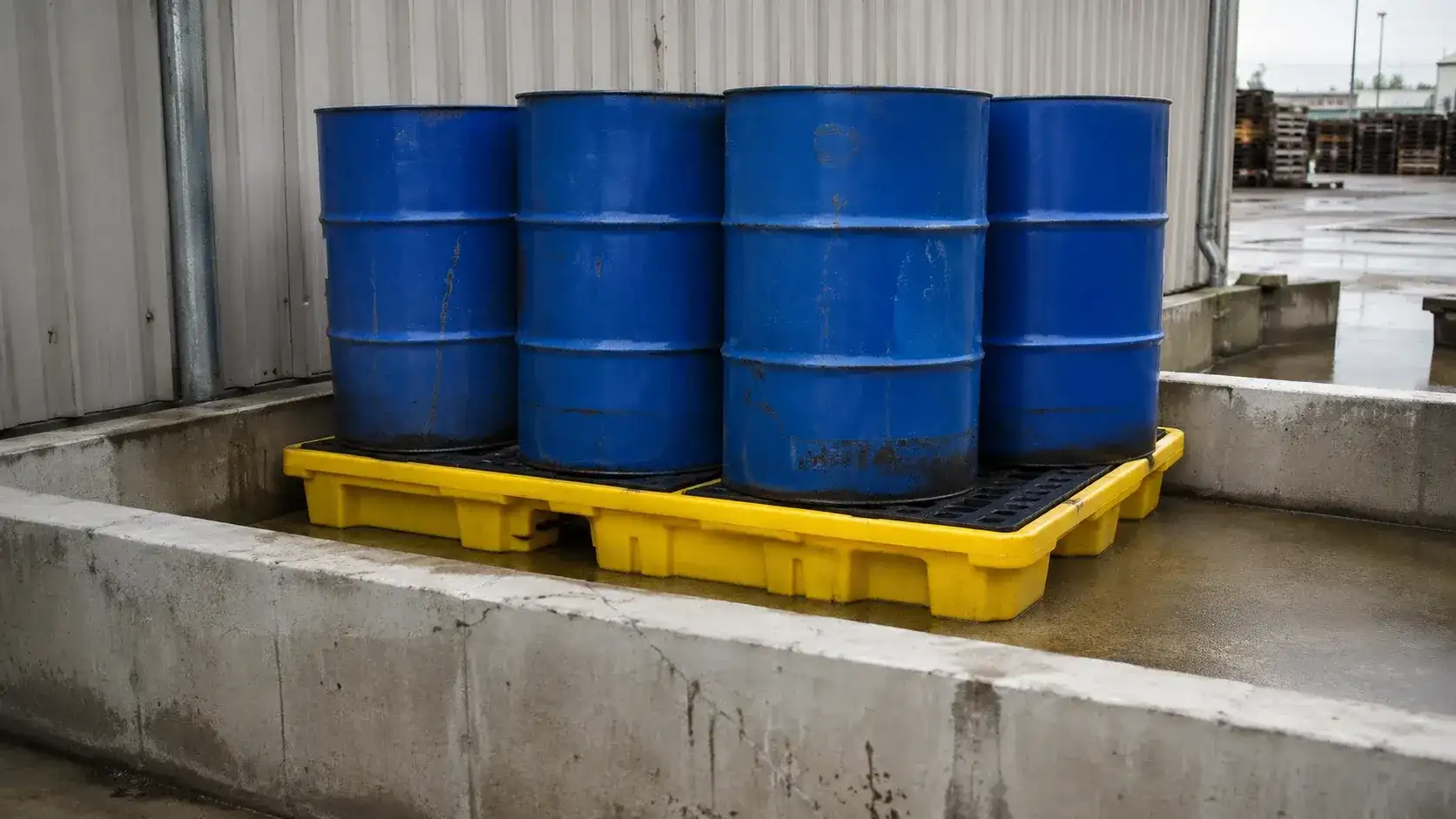
Passive containment is engineered around fixed storage points: drums, totes, IBCs, and stationary tanks. Spill containment pallets and trays sit directly under individual containers and catch drips or ruptures without any human intervention. Bunds, dikes, and curbing extend the same principle to an entire storage room or tank farm, forming a continuous impermeable perimeter around multiple containers.
Because passive containment is inspected, tested, and sized once and then left in place for years, it is the backbone of most SPCC compliance programs. Facilities storing bulk oil or hazardous liquids in fixed locations should treat passive containment as the default, reserving active tools for the scenarios passive infrastructure cannot reach — a delivery truck in the yard, a forklift with a slow hydraulic leak, or a transfer hose between tanks.
For a full breakdown of passive containment hardware, sizing, and layout — pallets, bunds, dikes, and trays specifically — see AbsorbentX’s Secondary Containment Guide.
Active (Reactive) Containment in Detail
Active containment exists for the moments passive infrastructure cannot cover: a spill already in motion across a floor, a parking lot, or open water. Containment booms float on or across liquid surfaces to corral spreading fuel or oil before it reaches a storm drain or shoreline. Containment berms — flexible, quick-deploy barriers — can be unrolled around a leaking drum or under a vehicle in under a minute to create an instant catch basin.
Absorbent socks serve a dual role in active response: placed around the perimeter of a spill, they both block liquid movement and begin absorbing it, making them one of the few tools that combine containment and cleanup in a single product. Drain covers and drain seals are a narrower but critical active tool — a rubber or foam cover dropped over a floor drain in seconds can be the difference between a contained spill and a reportable discharge to a municipal sewer.
Active containment only works if the right materials are within reach of the people who will use them. A boom stored in a locked warehouse two buildings away does nothing for a spill happening now, which is why kit placement and staff drills matter as much as the equipment specification itself.
For active response specific to petroleum products — boom deployment, sock placement, and berm construction during an oil spill in progress — see AbsorbentX’s Oil Containment Guide.
Containment Methods Across Different Liquid Types
Not every containment material is compatible with every liquid. Polypropylene, the workhorse material behind most oil booms and berms, is oleophilic and holds up well against petroleum products, but it is not the right choice for handling aggressive acids or strong caustics, which can degrade certain plastics and coatings over time. Choosing containment material by liquid chemistry, not just by shape or price, is the step most buyer’s guides skip.
Water-based liquids — coolant, soapy wash water, non-hazardous process water — are generally the least aggressive on containment materials, so standard polyethylene trays and polypropylene booms perform well. Corrosive chemicals demand containment rated for the specific acid or base involved; a facility handling sulfuric acid, for example, needs polyethylene or PVC-lined containment rather than the coated steel that would be perfectly adequate for diesel fuel. Flammable solvents add a third variable — bonding and grounding requirements to prevent static discharge — on top of material compatibility.
| Liquid Type | Compatible Containment Materials | Materials to Avoid | Absorbent Pairing |
|---|---|---|---|
| Petroleum oil / fuel | Polypropylene berms, polyethylene pallets, coated steel dikes | Untreated cellulose berms under sustained load | Oil-only pads |
| Water-based coolant / wash water | Polyethylene trays, polypropylene booms | Bare uncoated carbon steel (corrodes over time) | Universal / general-purpose pads |
| Corrosive acids / caustics | Polyethylene or PVC-lined containment, chemical-resistant coatings | Standard polypropylene film in aggressive concentrations | Chemical / acid-base rated pads |
| Solvents / flammable liquids | Grounded and bonded steel containment, spark-resistant flooring | Non-conductive plastic without bonding in classified zones | Chemical or solvent-rated universal pads |
For chemical-specific absorbent selection once containment is in place, see AbsorbentX’s Chemical Absorbents Guide for material ratings by chemical family.
Sizing Containment to Liquid Volume
Undersized containment is functionally no containment at all — a bund that overflows still lets liquid reach the floor. The industry benchmark, drawn from SPCC practice, is the 110% rule: secondary containment should hold at least 110% of the volume of the largest single container within it, with the extra 10% covering rainfall, snowmelt, and operational margin rather than being an arbitrary buffer.
Applied to a real example, a facility storing four 55-gallon drums in one containment area sizes the containment to at least 110% of the largest drum — 60.5 gallons — not 110% of all four drums combined, because only the largest single container’s full failure needs to be absorbed by the surrounding structure. Where multiple containers share one containment area, accepted practice sizes for whichever is greater: 110% of the largest container, or 10% of the combined volume of everything stored in that area.
Active containment tools follow the same logic in miniature: a boom or berm needs enough linear length and holding capacity to match the expected release rate and duration, not just the container size. A single containment sock rated for a few gallons is inadequate around a 275-gallon tote; matching capacity to the realistic worst-case volume, not the average one, is what keeps containment from failing under pressure.
Regulatory Context: SPCC, EPA, and What Applies to You
The Spill Prevention, Control, and Countermeasure (SPCC) rule, administered by the EPA under 40 CFR Part 112, requires facilities that store above certain thresholds of oil to maintain secondary containment and a written SPCC plan. The rule does not mandate a specific brand or design of containment, only that the containment be adequate to hold the largest foreseeable release plus precipitation.
Facilities handling non-oil chemicals may fall under separate state or local stormwater and hazardous-materials regulations rather than SPCC directly, so the specific threshold and paperwork requirement varies by liquid type, storage volume, and jurisdiction. This section is informational only, not legal guidance, and any facility uncertain about its regulatory obligations should confirm requirements directly with the EPA or a qualified environmental compliance consultant.
The EPA’s own summary of SPCC requirements is available at the EPA Spill Prevention, Control, and Countermeasure (SPCC) Rule overview.
How Containment and Absorption Work Together
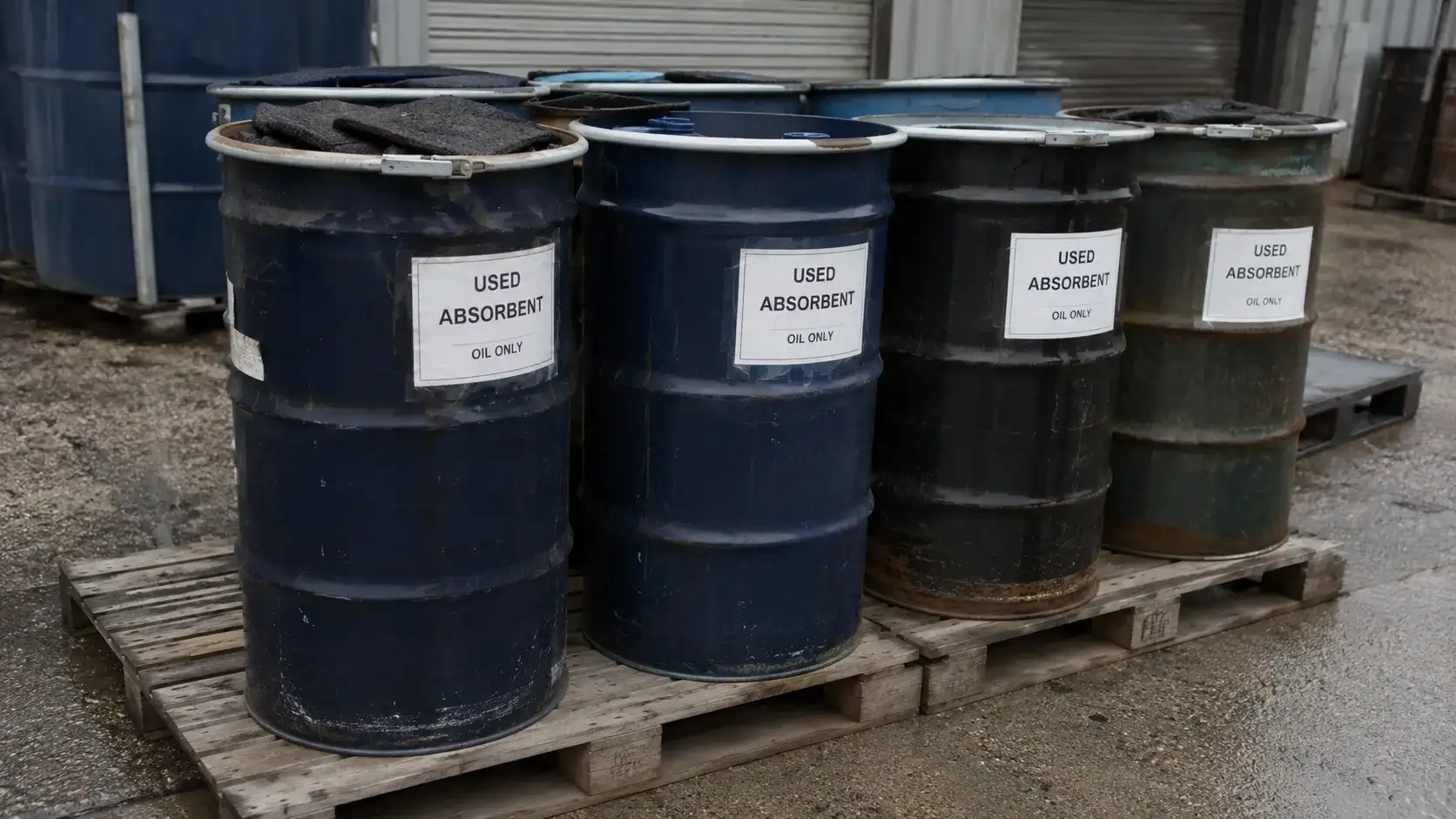
Containment and absorption solve two different problems, and treating one as a replacement for the other is a common and costly mistake. Containment stops a liquid from spreading — it draws a boundary. Absorption removes the liquid from within that boundary, converting a pooled hazard into solid waste that can be bagged and disposed of. A berm with no absorbent inside it still leaves a standing pool of oil or chemical that is a slip hazard and an ongoing risk until someone physically removes it.
In practice, the two are almost always deployed together: a boom or sock forms the perimeter, and absorbent pads, rolls, or loose granular absorbent handle everything inside it. AbsorbentX’s oil absorbent pads and oil-only absorbent pads are built for exactly this second step, wicking up petroleum liquids while repelling water so crews aren’t fighting rainwater along with the spill itself.
For a walk-through of the full cleanup sequence after containment is in place, see AbsorbentX’s Liquid Spill Cleanup Guide and Water Spill Cleanup Guide for liquid-specific cleanup steps once the spread has been stopped.
Protecting nearby drains is a related but distinct control worth planning separately — see AbsorbentX’s Drain Protection Guide for drain covers, seals, and inserts that stop liquid from entering the storm or sanitary system in the first place.
Choosing the Right Containment Method for Your Facility
Start by mapping every point where a liquid is stored, transferred, or moved through the facility, and classify each as a passive risk — a fixed container that could leak slowly — or an active risk — a transfer, delivery, or mobile equipment point where a spill would move quickly. Passive risks get permanent containment sized with the 110% rule; active risks get positioned kits with booms, socks, and absorbents sized to the realistic worst-case volume and distance to the nearest drain.
Match containment material to the liquid family stored at each point rather than defaulting to whatever is cheapest or already on hand — polypropylene for oils, polyethylene or PVC-lined systems for corrosives, bonded steel for flammable solvents. Then confirm SPCC or local regulatory applicability for any point storing oil or hazardous chemicals above reporting thresholds, and document the containment specification as part of the facility’s written spill plan.
Finally, revisit sizing whenever storage changes. A new tank, an additional drum row, or a change in liquid type can silently take a facility from adequately contained to undersized without any visible warning until the day a container actually fails.
Frequently Asked Questions
What is the difference between liquid containment and spill containment?
Liquid containment is the broader term covering any barrier or method that keeps a liquid within a defined area, whether that liquid is oil, coolant, water, or a chemical, and whether the containment is permanent storage infrastructure or an emergency response tool. Spill containment usually refers specifically to the active, reactive side of that broader category — the booms, berms, and socks deployed once a spill is already happening.
Do I need secondary containment for every drum of oil?
Under SPCC rules, facilities storing oil above certain aggregate thresholds need secondary containment and a written SPCC plan, but the exact threshold depends on total storage capacity and container size. As a practical baseline, most facilities storing multiple drums or any bulk tank benefit from containment pallets or bunds regardless of whether they cross a regulatory threshold, simply because a single drum failure without containment reaches the floor and often a drain.
What is the 110% rule in simple terms?
It means secondary containment should be built to hold at least 110% of the volume of the largest single container it protects — 100% for the container’s full contents plus a 10% margin for rain or operational headroom. Where several containers share one containment area, use whichever is larger: 110% of the biggest single container, or 10% of everything stored in that area combined.
Can I use the same containment material for oil and for chemicals?
Not always. Polypropylene and standard polyethylene handle petroleum products and most water-based liquids well, but aggressive acids and caustics can degrade those same materials over time, so chemical storage often needs PVC-lined or chemical-resistant containment instead. Always check a containment product’s chemical compatibility rating against the specific liquid stored, not just its general category.
Does containment replace the need for absorbents?
No. Containment stops a liquid from spreading, but it does not remove the liquid — a contained pool is still a hazard until it is absorbed and disposed of. Absorbent pads, rolls, and granular absorbent are the cleanup step that follows containment, and most well-run spill response plans budget for both rather than treating either as optional.