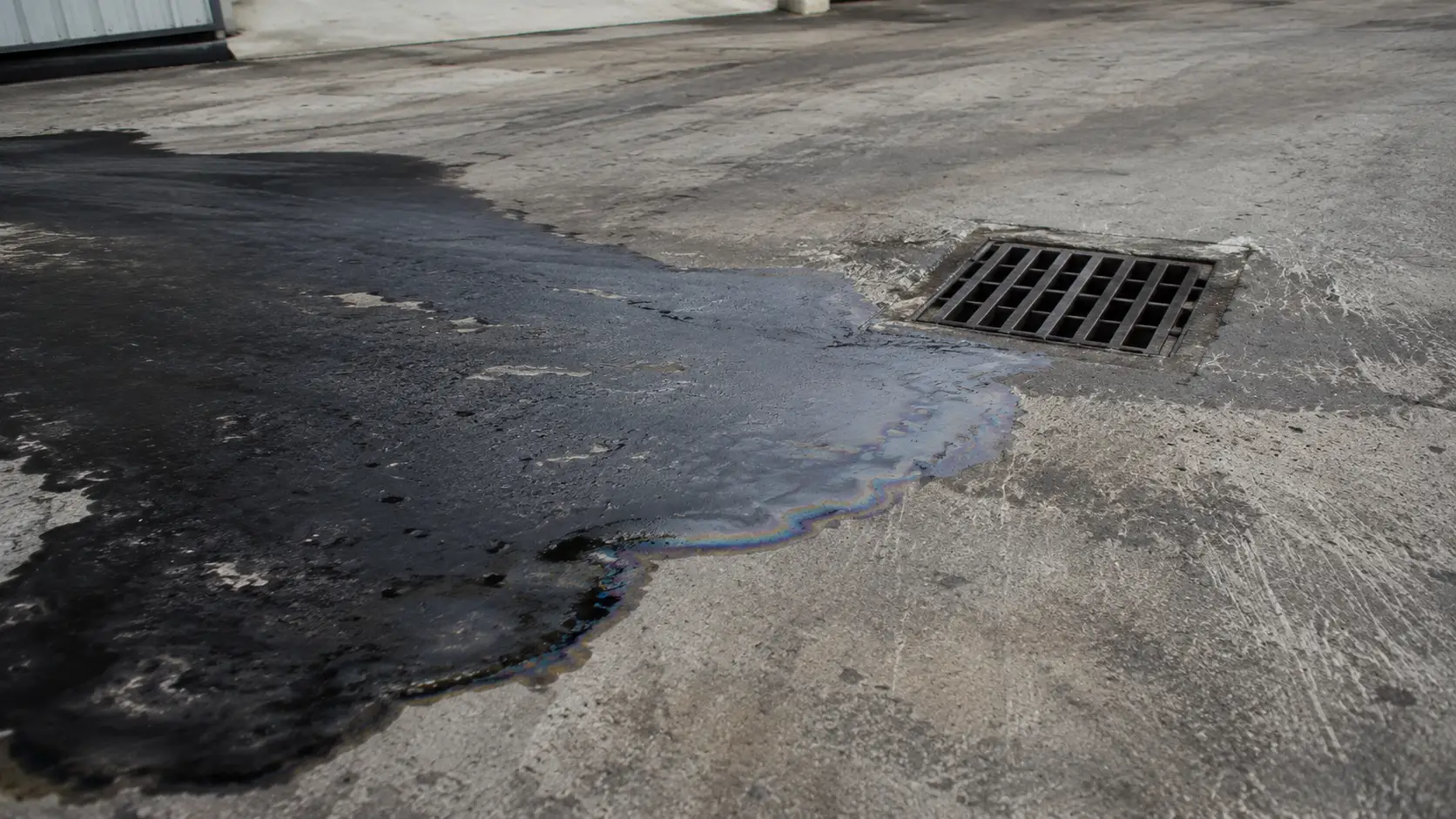
Every spill has a point of no return, and on almost every industrial site that point is a drain. Up to the moment oil reaches a drain grate you have a floor to clean; after it, you have a pollution incident with a regulator, a specialist contractor, and a reporting obligation attached. The cost difference between those two outcomes runs to several orders of magnitude.
Drain protection is the equipment and the habits that keep spills on the surface where they can be dealt with. It covers seals laid over grates, socks and berms that divert liquid away from inlets, and permanent inserts that sit in the drain doing the job passively — plus the planning that puts the right one within reach of the drains that matter.
This guide covers why drains are the critical point in a spill, how to tell a storm drain from a foul sewer and why it matters enormously, the main protection types and where each suits, how and when to deploy them, and what to do if a spill has already gone in.
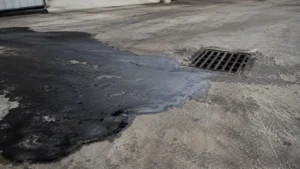
Why Drains Are the Critical Point in Any Spill
A spill on a floor is bounded. It spreads at a predictable rate, stays visible, and can be absorbed with materials you already have. Once it enters a drain, none of that holds — the liquid is out of sight, moving faster than you can follow, and heading somewhere you cannot easily reach or clean.
The escalation is legal as well as practical. Oil or chemical reaching a watercourse through a surface-water drain is a reportable discharge in most jurisdictions, bringing agency notification, potential enforcement, remediation costs, and the possibility of prosecution. The same volume of oil absorbed on a floor generates a bag of waste and nothing else.
This is why drain protection sits ahead of absorption in every competent spill procedure. The instinct under pressure is to start soaking up the liquid you can see, but the correct first move is almost always to cut off the route to the drain, because that is the only part of the situation that gets irreversibly worse with time.
Storm Drains and Foul Sewers Are Not the Same Thing
Most sites have two separate drainage systems, and confusing them is the single most consequential misunderstanding in spill response. Surface-water or storm drains carry rainwater directly to a river, stream, or soakaway with no treatment whatsoever, so anything entering one goes straight into the environment.
Foul or sanitary sewers carry wastewater to a treatment works. A spill entering one is still a serious matter and usually still reportable to the water authority, since the substance can disrupt biological treatment or pass through untreated, but it is not the immediate environmental release that a storm drain represents.
Knowing which is which on your own site is basic preparedness, and it is surprisingly often unknown. Storm drains are typically in yards, car parks, and external areas, and are frequently marked with a fish symbol or blue paint, while foul drains sit near buildings and welfare facilities. If your site drawings do not make it clear, a drainage survey is worth the modest cost.
Where a site’s stormwater discharge is permitted, the terms usually place explicit duties on spill prevention — the EPA’s guidance on stormwater discharges from industrial activities explains which activity categories require NPDES permit coverage and why runoff contact with those operations is regulated.
Types of Drain Protection Equipment
Drain seals and covers are the primary emergency tool — flexible mats of polyurethane or reinforced vinyl laid flat over a grate, where the weight of the mat and surface contact form a seal that liquid cannot pass. They deploy in seconds, need no fixings, and are the right choice when a spill is already moving.
Absorbent socks and non-absorbent barrier tubes work differently, ringing the drain to divert liquid rather than sealing the opening. Socks have the advantage of absorbing what they stop, which suits slow leaks and small volumes, though a sock will eventually saturate and pass liquid through if the flow continues.
Drain berms and inlet guards are heavier-duty perimeter options for large outdoor inlets, while passive drain inserts sit permanently inside the drain to catch silt and hydrocarbons continuously. The passive options protect against the spills nobody witnessed, which on a large site is a meaningful share of them.
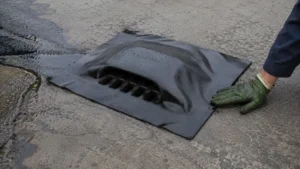
Choosing Between Seals, Socks, and Berms
Match the tool to the failure you are guarding against. For a sudden release near a known drain, a seal is the correct answer because it stops everything immediately and does not have a capacity limit. For a slow drip or a seeping leak, a sock is often better because it absorbs the liquid rather than simply holding it against the grate.
Surface condition decides more than most people expect. Seals need a reasonably flat, clean surface to form contact, so a cracked, heavily textured, or debris-covered area around a grate will let liquid track underneath. Where the surface is poor, a berm or a ring of socks set back from the drain works better than a seal that cannot seat.
Consider rainfall as well. A sealed storm drain in heavy rain causes ponding and can flood the area you are working in, which is manageable for a short response but not as a semi-permanent measure. This is where passive inserts earn their place, since they filter continuously without blocking flow.
Absorbent socks used for drain protection should match the liquid — hydrophobic oil-only grades are the right choice outdoors and in wet conditions, as explained in our guide on when to use oil-only absorbents.
How to Deploy Drain Protection During a Spill
Move to the drain before you move to the spill. Identify which drain the liquid is heading for, taking account of the fall of the ground rather than the shortest straight line, and get protection down while the spill is still some distance away. Seconds spent here are worth minutes spent absorbing later.
Clear the surface before laying a seal. Leaves, grit, and standing debris around a grate will break the contact and let liquid pass underneath, and a quick sweep of the immediate area is usually enough. Lay the seal flat and press it down from the centre outward to push air and water out from beneath it.
Protect the drains you are not watching too. Spills follow gradients and frequently reach a second inlet nobody was thinking about, so on an open yard it is worth covering the downhill drains as well as the obvious one. Only then move on to containing and absorbing the spill itself.
Finally, remember the seal is temporary. Once the spill is absorbed and the surface is clean, lift the seal carefully so any liquid pooled on top does not run into the drain as you remove it — absorb that pool first, then lift.
Planning Drain Protection Before a Spill Happens
Effective drain protection is a placement problem more than a purchasing one. Walk the site and map where the drains are, which system each connects to, and which direction the ground falls, because that map tells you which drains are genuinely at risk and which are irrelevant to your storage and transfer areas.
Station protection at the drains that matter rather than centrally. A seal in a store two hundred metres away is not protection, and the whole value of the equipment lies in it being reachable within the seconds a spreading spill allows. Fuel transfer points, drum stores, loading bays, and vehicle areas are the usual priorities.
Build deployment into routine operations rather than treating it as emergency-only. Covering the nearby drain before a fuel delivery or a decanting operation begins is the cheapest possible insurance, and it means the protection is already in place during exactly the activity most likely to cause a spill.
Drain protection belongs in the site spill kit alongside absorbents — our spill kits guide and oil spill kits guide cover how to size and position kits across a site.
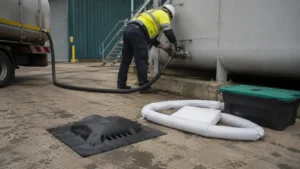
Common Drain Protection Mistakes
The most common is timing. Protection deployed after the spill has already reached the grate achieves nothing, and the decision to grab absorbents first is the reason most drain contamination happens on sites that own perfectly good drain seals.
The second is poor storage. Drain seals stored folded and compressed for years develop creases that prevent them sealing, and polyurethane left in sunlight goes hard and loses its tack. Store them flat, out of UV, and check them periodically rather than assuming an unopened product is a working one.
The third is treating protection as a permanent fix. A sealed drain is a blocked drain, and leaving seals down indefinitely causes ponding, ice in winter, and eventually someone removing them permanently out of frustration. Deploy deliberately, then remove and clean once the job is done.
The fourth is forgetting that socks saturate. A sock ringing a drain against a continuing leak will eventually pass liquid straight through, so it needs monitoring and replacing rather than being placed and forgotten.
What to Do If Oil Reaches the Drain
Stop the flow at the surface first. Seal or block the drain even at this stage, because limiting how much more goes in materially changes the scale of the problem, then contain what remains on the surface as normal.
Report it promptly. In most jurisdictions a discharge to a surface-water drain or watercourse must be notified to the environmental regulator, and reporting early is consistently treated more favourably than a discovery made later by someone else. Establish who makes that call on your site before you need to.
If your site stores oil above the SPCC thresholds, your plan will already specify notification steps — the EPA’s oil spill prevention and preparedness regulations set out the framework, and the plan should name the responsible person rather than leaving it to whoever is on site.
Then consider downstream interception. Where the drain discharges to a visible outfall, ditch, or watercourse, absorbent booms deployed at that point can recover a meaningful proportion of the oil before it disperses, which is where a marine-grade boom in the site kit proves its value.
Choosing Drain Protection Products
For seals, look at material and recovery. A good seal is flexible enough to conform to a slightly uneven surface, chemically resistant to what you store, and able to return to flat after storage rather than holding a fold. Reusability matters for cost, but only if the material genuinely cleans up.
For socks and booms, consistency of fill and a durable outer sleeve matter more than headline absorbency. A sock that splits when dragged into position around a wet drain, or one with fill settled to one end leaving a gap, fails at exactly the moment it is needed.
As a Shenzhen-based manufacturer, AbsorbentX produces socks, booms, and pads to consistent specification, with private-label and OEM options for bulk buyers. Browse the absorbent socks range for drain ringing and perimeter work, the absorbent booms range for outfall and open-water interception, and the absorbent pads range for the surface cleanup that follows.
The Bottom Line
Drain protection is the highest-value few seconds in any spill response, because the drain is the only part of the situation that becomes irreversible. Protect the route first, absorb second, and accept that the instinct to do the opposite is what turns manageable spills into reportable incidents.
Know which of your drains go to a watercourse and which go to treatment, station protection at the ones that matter rather than in a central store, and deploy it routinely before transfer operations rather than only in emergencies.
Check the equipment periodically, store seals flat and out of sunlight, and remember that a saturated sock stops working. For the wider response picture, our oil spill guide covers containment and cleanup in full, and how to control oil leaks in industrial facilities deals with stopping the leaks that threaten drains in the first place.
Frequently Asked Questions
What is drain protection in spill response?
Equipment and procedures that stop spilled liquid entering a drainage system — flexible seals laid over grates, absorbent socks or berms that divert liquid away from inlets, and passive inserts that sit inside the drain permanently. It is the first action in a spill response, taken before absorption begins.
Why is it so important to stop a spill reaching a drain?
Because it is the point where a floor cleanup becomes a pollution incident. Surface-water drains discharge directly to rivers and streams with no treatment, so a spill entering one is usually a reportable discharge with agency involvement, remediation costs, and possible enforcement attached.
What is the difference between a storm drain and a foul sewer?
Storm or surface-water drains carry rainwater untreated straight to a watercourse or soakaway, so anything entering goes directly into the environment. Foul or sanitary sewers carry wastewater to a treatment works. Both matter, but a spill into a storm drain is the more immediate environmental release.
Should I use a drain seal or absorbent socks?
Use a seal for a sudden release near a drain, since it stops everything at once and has no capacity limit. Use socks for slow drips and seeping leaks, since they absorb what they stop. Where the surface around the grate is cracked or debris-covered and a seal cannot seat properly, a berm or ring of socks works better.
Can drain seals be left in place permanently?
No. A sealed drain is a blocked drain, causing ponding in rain and ice in winter. Deploy seals for the duration of a spill or a transfer operation, then remove and clean them. For continuous protection, use a passive drain insert that filters hydrocarbons and silt without blocking flow.
What should I do if oil has already entered the drain?
Seal the drain anyway to limit how much more enters, contain the remaining surface spill, and report the discharge to the environmental regulator promptly — early reporting is consistently viewed more favourably. Where the drain discharges to a visible outfall or ditch, deploy absorbent booms there to recover what you can.