A fuel spill turns an ordinary fueling stop, tank change, or transfer job into a hazard in seconds. Gasoline, diesel, and jet fuel behave differently once they hit pavement, soil, or water, and treating every fuel spill the same way is how facilities end up with a fire, a fine, or both. This guide walks through what actually changes between fuel types, the immediate safety steps that matter most in the first two minutes, and the containment, cleanup, and disposal practices that hold up whether you’re managing a five-gallon splash at a loading dock or a 200-gallon release from a damaged tank.
The goal here is practical: what to grab, what to avoid, and how to stock a site so the next spill is a ten-minute cleanup instead of a shutdown. Where compliance thresholds apply, they’re noted, but this is operational guidance, not legal advice — always confirm reporting obligations with your local fire marshal or state environmental agency.
Why Fuel Spills Aren’t All the Same
Gasoline, diesel, and jet fuel are all petroleum-based hydrocarbons, but they don’t act alike once spilled. Gasoline has a flash point around -45°F, meaning it can ignite at almost any ambient temperature, and it evaporates fast enough to build a flammable vapor cloud within seconds of a spill. That combination — high volatility plus a low flash point — is why a gasoline spill next to a running engine or a cigarette is treated as an immediate fire emergency, not a housekeeping issue.
Diesel fuel has a flash point closer to 125-140°F, so it’s far less prone to flash ignition at normal outdoor temperatures. It’s still combustible and still a serious environmental hazard — diesel is denser, oilier, and tends to cling to surfaces and soil longer than gasoline, which actually makes cleanup and groundwater protection more of a concern than fire risk. Jet fuel, typically Jet A or JP-8, sits closer to kerosene, with a flash point around 100-115°F and volatility between gasoline and diesel; it’s common at airports, fixed-base operators, and military or ag-aviation sites and brings its own vapor and static-discharge precautions during fueling operations.
Knowing which fuel you’re dealing with changes your first move. A gasoline spill demands immediate ignition control above everything else. A diesel spill shifts priority toward stopping migration into soil or a storm drain. Jet fuel splits the difference — treat it with gasoline-level respect for vapor and ignition risk, but expect diesel-like persistence in cleanup.
Immediate Safety Steps
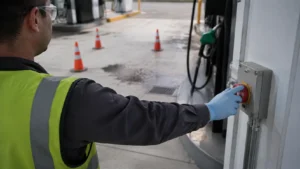
The first 60 seconds after a fuel spill determine whether it stays a cleanup job or becomes an incident. Kill every ignition source in range: shut down engines, turn off pumps, extinguish smoking materials, and don’t operate anything that could spark, including cell phones near vapor. If the spill is large enough to produce a visible vapor haze or a strong fuel smell, move personnel upwind and establish a perimeter — many facility emergency plans call for roughly 50 to 150 feet of clearance depending on spill size and wind conditions.
Ventilate before you approach an enclosed space. Fuel vapors are heavier than air and pool in pits, trenches, and low-lying rooms, so a spill inside a maintenance bay or tank room needs forced ventilation running before anyone re-enters to start cleanup. Stop the source if it’s safe to do so — righting a tipped container, closing a valve, or shutting off a pump — but never reach across an active spill path or a vapor cloud to do it.
PPE isn’t optional for anyone handling fuel-contaminated material. Nitrile or fuel-resistant gloves, safety glasses or a face shield, and a fire-resistant outer layer are the minimum for hands-on cleanup; add a respirator rated for organic vapors if the spill is large or ventilation is limited. For a deeper breakdown of PPE and kit contents by hazard class, see AbsorbentX’s hazmat spill kit guide, and OSHA’s flammable liquids standard at 29 CFR 1910.106 for the regulatory baseline on storage and handling.
Containment and Cleanup Methods
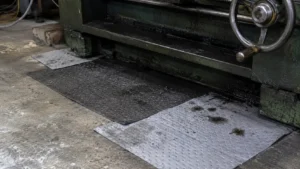
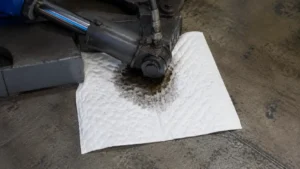
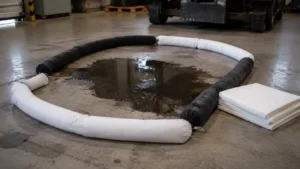
Once the area is safe, containment is about stopping spread before it reaches a drain, a crack in the pavement, or bare soil. This is where hydrocarbon absorbent material earns its keep — fuel-rated pads, socks, and booms are engineered from meltblown polypropylene that repels water and grabs only oil-based liquids, which matters because a spill near a wet dock or in rain isn’t going to wait for dry conditions. Ring the perimeter with absorbent socks first to stop lateral movement, then lay pads across the pooled fuel to pull it up.
A common and costly mistake is grabbing a universal absorbent — the gray pads rated for oil, water, and everything else — for a fuel spill. Universal pads soak up water right alongside fuel, which cuts their real absorbent capacity dramatically on a wet surface and wastes material fast on anything but a small, dry spill. For fuel specifically, oil-only absorbents outperform because their polypropylene fibers are hydrophobic: they float on water and absorb only the hydrocarbon layer, which is exactly the profile you want on a wet forecourt or near a puddle. AbsorbentX stocks oil absorbent pads and dedicated oil-only absorbent pads built for exactly this kind of hydrocarbon cleanup, sized for both single-incident kits and pallet-volume facility stock.
Work from the outside in: contain the edge of the spill first, then absorb the center. For a fuel spill kit at a fueling point or loading dock, a practical baseline is 10-15 heavyweight pads, two 3-inch by 4-foot socks, PPE, a pair of non-sparking scoops, and heavy-duty disposal bags — enough to handle a spill up to roughly 15-20 gallons without running out of media mid-cleanup. Facilities running multiple fueling points should stock a kit at each one rather than relying on a single central kit that’s a two-minute walk away when seconds matter.
Surface-Specific Cleanup
Concrete and Asphalt
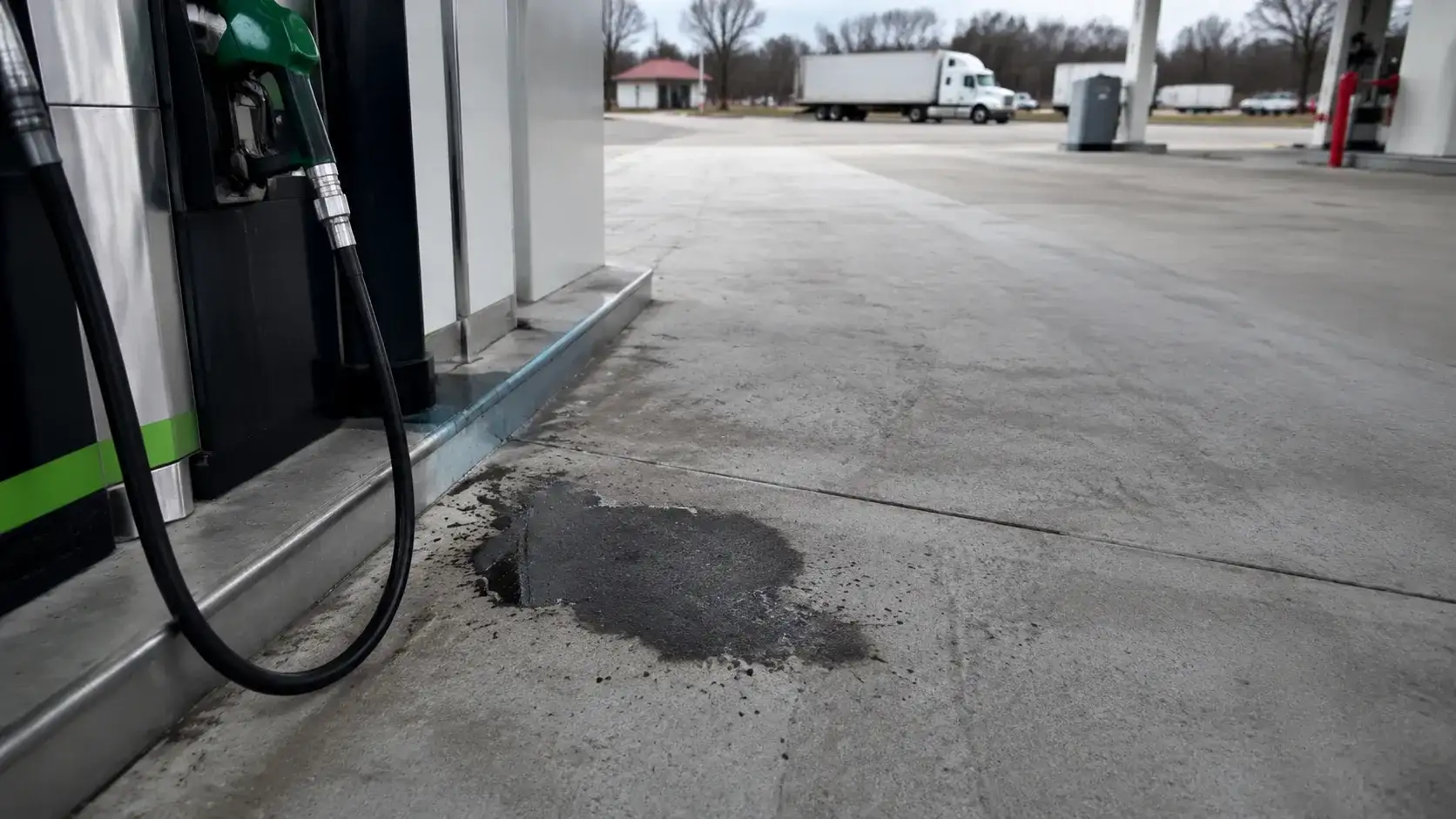
Hard surfaces are the easiest fuel spills to manage because the fuel stays on top instead of migrating. Absorb the bulk of the liquid with pads or granular sorbent first, then treat any remaining stain with a degreaser and stiff brush — for stubborn diesel staining on concrete, AbsorbentX’s guide on how to clean oil off a concrete floor covers scrubbing technique and follow-up sealing in more depth.
Avoid hosing a fuel spill toward a storm drain to “clean it up” — that’s one of the most common ways a contained spill becomes a reportable environmental release, since most storm drains discharge directly to surface water without treatment. If a drain protection cover or drain sock isn’t already in place near the spill, block the drain opening with absorbent socks before any wash-down begins.
Bare Soil
Fuel on soil is a different problem because it moves downward, not just outward. Remove visible pooled fuel with absorbent pads immediately, then excavate the visibly contaminated soil — fuel typically penetrates 3-6 inches into loose soil within the first hour, faster in sandy soil, slower in clay. Bag and label excavated soil as contaminated for proper disposal rather than spreading it or leaving it on-site.
For larger soil releases, especially anything approaching or exceeding a reportable quantity, bring in an environmental contractor to confirm the contamination hasn’t reached groundwater. Diesel and jet fuel are more likely to require this follow-up than gasoline, since they persist longer in soil rather than evaporating off.
Open Water
A fuel spill on water needs booms, not pads, as the first response — fuel floats and spreads across the surface fast, so the priority is corralling it before it reaches a wider waterway. Deploy absorbent booms in a containment ring or, in moving water, at an angle downstream to funnel the sheen toward a collection point. Any fuel spill that reaches a lake, river, pond, or wetland should be reported immediately; this is one of the clearest reporting triggers under federal spill rules, and the U.S. EPA’s oil spill program at epa.gov/oil-spills-prevention-and-preparedness-regulations lays out the reporting and prevention framework that applies.
Disposal and Reporting Considerations
Fuel-saturated absorbents are typically classified as hazardous or contaminated waste, not regular trash, because they retain flammable and toxic residue. Bag used pads, socks, and any contaminated soil in heavy-duty, puncture-resistant bags, label them clearly, and store them away from ignition sources until pickup. Most facilities route this material through a licensed hazardous waste hauler rather than a standard dumpster — check with your waste vendor before your first spill, not during it.
Reporting thresholds vary by state and by where the fuel ends up, but a widely used federal benchmark is that spills of 25 gallons or more, or any spill that causes a sheen on surface water, should be reported to the National Response Center or your state environmental agency within 24 hours. Smaller spills fully contained on your own property typically don’t trigger external reporting, but internal documentation still matters — date, time, fuel type, estimated volume, and cleanup method — both for insurance purposes and to spot patterns if the same fueling point keeps spilling.
This is general operational guidance, not legal advice. Requirements differ by jurisdiction and by whether your site falls under EPA Spill Prevention, Control, and Countermeasure (SPCC) rules, so confirm specifics with your fire marshal, state environmental office, or compliance counsel before finalizing a site spill plan.
Preventing Fuel Spills Before They Happen
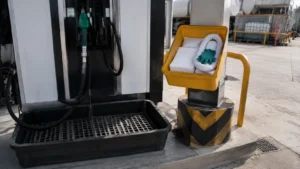
The cheapest fuel spill is the one that never happens, and most prevention comes down to physical barriers between fuel and bare ground. Secondary containment — a bermed pad, containment tray, or spill pallet under any stationary tank, drum, or IBC — catches leaks and overfills before they spread. Drip trays under fueling nozzles and dispensing points catch the small, routine drips that add up over a year of daily fueling, and they’re inexpensive relative to even one drain-contamination incident.
Stocking spill kits at every fueling and transfer point, not just a central supply room, is the single biggest factor in how fast a spill gets contained. A kit that’s 40 feet away and unlocked gets used in under a minute; one that’s a building away or behind a locked cabinet often doesn’t get used until the spill has already spread. Pair kit placement with a quick monthly check — pads restocked, socks not dried out, PPE present — so the kit is ready the one day it’s actually needed. For broader spill-readiness planning across a facility, AbsorbentX’s spill control guide and oil spill guide cover kit placement and facility-wide planning in more detail.
For facilities managing multiple sites — fleet yards, distribution centers, airports, or multi-pump fueling stations — buying absorbents on a bulk or OEM basis keeps per-unit cost down and ensures every location is stocked to the same standard. AbsorbentX supplies oil-only and hydrocarbon-rated absorbents in bulk and private-label formats for exactly this kind of multi-site fuel-handling program.
Fuel Type Comparison at a Glance
| Fuel Type | Flash Point (approx.) | Primary Hazard | Cleanup Priority |
| Gasoline | -45°F | Flash fire / vapor ignition | Ignition control first |
| Jet Fuel (Jet A / JP-8) | 100-115°F | Vapor + static discharge | Vapor control, then contain |
| Diesel | 125-140°F | Soil/groundwater persistence | Contain migration first |
Frequently Asked Questions
What should you do first when a fuel spill happens?
Eliminate ignition sources immediately — shut off engines, pumps, and anything that could spark — then ventilate the area and keep people clear of vapor before any cleanup begins. Containment and absorbent deployment come after the area is confirmed safe.
Can you use regular oil absorbent pads on a fuel spill?
Yes, as long as they’re oil-only or hydrocarbon-rated pads, not universal absorbents. Universal pads also soak up water, which wastes capacity fast on a wet surface, while oil-only pads are hydrophobic and absorb only the fuel.
Is a gasoline spill more dangerous than a diesel spill?
In terms of fire risk, yes — gasoline’s flash point is far lower and it evaporates faster, creating flammable vapor almost immediately. Diesel is less prone to flash ignition but tends to persist longer in soil and on surfaces, making it more of a long-term environmental concern.
How much fuel spilled requires reporting to authorities?
A common federal benchmark is 25 gallons or more, or any amount that causes a sheen on surface water, reported within 24 hours. Exact thresholds vary by state and site classification, so confirm with your local environmental agency or fire marshal.
What goes in a basic fuel spill kit?
A practical baseline kit includes 10-15 heavyweight oil-only absorbent pads, two or more absorbent socks, PPE (gloves, goggles, a fire-resistant layer), non-sparking scoops, and heavy-duty disposal bags — enough for spills up to roughly 15-20 gallons.
How do you dispose of fuel-contaminated absorbent pads?
Bag them in heavy-duty, labeled bags and route them through a licensed hazardous waste hauler rather than regular trash, since they retain flammable and toxic residue. Store used pads away from ignition sources until pickup.