A hydraulic leak rarely announces itself with a dramatic rupture — it starts as a wet spot under a cylinder rod, a slow drip from a fitting, or a fluid level that reads a quart low on Monday morning. By the time a puddle forms on the shop floor, the system has usually been losing pressure, running hot, and wearing internal components for weeks. For maintenance managers running fleets of forklifts, presses, injection molders, or mobile equipment, catching a hydraulic fluid leak early is the difference between a five-minute fitting tightening and a four-figure cylinder rebuild.
This guide covers what actually causes hydraulic leaks, why the fluid itself is a safety and environmental liability, how to catch leaks before they become failures, what to keep on hand for cleanup, and how to build a drip-containment routine that keeps floors dry and audits clean. It’s written for the people who own the maintenance budget, not for engineers designing the next cylinder.
What Causes Hydraulic Leaks
Most hydraulic leaks trace back to one of five root causes: seal wear, fitting failure, hose degradation, pressure spikes, and fluid contamination. Seals are the most common failure point — dynamic seals on cylinder rods see thousands of reciprocating cycles per shift, and the elastomer simply wears thin over months of service, especially in equipment that runs above 3,000 PSI. Once a seal starts to weep, it does not self-heal; the gap only widens as fluid washes lubricant away from the contact surface.
Fittings and connections are the second-biggest culprit, particularly on equipment that vibrates during operation, like mobile hydraulics on excavators or presses with reciprocating motion. A fitting torqued correctly at installation can back off a quarter-turn after a few thousand hours of vibration, and that’s enough to turn a sealed joint into a slow weep. Hoses fail differently — abrasion against frames or other components wears through the outer cover, UV and heat exposure make the rubber brittle, and sudden pressure spikes from a stuck relief valve can blow a hose end off entirely without warning.
Contamination is the leak cause most facilities underrate. Water or particulate in the fluid accelerates corrosion on cylinder bores and rod surfaces, creating pitting that seals can no longer ride over cleanly. A single ISO cleanliness code jump, say from 18/16/13 to 20/18/15, can cut seal life by half in high-cycle equipment. Keeping fluid filtered and reservoirs sealed against moisture is as much leak prevention as it is lubrication management.
Why Hydraulic Fluid Is a Hazard, Not Just a Mess
Hydraulic fluid under pressure is dangerous in ways a puddle on the floor does not communicate. A pinhole leak at 2,000+ PSI can inject fluid through skin in a fraction of a second, causing an injury that looks minor externally but requires emergency surgical treatment within hours to prevent tissue damage or amputation. Anyone diagnosing a suspected leak should never use a bare hand to check for a spray — cardboard or a similar barrier is the standard field method.
Beyond injection risk, hydraulic oil on a walkway is a slip hazard that OSHA specifically addresses under its general walking-working surfaces standard, and a pooled leak near hot equipment or electrical panels raises fire risk since most hydraulic fluids have flash points in the 300-400°F range.
For a closer look at fluid-injection and pressurized-system hazards, the OSHA hydraulic and pneumatic systems safety guidance is a useful reference for training new maintenance hires.
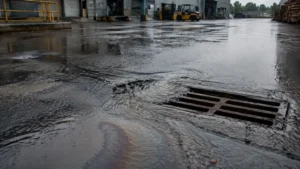
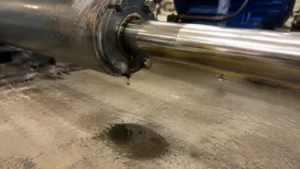
Environmentally, even a modest hydraulic leak adds up. A cylinder weeping one drop every few seconds can lose over a gallon of fluid a month, and if that fluid reaches a floor drain it becomes a reportable discharge in most municipalities. Facilities near storm drains or with floor drains tied to municipal systems should treat every hydraulic leak as a potential compliance issue, not just a housekeeping one — drain protection and absorbent socks around drain covers are a low-cost way to avoid an expensive cleanup order.
Detecting Hydraulic Leaks Early
Visual inspection remains the single most effective detection method, and it costs nothing but a few minutes. A daily walk-around by the equipment operator, checking for wet spots under cylinders, discoloration on hoses, and fluid pooling near fittings, catches the majority of leaks while they are still cosmetic. Pairing that with a weekly technician check that includes fluid-level logging turns leak detection from a guessing game into a trend line — a reservoir that drops half an inch a week is telling you something a single glance never will.
Telltale signs beyond visible fluid include a whining or rumbling pump (often a sign of low fluid or air ingestion from a leak on the suction side), unusually hot fluid temperatures, and cylinders that drift or lose holding force under load. Any of these symptoms combined with a fluid level that keeps dropping points to a leak even if no puddle has formed yet, which is common with leaks inside a machine base or under a skid plate where fluid pools out of sight.
For larger or high-value systems, ultraviolet dye kits and pressure/temperature sensors with remote alerts are worth the investment. A dye additive mixed into the reservoir fluoresces under a UV light, making pinhole leaks visible in seconds even in a dim shop. Sensor-based monitoring on critical presses or injection molding lines can flag a pressure drop before an operator ever notices reduced clamp force, cutting unplanned downtime significantly on equipment that would otherwise run to failure.
Cleanup Response for Hydraulic Fluid Leaks
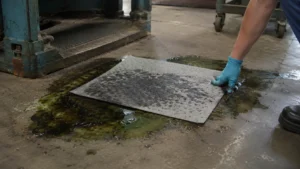
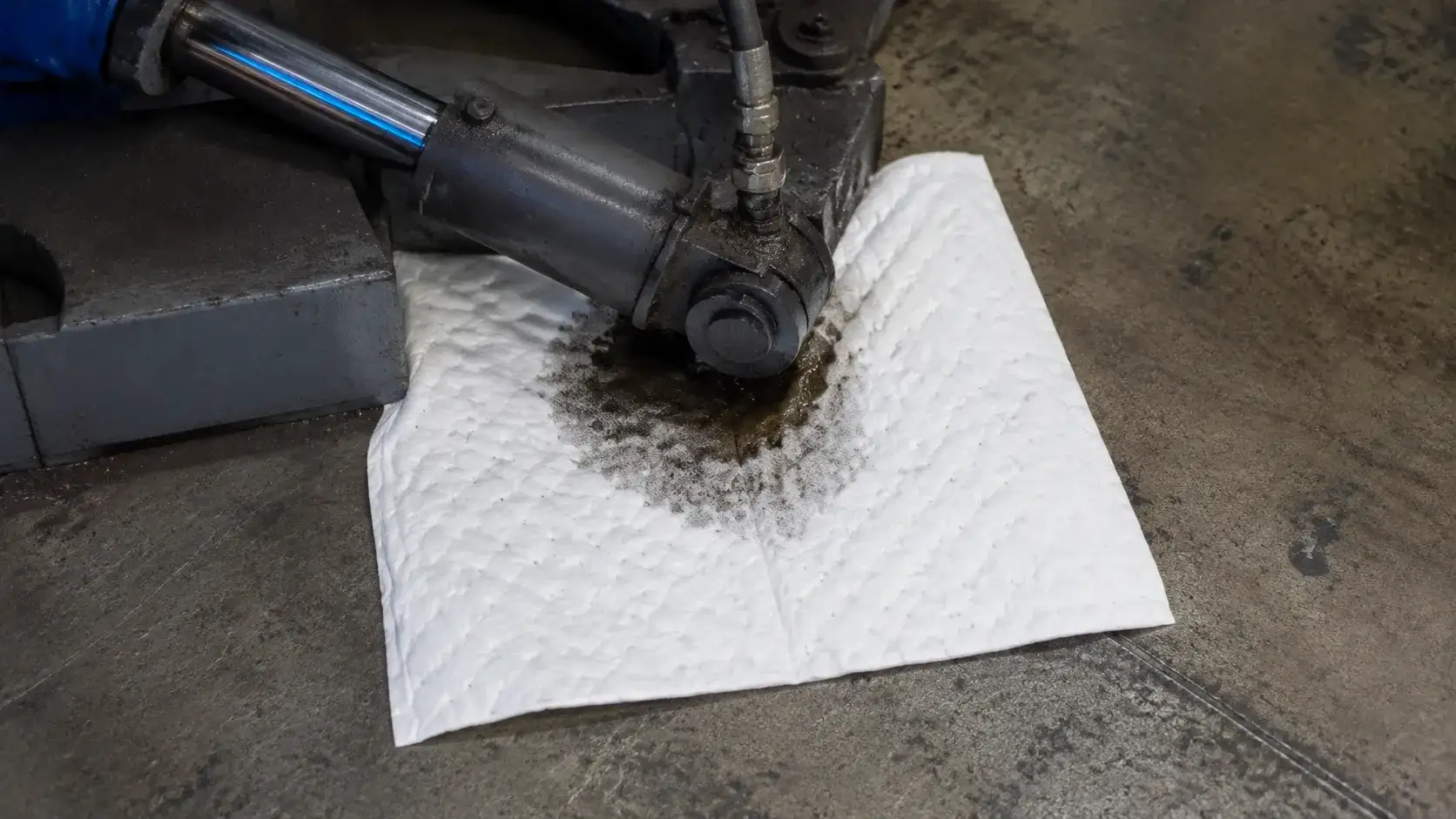
When a leak does happen, the format of absorbent matters. Oil-only absorbent pads are the right first response for wipe-downs and small drips under a cylinder or fitting — they’re rated to absorb hydrocarbon-based fluids while repelling water, so a pad on a wet shop floor won’t soak up rainwater or coolant runoff and lose capacity before it touches the actual leak. AbsorbentX’s oil-only absorbent pads are built for exactly this scenario — quick grab, high oil pickup per sheet, and no water weight slowing the crew down.
For an active drip that needs containing rather than a one-time wipe, absorbent socks placed in a ring around the leak source hold fluid in place without a technician standing over it, which is useful on equipment that will keep weeping until the next scheduled repair window. For a fuller comparison of pad, sock, and roll formats and when each makes sense on a shop floor, see AbsorbentX’s industrial absorbents guide.
For larger leaks — a blown hose end or a cracked reservoir — the priority shifts to volume: absorbent mats or rolls laid down fast, socks deployed around any nearby floor drain, and a spill kit staged nearby so the response doesn’t wait on a supply run. A stocked spill kit near every hydraulic-heavy work cell, not just in a central supply closet, cuts response time from minutes to seconds, which is often the difference between a contained puddle and fluid that has already reached a drain.
Preventive Maintenance and Drip Containment
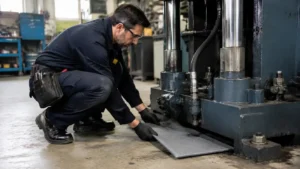
The most cost-effective leak strategy is preventing the leak from becoming a floor problem at all. Drip pans or absorbent mats placed permanently under chronic-weep points — older cylinders, fittings on equipment scheduled for rebuild but not yet down — catch fluid before it ever reaches the floor, turning an ongoing compliance and slip risk into a simple pad-swap on a schedule. Facilities running equipment with known seal wear should budget for a drip pad on every unit rather than reacting after the first slip-and-fall near-miss.
Seal and hose replacement schedules matter more than most facilities admit. Waiting for a hose to fail catastrophically instead of replacing it on a 3-4 year interval (or per manufacturer guidance for high-flex applications) trades a $40 hose for a production-line shutdown and a fluid spill that can run into hundreds of dollars in absorbents and disposal fees. The same logic applies to seals on cylinders with known high-cycle duty — scheduled seal kits during planned downtime cost a fraction of an emergency rebuild plus the associated fluid loss.
Torque-checking fittings on a quarterly schedule, especially on mobile or vibrating equipment, closes the second-biggest leak source before it starts. Pairing that habit with proper fluid filtration and a sealed, moisture-free reservoir addresses the contamination-driven wear that shortens seal life in the first place. For a broader look at building a facility-wide absorbent stocking and maintenance routine, see AbsorbentX’s maintenance absorbents guide.
Disposal of Hydraulic-Fluid-Soaked Absorbents
Used absorbents are not automatically hazardous waste, but they are not automatically safe to toss in a regular dumpster either. Under federal RCRA rules, an absorbent that has soaked up petroleum-based hydraulic fluid is generally handled as non-hazardous industrial waste unless the fluid itself tested hazardous (contaminated with solvents or heavy metals, for example) or your state imposes stricter rules — several states, including California, regulate oil-soaked absorbents more tightly than federal baseline.
The practical rule for most maintenance departments: store used pads and socks in a covered, labeled drum away from ignition sources until pickup, keep them separate from water-soaked or chemical-contaminated absorbents, and use a licensed industrial waste hauler rather than regular trash service. Mixing hydraulic-fluid absorbents with other waste streams is the single most common reason a facility gets reclassified into a stricter disposal category during an audit.
Free-liquid content matters too — most haulers and landfills require absorbents to pass a paint-filter test (no free-flowing liquid drips out) before accepting them, which is one more reason oil-only pads with high retention capacity are worth the slightly higher unit cost over generic rags: less free liquid left in the pad means fewer rejected loads and fewer double-handling fees.
Building a Bulk Hydraulic Leak Response Kit
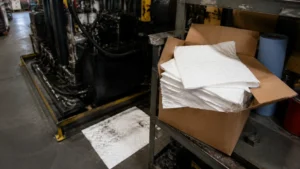
Facilities running more than a handful of hydraulic units benefit from stocking absorbents by the case rather than grabbing individual packs as leaks happen. A standard shop bay running two or three hydraulic-powered machines typically goes through 15-25 oil-only pads a month between routine wipe-downs and drip-pad swaps — buying in bulk case quantities usually cuts per-pad cost by 20-30% compared to small retail packs, and it means a tech never has to stop mid-repair because the supply cabinet ran dry.
A practical bulk kit for a maintenance department includes a case of oil-only pads staged at each hydraulic work cell, a bundle of absorbent socks kept near floor drains and equipment perimeters, a roll of heavier-duty mat for large-format leaks, and a stocked spill kit for anything beyond routine drips. AbsorbentX’s oil absorbent pads line covers light, medium, and heavy-duty grades so a facilities manager can match absorbency to the actual leak volume instead of over-buying premium pads for a slow weep or under-buying for a real spill.
For facilities that also handle spilled coolant, cutting fluid, or other petroleum products alongside hydraulic leaks, it’s worth reviewing containment strategy across the whole shop rather than leak-type by leak-type — AbsorbentX’s oil containment guide walks through berms, drain covers, and secondary containment options that pair well with a hydraulic-leak response kit.
Frequently Asked Questions
What is the most common cause of a hydraulic leak?
Seal wear on cylinder rods is the single most common cause, driven by normal wear over thousands of duty cycles, contamination-accelerated corrosion, or improper piston clearance. Fitting and hose failures from vibration and abrasion are close behind.
Is hydraulic fluid dangerous to touch?
A pooled leak on the floor is a slip and fire hazard, but a pressurized pinhole spray is far more dangerous — it can inject fluid through skin and cause serious tissue damage requiring emergency treatment. Never check for a pressurized leak with a bare hand.
How often should hydraulic equipment be inspected for leaks?
A daily visual walk-around by the operator plus a weekly technician check with fluid-level logging catches most leaks while they’re still minor. High-cycle or high-pressure equipment above 3,000 PSI benefits from more frequent checks, including quarterly fitting torque verification.
What absorbent should I use for a hydraulic fluid leak?
Oil-only absorbent pads or socks rated for petroleum-based fluids are the standard choice — they absorb hydrocarbon fluid while repelling water, so they don’t lose capacity on wet floors. Larger leaks call for absorbent mats, rolls, or a full spill kit.
Can hydraulic-fluid-soaked absorbent pads go in regular trash?
Generally no. Most facilities need to store used pads in a covered, labeled container and dispose of them through a licensed industrial waste hauler, since many haulers and some state rules require a paint-filter test showing no free liquid before regular disposal is allowed.
How much fluid can a small hydraulic leak lose over time?
A cylinder weeping roughly one drop every few seconds can lose more than a gallon of fluid per month. That volume is enough to trigger environmental reporting requirements if it reaches a floor drain, which is why early detection matters even for leaks that look minor.