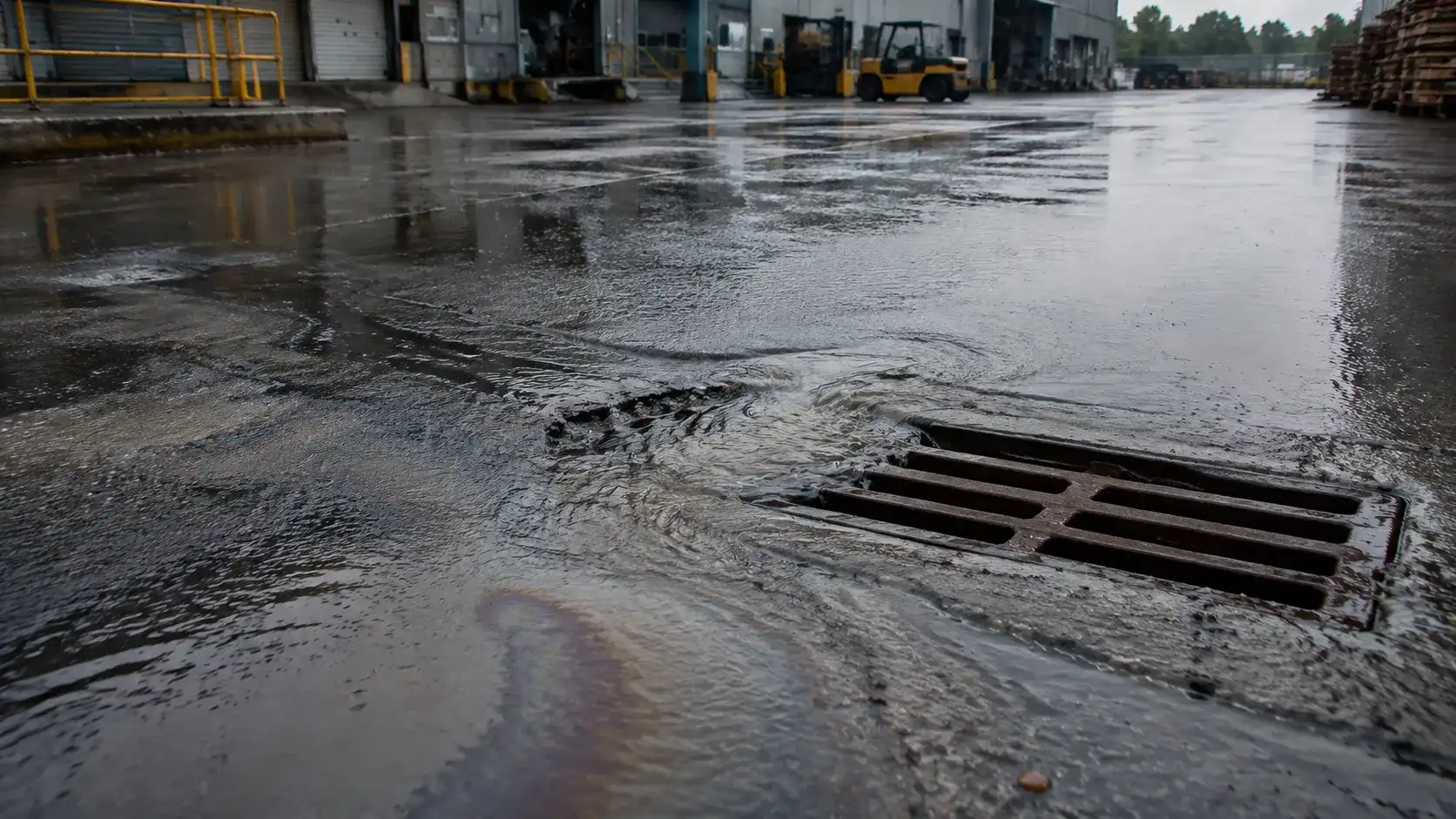
Stormwater pollution happens the moment rain hits an industrial yard and picks up whatever is sitting on the pavement: oil drips from a forklift, sediment from a loading dock, or chemical residue near a tank farm. That runoff moves fast, often reaching a storm drain within minutes, and storm drains at most industrial sites flow untreated into a nearby creek, river, or municipal separate storm sewer system. For facility and EHS managers, stormwater pollution is not an abstract environmental issue; it is a permit compliance risk, a potential fine, and a housekeeping problem that bulk absorbent products, drain covers, and secondary containment are specifically built to solve.
This guide covers what causes industrial stormwater pollution, the pollutants regulators and inspectors look for, the basics of NPDES and SWPPP requirements, and the physical prevention methods facilities use to keep runoff clean between inspections. AbsorbentX supplies the oil absorbent pads, drain protection, and containment products referenced throughout, but the guidance here applies regardless of which vendor a facility buys from.
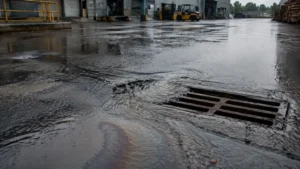
What Causes Industrial Stormwater Pollution
Industrial stormwater pollution starts with materials left exposed to weather. Outdoor storage areas, loading docks, vehicle maintenance bays, and uncovered waste containers all sit within reach of rainfall, and any residue on those surfaces becomes part of the runoff the moment a storm starts. A facility that looks clean on a dry Tuesday can still be discharging pollutants every time it rains, because dry-weather housekeeping and wet-weather runoff control are two different problems.
Site layout plays a bigger role than most facilities realize. Uncovered dumpsters near a drain, a fueling area without a canopy, or a scrap metal pile draining directly toward a catch basin all create direct pathways from pollutant source to receiving water. Grading matters too — runoff naturally collects in low points, and if those low points sit next to unprotected drains, even a modest storm concentrates contaminants exactly where they are hardest to filter out.
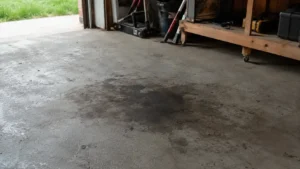
Equipment failures and routine operations add a steady background load. A slow hydraulic leak on a forklift, drips from a compressor, or dust and metal fines from outdoor grinding operations accumulate over weeks. None of it looks dramatic day to day, but a single rain event can mobilize months of accumulated residue in a single discharge, which is exactly what inspectors and NPDES sampling are designed to catch.
Common Industrial Stormwater Pollutants
Oil and grease are the most frequently cited pollutants at industrial sites, coming from vehicle and equipment leaks, lubricant storage, and maintenance areas. Even small amounts create a visible sheen and can trigger a violation, since many permits set numeric limits for oil and grease in the range of 15 mg/L for benchmark monitoring. This is the pollutant category that oil-only absorbent pads are specifically designed to remove without picking up the water sitting alongside it.
Sediment and total suspended solids come from exposed soil, gravel yards, construction staging areas, and tracked-in dirt from vehicle traffic. Chemical pollutants — solvents, cleaning agents, process chemicals, and heavy metals from plating or metalworking operations — pose a higher regulatory and ecological risk per gallon than sediment, which is why facilities handling these materials typically face tighter monitoring benchmarks.
Debris and trash round out the list: packaging material, pallet fragments, and general litter that blows or washes toward drains. It is often the easiest pollutant category to control through basic housekeeping, but it is also the one most commonly flagged during a routine inspection because it is visible from the parking lot without any testing at all.
NPDES Permits and SWPPP Basics
Facilities that discharge stormwater associated with industrial activity generally need coverage under the National Pollutant Discharge Elimination System (NPDES) program, established under the Clean Water Act. Most states administer their own NPDES industrial stormwater general permit, and coverage typically requires developing a Stormwater Pollution Prevention Plan, or SWPPP, before discharge begins. This section is informational only and is not a substitute for legal or regulatory advice — permit requirements vary by state and by industry sector, so facilities should confirm specifics with their state environmental agency.
A SWPPP is a working document, not a one-time filing. It typically includes a site map showing drainage pathways and outfalls, an inventory of exposed materials and activities, a list of best management practices in use, an inspection and monitoring schedule, and a spill prevention and response plan. Inspectors and auditors expect the SWPPP to match what they actually see on-site, so a plan that references controls that were never installed creates more risk than having no plan at all.
Benchmark monitoring is where the SWPPP meets real numbers. Many general permits require quarterly or semi-annual sampling of stormwater discharge for pollutants like oil and grease, total suspended solids, and pH, compared against sector-specific benchmark values. Two consecutive exceedances usually trigger a corrective action requirement, which is the point where facilities scramble to add controls under deadline pressure instead of budgeting for them proactively.
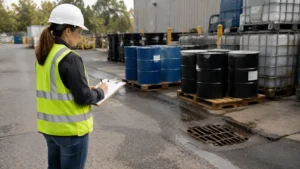
Prevention Methods for Industrial Sites
Drain Covers and Catch Basin Inserts
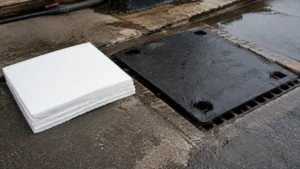
Drain covers physically block a storm drain during a spill or a high-risk activity like tanker unloading, giving crews time to respond before anything reaches the storm sewer. A catch basin insert takes a more permanent approach, sitting inside the basin year-round to filter sediment and absorb oil from every rain event without requiring someone to remember to deploy it. Facilities with drains near fueling areas or loading docks typically run both: a permanent insert for background protection and a rapid drain cover for active spill response.
Choosing between them usually comes down to how predictable the risk is. A drain next to a rarely-used chemical storage cage might only need a cover kept nearby for emergencies, while a drain that sits under daily forklift traffic and equipment washdown benefits more from a catch basin insert doing quiet, constant work. Our drain protection guide walks through sizing and installation in more depth.
Secondary Containment
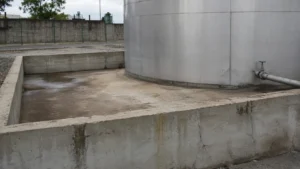
Secondary containment — berms, spill pallets, and containment basins placed under and around drums, totes, and tanks — stops a leak from ever reaching the yard surface in the first place. Regulators generally expect containment sized to hold at least 110% of the largest container’s volume, which is the standard most bulk chemical and oil storage areas design around. This is prevention at the source rather than cleanup after the fact, and it is usually the single highest-leverage control a facility can add near bulk liquid storage. Our secondary containment guide covers containment sizing and material selection in detail.
Spill Kits and Absorbent Products
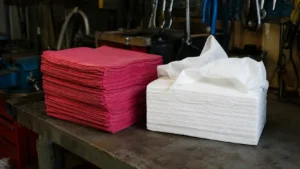
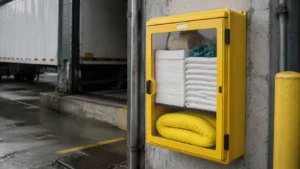
Even well-controlled sites have spills, and response speed is what determines whether a spill stays contained on pavement or spreads toward a drain. A stocked spill kit positioned within 30-60 seconds of high-risk areas — fueling stations, transformer pads, loading docks — lets the nearest employee respond immediately rather than waiting for a dedicated safety team. Oil absorbent pads are the fastest first response for surface spills, while oil-only absorbent pads are worth stocking specifically near drains and waterways because they repel water and absorb only hydrocarbons, which matters when a spill happens during or right before rain. Our spill kits guide breaks down kit types and recommended contents by risk area.
Good Housekeeping Practices
Housekeeping is the least expensive control and the one inspectors notice first. Sweeping instead of hosing down work areas, covering outdoor material storage, promptly wiping down equipment leaks, and keeping dumpster lids closed all reduce the pollutant load available to be picked up by the next storm. None of this requires capital spending, only a written schedule and someone accountable for following it.
Employee training closes the loop between having controls and having controls that work. Staff who know where the nearest spill kit is, how to deploy a drain cover, and who to notify during a spill respond in minutes instead of hours. Facilities that run a short annual refresher alongside their SWPPP review consistently report fewer benchmark exceedances than those that treat the plan as a filing cabinet document.
Site Inspection Checklist
Routine self-inspection is what most permits require and what actually prevents violations, since problems caught internally never show up in an agency’s enforcement record. A short walk-through, done consistently, catches the small issues before they become sampling failures.
- Check all storm drains and catch basins for visible sheen, sediment buildup, or debris blocking flow
- Confirm drain covers and catch basin inserts are in place, undamaged, and not saturated past capacity
- Inspect secondary containment berms and pallets for cracks, standing liquid, or accumulated rainwater that reduces available capacity
- Verify spill kits are fully stocked, unexpired, and stationed at their designated high-risk locations
- Look for new leaks under parked equipment, forklifts, and outdoor machinery since the last inspection
- Confirm outdoor material storage remains covered or contained as described in the current SWPPP
Documenting each inspection with a date, inspector name, and any corrective action taken is not optional under most permits — it is the evidence that demonstrates ongoing compliance if a facility is ever audited. A simple log kept alongside the SWPPP, updated after every inspection, is usually sufficient.
Building a Practical Stormwater Prevention Program
The facilities that stay out of enforcement trouble are rarely the ones with the most expensive equipment — they are the ones where prevention products match actual site risk. A small distribution warehouse with one loading dock needs a different setup than a metal fabrication plant with multiple outdoor process areas, but the underlying approach is the same: identify where pollutants could reach a drain, install physical controls at those points, and keep spill response materials close enough to matter.
Budgeting for stormwater prevention works best as an annual review tied to the SWPPP update rather than a reactive purchase after a violation notice. Facilities that stock drain covers, catch basin inserts, secondary containment, and spill kits before the next permit inspection consistently spend less overall than those that buy under deadline pressure after a benchmark exceedance. Bulk purchasing through a single supplier also simplifies restocking and keeps kit contents consistent across multiple site locations.
Frequently Asked Questions
What is the difference between stormwater pollution and wastewater pollution?
Stormwater pollution comes from rainwater runoff that picks up contaminants from outdoor surfaces and typically discharges untreated to a storm sewer or nearby waterway. Wastewater, by contrast, is process water or sewage that generally goes through a treatment plant before discharge. Industrial sites usually need separate permits and controls for each.
Do all industrial facilities need an NPDES stormwater permit?
Not every facility needs one — coverage depends on the industrial activity’s SIC or NAICS code and whether stormwater from the site comes into contact with industrial materials or operations. Facilities with covered storage and no exposed industrial activity may qualify for a no-exposure exclusion, but this needs to be certified with the permitting authority, not assumed.
How often should stormwater controls be inspected?
Most general permits require routine visual inspections, commonly monthly or quarterly, plus additional inspections after significant storm events. Many facilities also run a more thorough annual comprehensive site inspection as part of their SWPPP review.
What size secondary containment do I need?
A common rule of thumb is sizing containment to hold at least 110% of the largest single container’s volume stored within it, though some state and local rules require additional capacity for multiple containers. The secondary containment guide covers sizing calculations for drums, totes, and tanks.
Can absorbent pads alone prevent a stormwater violation?
Absorbent pads are a critical response tool, not a complete prevention program on their own. They work best combined with drain covers or catch basin inserts, secondary containment for bulk storage, and routine housekeeping — layering controls is what keeps a single missed spill from turning into a permit violation.