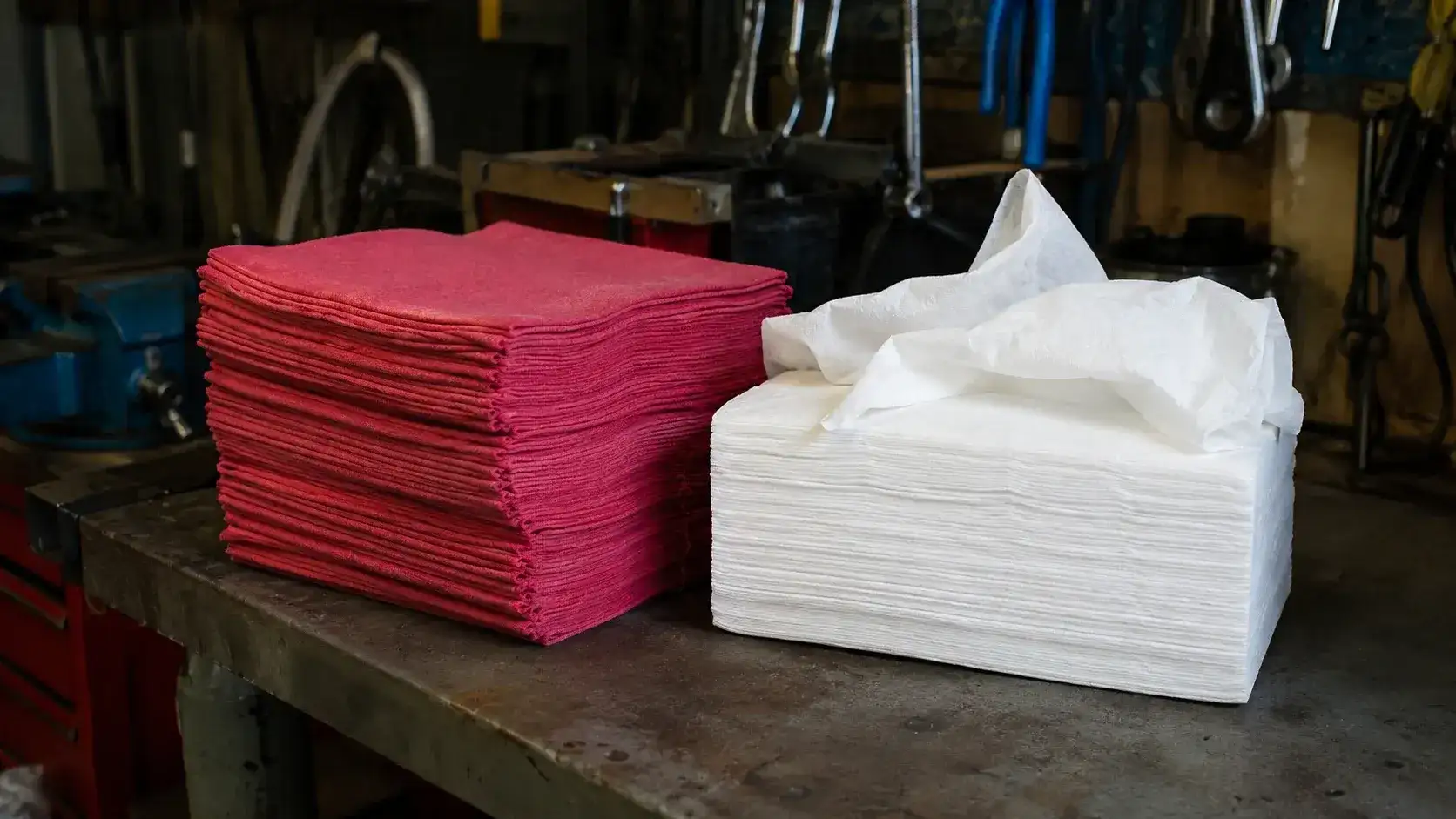
Shop towels and industrial wipes both clean up messes in workshops and factories, but they are built for different jobs, and using the wrong one wastes money or leaves a poor finish. Shop towels are the durable, reusable rags of general cleanup, well suited to grease and grime, while industrial wipes are engineered for consistent, often lower-lint performance on more demanding, finish-sensitive tasks where a rag would leave fibers behind. Knowing the difference is the key to buying the right product for each task rather than reaching for whatever is nearest.
This guide compares shop towels and wipes side by side — their materials, lint, absorbency, durability, cost, and reusability — and shows which to reach for on which task. Whether you run a garage, a machine shop, or a production line, the same logic applies. By the end you will know when a shop towel is enough and when a wipe is worth it, and how the two fit alongside your absorbents.
What Are Shop Towels?
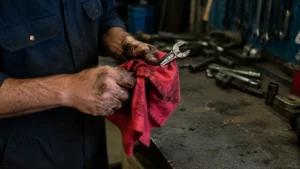
Shop towels are durable cleaning cloths — often woven cotton or a cotton blend, and sometimes heavy nonwoven paper — built to handle rough, general cleanup in workshops and garages. The classic red woven shop towel is reusable, standing up to repeated washing and heavy scrubbing. Their strength is toughness and grip on stubborn grease and grime, holding up where a lighter product would tear.
Because they are rugged and often reusable, shop towels are the everyday workhorse for messy jobs where a clean finish is not critical. Wiping hands, tools, and dirty surfaces, mopping up small drips, cleaning brushes and parts, and general degreasing all suit them well. They are cheap per use when laundered and reused, which is a large part of their enduring appeal in busy workshops.
The trade-off is that shop towels, especially cloth ones, shed lint and are inconsistent from piece to piece. That makes them a poor choice for sensitive or precision surfaces, which is where wipes take over.
It is also worth knowing that “shop towel” covers a couple of different products. The reusable red cloth is one; disposable heavy paper or nonwoven shop towels on a roll are another, offering more convenience and a bit less lint at the cost of reuse. Both share the same rough-and-ready role, and both sit below industrial wipes on cleanliness.
What Are Industrial Wipes?
Industrial wipes are engineered cleaning wipes, usually nonwoven synthetic or blended materials, made for consistent performance on more demanding tasks. Unlike a rag, each wipe is uniform, so absorbency, strength, and lint behaviour are predictable from one to the next. Many are designed to be low-lint for precision work.
This consistency is why wipes suit tasks a shop towel cannot handle well — cleaning painted or machined surfaces, final wipe-downs, precision assembly, and anywhere a clean, particle-free finish matters. Lint-free grades extend this to electronics, optics, and cleanrooms, where consistency is not a luxury but a strict requirement of the work.
That predictability is the real value of an engineered wipe. With a rag you never quite know how much lint it will shed or how it will hold up, but with a wipe you can specify and rely on the same behaviour every time. For any process that has to be repeatable, that reliability is worth paying for.
Wipes are typically single-use and cost more per piece than a reused shop towel, but they deliver a controlled result. Our guide on lint free wipes covers the low-lint grades in detail.
Industrial wipes span a range of grades, from economical general-purpose nonwovens up to sealed-edge cleanroom wipes. The higher grades cost more but shed far fewer particles, which is what makes them safe for electronics and optics. Choosing the grade to match the task is the same discipline that applies to absorbents.
Shop Towels vs Wipes: The Key Differences
The two products differ across several practical dimensions, and the table below lays them out side by side. In short, shop towels win on durability, grip, and cost-per-use when reused, while wipes win on consistency, lint control, and suitability for precision work.
Neither is simply better; they are built for different ends of the cleaning spectrum. The right choice depends entirely on how rough or how sensitive the task is, and most operations genuinely need both.
| Factor | Shop Towels | Industrial Wipes |
| Material | Woven cotton/blend or heavy paper | Nonwoven synthetic or blended |
| Lint | Higher, variable | Lower, controlled (low-lint grades) |
| Durability | Very durable, reusable | Single-use, uniform strength |
| Absorbency | Good, less consistent | Consistent, task-tuned |
| Best for | Rough cleanup, grease, hands, tools | Precision, finishes, sensitive surfaces |
| Cost | Low per use when reused | Higher per piece, controlled result |
Which Should You Use? Matching Product to Task
The decision comes down to how clean and consistent the finish must be. For rough, dirty work — wiping hands, cleaning greasy tools, mopping small spills, and general degreasing — a shop towel is the right, economical choice. Its durability and grip suit the mess, and reusing it keeps the cost per job very low over time.
For anything where lint or consistency matters — cleaning machined or painted surfaces, prepping for paint, final wipe-downs, and precision assembly — an industrial wipe is worth the extra cost. And for the most sensitive work on electronics, optics, or in cleanrooms, only a proper lint-free wipe will do the job safely.
Many workshops keep both and use each for its proper job. Reaching for a shop towel on a lens or a wipe on a greasy engine block are both mistakes; matching the product to the task is what saves money and protects the work.
A simple test helps when you are unsure. Ask whether a stray fiber or a slightly inconsistent wipe would matter for the surface in front of you. If it would — on a sealing face, a painted panel, a sensor, or a board — reach for a wipe. If it would not, a shop towel is the cheaper, tougher choice and there is no reason to spend more.
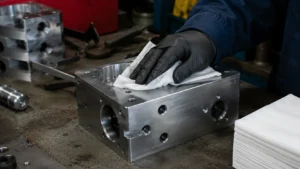
Reusable vs. Single-Use: The Cost Question
A big part of the shop-towel-versus-wipe decision is reuse. Cloth shop towels can be laundered and reused many times, which makes them very economical for high-volume, dirty work — though laundering has its own cost and logistics to manage. For a busy garage getting through many towels a day, reuse usually wins on cost by a wide margin.
Industrial wipes are typically single-use, trading a higher per-piece cost for consistency, hygiene, and no laundering. For precision work, or where a contaminated cloth would ruin the job, that single-use control is exactly what you want. The extra cost buys a guaranteed clean starting point every time.
There are hidden costs to weigh on both sides. Reusable shop towels carry laundering, storage, and handling costs, and in some settings the risk of a contaminated towel spreading grease or grit is a real downside. Single-use wipes avoid all of that but add waste and a higher per-piece price. The right balance depends on your volume, your task, and how much a poor result would cost you.
Many operations use both, laundering shop towels for rough work and buying wipes for tasks that demand consistency. We compare reuse economics for absorbents in our guide on are oil absorbent pads reusable.
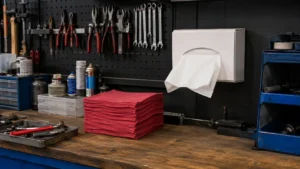
Where Absorbents Fit Alongside Towels and Wipes
Shop towels and wipes are for wiping and cleaning, but they are not the right tool for a real spill. A puddle of oil or coolant calls for an absorbent pad, sock, or mat that can soak up volume without smearing it around, which a towel or wipe cannot do efficiently. Keeping absorbents alongside towels and wipes rounds out a complete kit.
The simple rule is: absorbents for spills, shop towels for rough cleanup, and wipes for precision and sensitive surfaces. Each has a distinct job, and using the right one for each keeps costs down and results clean while avoiding cross-use mistakes. Our oil absorbents guide covers the spill side of the kit.
Thinking of the three together — absorbents, towels, wipes — is the easiest way to make sure you always have the right product within reach.
Storing them sensibly reinforces the habit. Keeping absorbents at the spill station, shop towels at the dirty work area, and wipes near the precision bench means staff naturally reach for the right one. A little organisation at the point of use does more to prevent misuse than any amount of instruction.
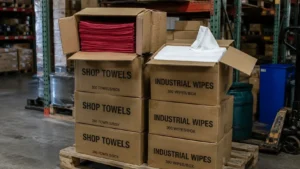
Buying Shop Towels and Wipes in Bulk and OEM
For distributors and high-volume users, both products are bought in quantity, so consistency and value matter most. For wipes especially, reliable lint behaviour and uniform strength batch to batch are what keep them performing across a full order, and a product that varies from batch to batch undermines the tasks it is meant to support.
As part of its industrial wipes line, AbsorbentX supplies industrial wipes in a range of materials and grades, with private-label and OEM options for bulk orders, alongside its absorbent range. Matching the product to your customers’ tasks — from rough cleanup to precision work — is what drives repeat business. Explore the range and talk to us about custom specifications, or read how to choose an oil absorbent pads supplier for the same sourcing principles.
The Bottom Line
Shop towels and industrial wipes solve different problems. Shop towels are durable, reusable, and economical for rough cleanup, grease, and hands, while wipes are consistent, lower-lint, and suited to precision work and sensitive surfaces where a clean finish matters.
Match the product to how clean and consistent the task must be, keep both on hand for their proper jobs, and add absorbents for actual spills. Do that, and whatever the mess, the right cleaning product is always within reach.
For most workshops the practical answer is not one or the other but a sensible mix. Stock shop towels for the everyday grime that makes up most cleanup, keep a box of industrial wipes for the finishing and precision jobs, and hold lint-free wipes only if you do genuinely sensitive work. That small range covers almost everything without overspending on any of it.
Frequently Asked Questions
What is the difference between shop towels and wipes?
Shop towels are durable, often reusable cloths (usually cotton or heavy paper) for rough cleanup, while industrial wipes are engineered, consistent, often lower-lint nonwovens for precision and sensitive-surface work.
Are shop towels or wipes better?
Neither is simply better — shop towels win on durability, grip, and cost-per-use when reused, while wipes win on consistency, lint control, and precision. Choose by how rough or sensitive the task is.
When should I use an industrial wipe instead of a shop towel?
For cleaning machined or painted surfaces, final wipe-downs, precision assembly, and anywhere lint or consistency matters. For electronics, optics, or cleanrooms, use a lint-free wipe.
Are shop towels reusable?
Cloth shop towels can be laundered and reused many times, which makes them economical for high-volume dirty work. Industrial wipes are typically single-use for consistency and hygiene.
Can I use shop towels or wipes for a spill?
Only for very small ones. A real spill needs an absorbent pad, sock, or mat that soaks up volume without smearing. Keep absorbents alongside your towels and wipes for spills.