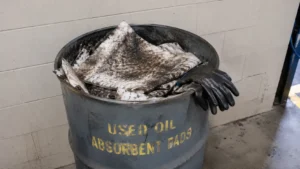
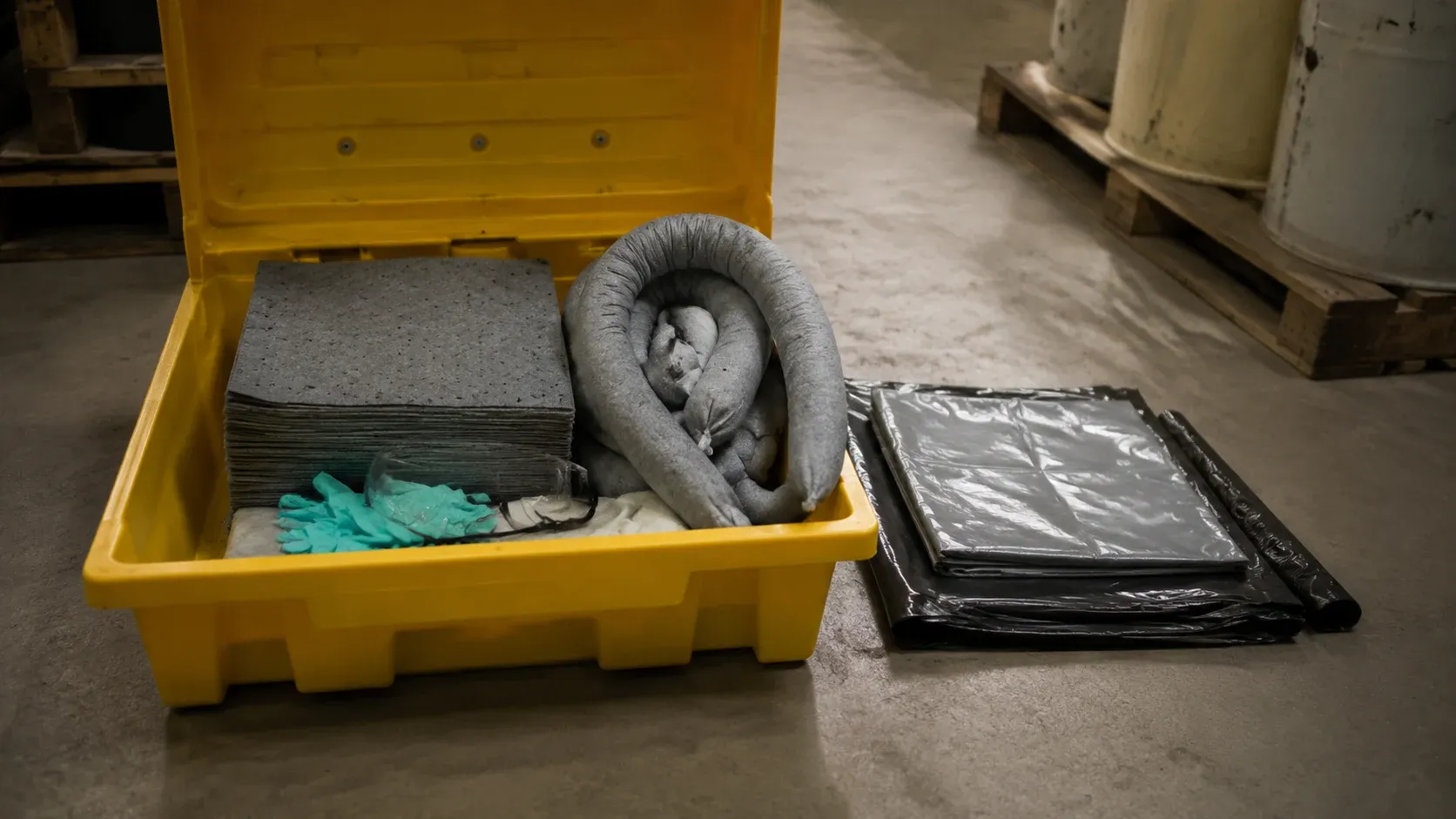
Universal spill kits are the general-purpose workhorse of spill control, built to handle almost any liquid you might meet on an indoor floor. Their gray sorbents soak up oil, water, coolants, solvents, and other non-aggressive fluids alike, which makes them the sensible default where a spill could be almost anything. Understanding what they do well — and where they should not be used — is the key to buying the right kit.
This guide explains what a universal spill kit absorbs, exactly what belongs inside, how to size and place one, and the honest limits that send you toward an oil-only or hazmat kit instead. Whether you run a machine shop, a fleet bay, or a production floor, the same logic applies. By the end you will know whether a universal kit is the right choice for your site.
What Is a Universal Spill Kit?
A universal spill kit is a pre-assembled package of gray universal sorbents, containment items, protective equipment, and disposal materials, stored in a container for immediate spill response. The gray colour follows the industry code for universal absorbents, which are made to soak up both oil and water-based liquids. Staff grab one kit and begin work rather than hunting for supplies while a spill spreads.
The defining trait is versatility. Where oil-only sorbents repel water and hazmat sorbents target chemicals, universal sorbents simply absorb whatever non-aggressive liquid they touch. That makes them ideal when you cannot predict what the next spill will be, which is the reality on most busy maintenance floors. Rather than gambling on which liquid will leak next, you keep one kit that copes with all of the common ones.
For a wider view of how universal fits alongside the other kit types, see our spill kits guide. This article focuses on the universal kit in detail.
What Do Universal Sorbents Absorb?
Universal sorbents are made from polypropylene treated so it takes up both oil and water-based fluids, unlike the untreated, hydrophobic material in oil-only products. In practice that means they handle coolants, mild solvents, paint, water, oil, and lubricants — the everyday mix of liquids found on a maintenance floor. This is why they are the default for general housekeeping.
Because they absorb water as readily as oil, universal sorbents clean up an entire mixed spill in one pass without trying to separate the components. On a dry indoor floor that is exactly what you want. The trade-off appears only when you actually need to keep water out, which is where oil-only sorbents take over.
It is worth knowing that this versatility comes from a surfactant treatment applied to the polypropylene. The treatment lowers the surface tension of water so the normally water-repelling fiber can take up water-based liquids as well as oil. That single additive is the whole difference between a universal pad and an oil-only one, and it is why the two look similar but behave so differently on a wet floor.
Our guide on do oil absorbent pads absorb water explains the oil-only versus universal distinction that underpins this choice.
Universal Spill Kit Contents Checklist
A complete universal kit contains gray absorbent pads for the bulk of the liquid, gray socks to contain and isolate the spill, and gray pillows for deep puddles and leaking valves. Larger kits add rolls for wide-area or walkway coverage. All of these should be gray, confirming they are the universal grade rather than oil-only or hazmat.
Personal protective equipment is essential and often where cheaper kits cut corners. Every kit needs chemical-resistant gloves, safety goggles rather than plain glasses for splash protection, and a disposable apron or coveralls. These items should be inspected and replaced as diligently as the sorbents.
Disposal belongs inside the kit, not as an afterthought. Include at least two heavy-duty disposal bags with ties so contaminated sorbents can be sealed on the spot, plus an instruction card and an inventory list. Our oil absorbents guide covers each sorbent format in detail.
Where to Use a Universal Spill Kit
Universal kits shine in controlled indoor environments where the liquid could be anything. Machine shops, fleet and service bays, production floors, and general maintenance areas are the classic settings, because there a single kit copes with coolant one day and hydraulic oil the next. The versatility saves you from stocking a separate kit for every fluid, and it means staff are never caught out by an unexpected liquid. In busy environments where the next spill is genuinely unpredictable, that adaptability is exactly what you want on hand.
They also suit places where spills are small and mixed, and where you simply want the mess gone rather than separated. Enclosed workspaces with smooth floors are ideal, since pads and socks make full contact and clean up quickly. For most indoor facilities, the universal kit is the first kit to buy, and often the one that sees daily use. It handles the routine drips and minor spills that make up the bulk of everyday spill response.
There is a cost argument for universal kits too. Stocking one versatile kit rather than several liquid-specific ones simplifies training, purchasing, and inspection, since staff learn a single grade and routine. For a facility whose spills are genuinely mixed and non-aggressive, that simplicity is a real saving.
The one thing to check is whether water rejection ever matters at your site. If it does, a universal kit alone is not enough, as the next section explains.
The Limits: When NOT to Use a Universal Kit
The universal kit’s strength is also its weakness. Because its sorbents absorb water, they are the wrong choice for oil on wet ground or on water — they fill with water before capturing the oil and will not float to skim a slick. For those situations you need a white, hydrophobic oil-only kit instead.
Universal kits are also not built for aggressive chemistry. Strong acids, caustics, and reactive solvents can degrade universal sorbents or create a hazard, so anywhere such chemicals are stored, mixed, or transferred calls for a yellow hazmat kit. Using a universal kit on those liquids risks both a failed cleanup and a safety incident.
The rule is simple: universal for mixed non-aggressive indoor spills, oil-only for hydrocarbons near water, and hazmat for chemicals. Keeping the right kit for each risk is cheaper than dealing with the consequences of the wrong one.
Sizing and Placement
Universal kits come in portable bag and bucket formats, drum kits, and wheeled carts, sized to the spill you realistically face. Small bag and bucket kits suit single workstations and vehicles, drum kits handle a substantial floor spill, and carts serve large production areas that need volume and mobility. Size the kit to your worst credible spill, not the average.
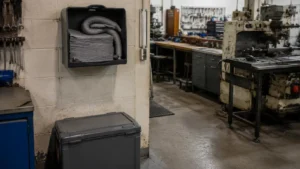
Placement matters as much as size. Kits belong where spills actually happen — beside machines with known leaks, at fluid-transfer points, and along busy walkways — clearly marked and never blocked. A common arrangement is a small kit at each risk point plus one larger kit centrally.
A kit that is hard to reach will not be used in time, so visibility and access beat a slightly larger inventory locked away. Make the nearest kit the obvious one to grab, and keep the path to it clear of pallets and equipment.
How to Use and Restock a Universal Kit
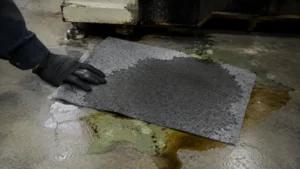
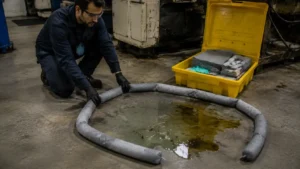
Response follows a consistent order. Put on the PPE first, then use the socks to surround the spill, working from the outside in so it cannot reach drains or spread further. With the perimeter set, lay pads over the liquid and add pillows to deep puddles, letting the sorbents wick it up rather than scrubbing it around.
Replace saturated items as they darken and stop absorbing, and work until no free liquid remains on the surface. Then seal the used sorbents and your PPE in the disposal bags and handle the waste according to what was absorbed and your local rules. Our guide on how to dispose of oil absorbent pads covers that final step.
Finally, restock immediately. Replace every sorbent, bag, and piece of PPE consumed, and inspect on a schedule so the kit is always complete and correctly placed. A sealed or tagged kit makes it obvious at a glance whether it has been opened, and a quick monthly check keeps the whole system reliable.
Buying Universal Spill Kits in Bulk and OEM
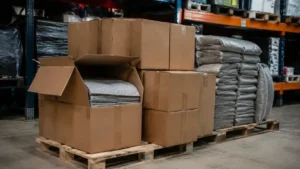
For distributors and multi-site operators, kit quality comes down to the sorbents inside. Consistent GSM, clean meltblown fiber, low lint, and dependable surfactant treatment batch to batch are what make a universal kit absorb reliably. A kit built from inconsistent sorbents will disappoint no matter how sturdy the container looks.
As a Shenzhen-based manufacturer, AbsorbentX produces the universal absorbents behind these kits — pads, socks, pillows, and rolls — with private-label and OEM options for bulk orders and custom kit configurations. Building kits around reliable sorbents is what earns repeat business. Browse the range on our absorbent pads collection, or read how to choose an oil absorbent pads supplier before ordering at volume.
The Bottom Line
Universal spill kits are the versatile default for indoor spill control, handling oil, water, coolants, and mild solvents with one set of gray sorbents. Stock them with gray pads, socks, and pillows, proper PPE, and disposal bags, and you have a complete response package for the mixed spills of everyday maintenance.
Just remember the limits: reach for an oil-only kit when hydrocarbons meet water, and a hazmat kit for aggressive chemicals. Match the kit to the risk, size it to your worst credible spill, and restock it the moment it is used, and a spill becomes a routine job rather than an emergency.
For most indoor facilities, a universal kit is the right first purchase and the one you will reach for most often. Add specialised kits only where a genuine oil-on-water or chemical risk exists. That layered approach gives you full coverage without paying for equipment your spills will never call for.
Frequently Asked Questions
What does a universal spill kit absorb?
Gray universal sorbents absorb both oil and water-based fluids — coolants, mild solvents, paint, water, oil, and lubricants. They are the general-purpose choice for mixed, non-aggressive indoor spills.
What is inside a universal spill kit?
Gray absorbent pads, socks, and pillows (plus rolls in larger kits), disposal bags with ties, and PPE including chemical-resistant gloves, safety goggles, and a disposable apron or coveralls, all in a storage container.
When should I not use a universal spill kit?
When you need to keep water out — oil on wet ground or water calls for an oil-only kit — and for aggressive chemicals like strong acids or caustics, which require a hazmat kit.
What is the difference between universal and oil-only kits?
Universal (gray) sorbents absorb both oil and water; oil-only (white) sorbents repel water and absorb only hydrocarbons, so they float and recover oil from the surface of water.
Where should I place a universal spill kit?
Where spills happen — beside leaking machines, fluid-transfer points, and busy walkways — clearly marked and unobstructed. Keep a small kit at each risk point and a larger one centrally.