A coolant spill on a machine shop floor is not the same problem as an oil spill, even though the two get mopped up with the same panic. Most machinists say coolant and mean water-miscible cutting fluid, the milky or translucent liquid that circulates through a CNC mill or lathe to cool the tool and flush chips. That is the coolant this guide is about. Automotive antifreeze, the glycol-based fluid in a car’s radiator, is also called coolant, but it behaves differently, carries different hazards, and is not the focus here. If a spill involves ethylene glycol antifreeze rather than cutting fluid, treat it as a separate chemical spill with its own containment and disposal path.
Get the wrong absorbent on a water-miscible coolant spill and it will sit there beading up on the surface, doing almost nothing, while the fluid keeps spreading toward an aisle or a drain. This guide covers why coolant behaves so differently from straight oil, why standard oil-only pads fail on it, what actually absorbs it, and how sump leaks, tank overflows, and floor spills each call for a slightly different response.
Why Coolant Spills Behave Differently Than Oil Spills
Straight cutting oil and hydraulic oil are hydrophobic: they float, they bead, and they stay mostly intact as a puddle, which is exactly the behavior oil-only absorbents are engineered around. Water-miscible coolant is the opposite. It is manufactured to mix into water at a 2 to 10 percent concentrate ratio, so once it hits the floor it behaves like a thin, slippery, water-based solution rather than a cohesive oil film. It spreads faster, travels farther across a level floor, and does not respond to skimming or the surface-tension tricks that work on a straight oil puddle.
Coolant is also chemically active in ways plain oil is not. Most semi-synthetic and synthetic coolants run mildly alkaline, typically in the pH 8.5 to 9.5 range, to resist bacterial growth and protect ferrous parts from flash rust. To keep that bacterial growth in check over weeks of sump use, coolant is dosed with biocides, and a spill can carry trace amounts of those additives onto the floor along with tramp oil that has emulsified into the mix from a leaking way lubricant or hydraulic seal. That combination is why a coolant spill should be treated as a mild chemical residue, not just a wet floor, and why crews should glove up before mopping it by hand.
The practical result is a spill that looks less dramatic than a gallon of hydraulic oil on concrete, but spreads over a wider area, stays slippery longer, and does not visually signal how contaminated it is. A quart of leaked coolant sump fluid can thin out and travel ten or fifteen feet from a machine base by the time someone notices it, especially on a floor with any pitch toward a drain.

Why Oil-Only Absorbents Fail on Water-Miscible Coolant
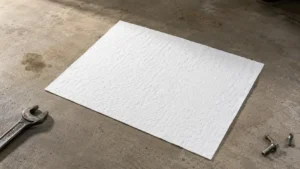
Oil-only absorbent pads are made from meltblown polypropylene that is treated or structured to repel water while wicking up hydrocarbons. That is the entire point of an oil-only pad: drop it in a puddle that has both oil and rainwater and it should soak up the oil and float, leaving the water behind. On a straight cutting-oil leak, that selectivity is a genuine advantage, and it is why oil-only pads are the right call on machines still running straight-oil coolant systems.
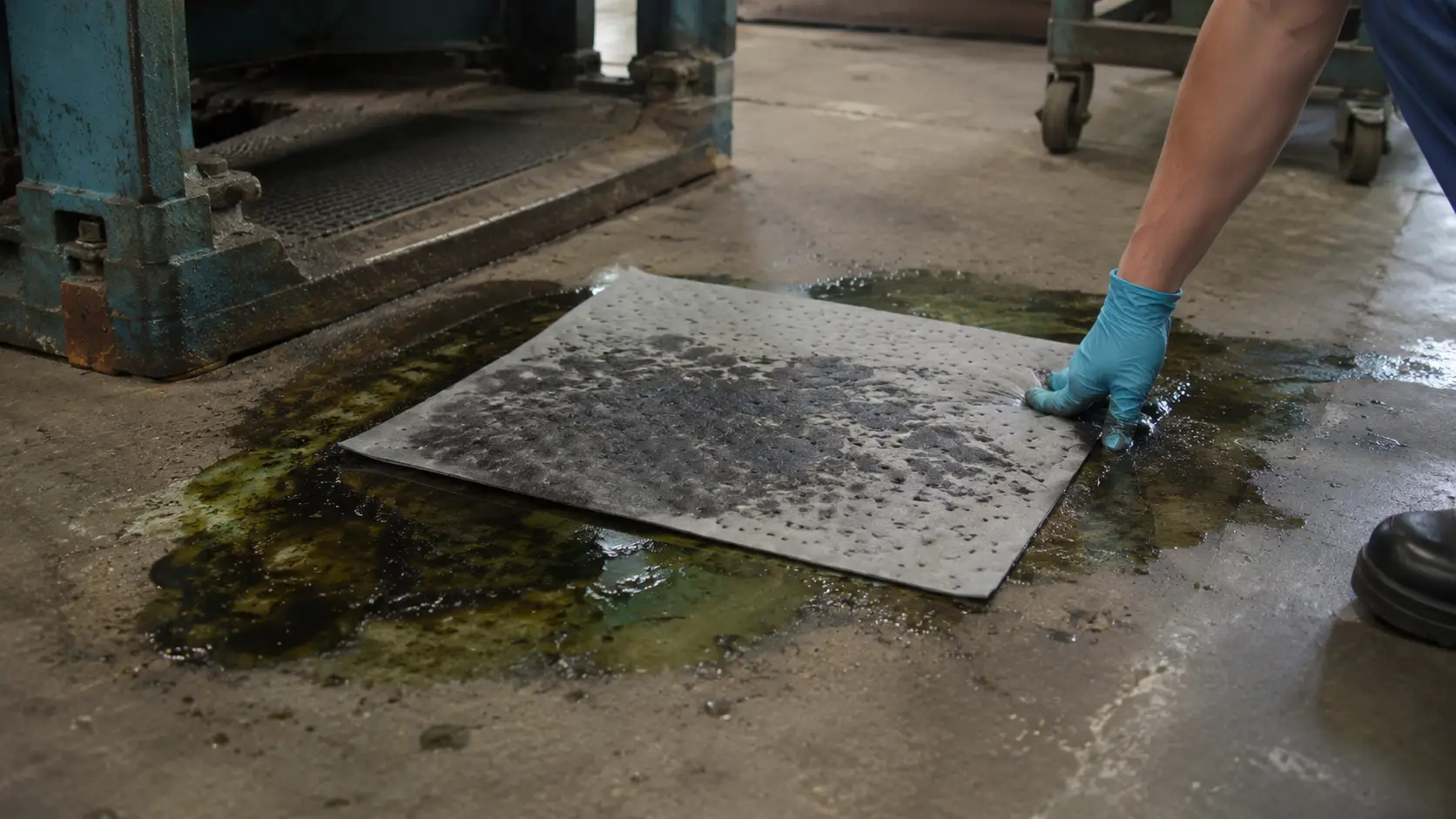
Put that same oil-only pad on a water-miscible coolant spill and the polypropylene fibers do what they are built to do: they push the water-based fluid away instead of drawing it in. A shop that grabs oil-only pads for a coolant leak typically finds the pad barely dampens, the puddle keeps spreading around its edges, and workers burn through three or four pads to blot up what one correctly rated pad would have handled in a single pass. For a closer look at pad construction and why fiber chemistry drives that selectivity, see AbsorbentX’s oil-only absorbent pads line.
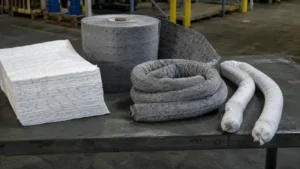
The fix is to stock a fluid that is not selective. Universal absorbents, sold as gray or black pads and rolls, are designed to take up water-based liquids, coolant, solvents, and oil alike without discrimination. Some manufacturers also sell pads specifically rated for water-miscible or synthetic coolant, built around high-wicking synthetic fiber blends that grab thin, low-viscosity fluids fast. Either option outperforms an oil-only pad on a coolant spill by a wide margin, and either belongs in the spill kit next to any CNC machine running water-miscible fluid.
What Actually Works: Absorbent Selection for Coolant
For routine drips and small leaks at the base of a machine, a stack of universal absorbent pads placed under the way covers or coolant hose fittings will catch fluid before it reaches the floor. These pads are cheap enough to treat as consumables, and swapping a saturated pad takes seconds compared to mopping a puddle that has already spread. For a shop running multiple machines on water-miscible coolant, keeping a full box within arm’s reach of each cell prevents the small leaks from ever becoming a floor hazard in the first place.
For a larger spill, whether from a burst coolant line or a sump overflow, absorbent socks and mini booms placed in a ring around the spill stop lateral spread while pads or granular absorbent handle the bulk of the volume inside the ring. This containment-then-absorb sequence matters more with coolant than with oil, because coolant’s lower viscosity means it reaches a drain or an aisle far faster if nothing rings it in first.
A comparison worth keeping on a wall chart near the spill kit: oil-only pads for straight-oil leaks and light hydraulic drips; universal pads or coolant-rated absorbents for anything water-miscible, including coolant, glycol-based fluids, and washdown water contaminated with tramp oil. Shops that standardize on universal absorbent for all coolant-adjacent work avoid the guessing game entirely, at the minor cost of slightly lower oil capacity per pad compared to a dedicated oil-only product. AbsorbentX’s oil absorbent pads line covers both the oil-only and general-purpose grades, so a shop can stock the right pad for each machine without guessing. AbsorbentX’s universal absorbents guide goes deeper into where universal absorbent outperforms a dedicated product and where it does not.

Slip Hazard: Coolant on Shop Floors
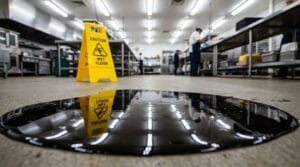
Thin, low-viscosity coolant on smooth concrete or epoxy-coated flooring creates one of the more dangerous slip surfaces in a machine shop, in some respects more dangerous than a thicker oil puddle because it is harder to see and spreads over a wider footprint before anyone notices. A worker walking between machines can hit a coolant film that has crept two or three feet past a machine’s drip tray without any visual cue that the floor has changed underfoot.
Because coolant residue also leaves a faint tacky or slick film even after the visible puddle is gone, floors near coolant-fed machines need a two-step response: absorb the bulk liquid immediately, then follow up with a degreaser-rated floor cleaner on the residue rather than assuming the area is safe once it looks dry. Standing coolant mist from machining also settles on the floor over a shift even without an obvious spill, so shops running enclosed machining centers should schedule a wipe-down of the surrounding floor area daily, not just after a visible incident.
Wet floor signage and a designated, visible spill kit location cut response time meaningfully. A kit stored fifty feet away in a supply closet gets used late; a kit mounted on the machine or the adjacent post gets used within seconds of someone spotting the leak, which is the difference between a contained puddle and one that has crossed an aisle.
Coolant Disposal: A Different Waste Stream Than Used Oil
A shop that has built good habits around used oil disposal can get tripped up here, because spent coolant does not fit the same regulatory bucket. Used oil recycling programs are built around petroleum-based lubricants and cutting oils; water-miscible coolant, once it is spent, is typically a wastewater or aqueous industrial waste stream and, depending on what has emulsified into it, tramp oil, machining fines, biocide residues, it may need to be characterized before disposal rather than assumed non-hazardous.
Saturated absorbent pads used to clean up coolant should be handled the same way: they are not automatically eligible for the same used-oil-rag disposal path a shop uses for straight oil pads, because they carry an aqueous, additive-laden fluid rather than pure hydrocarbon. Many municipalities and waste haulers require a hazardous waste determination on spent coolant and coolant-soaked absorbent before it leaves the site, particularly if the coolant sump has picked up tramp oil or heavy metal fines over its service life. NIOSH’s metalworking fluids page and OSHA’s metalworking fluids resources are useful starting points for understanding the exposure and handling concerns behind that stricter disposal treatment. Checking with a licensed industrial waste hauler before assuming a coolant spill kit’s used pads can go in the regular trash avoids a compliance problem that is easy to overlook.
Documentation habits help here too. Keeping a simple log of coolant spill volume, absorbent used, and disposal method gives a shop a paper trail if an inspector asks, and it also surfaces patterns, like one machine leaking repeatedly, that are worth fixing at the source rather than mopping up indefinitely.
Sump and Tank Leaks vs. Floor Spills
A coolant sump or tank leak is a different animal than a one-time floor spill. Sump leaks are usually slow, originating from a cracked tank seam, a failed hose fitting, or a worn pump seal, and they can run for hours or days before anyone notices a fluid level drop or a stain creeping from under the machine base. Because the leak rate is often low, the fix is less about heavy-duty absorbent capacity and more about early detection: checking sump fluid levels on a set schedule and inspecting hose connections during routine maintenance catches these leaks before they become a floor-wide problem.
A floor spill, by contrast, is usually sudden: a tote gets knocked over during a coolant top-off, a hose disconnects under pressure, or a machine’s coolant line ruptures mid-cycle. These events call for the containment-then-absorb approach covered earlier, executed quickly, because the volume involved is typically far larger than a slow sump seep and the spread happens in minutes rather than hours. For repeated CNC coolant leaks tied to worn seals or fittings rather than accidental spills, addressing the mechanical root cause matters as much as the cleanup response; AbsorbentX’s guide on how to control oil and coolant leaks in CNC workshops walks through drip-tray placement and fitting inspection in more depth.
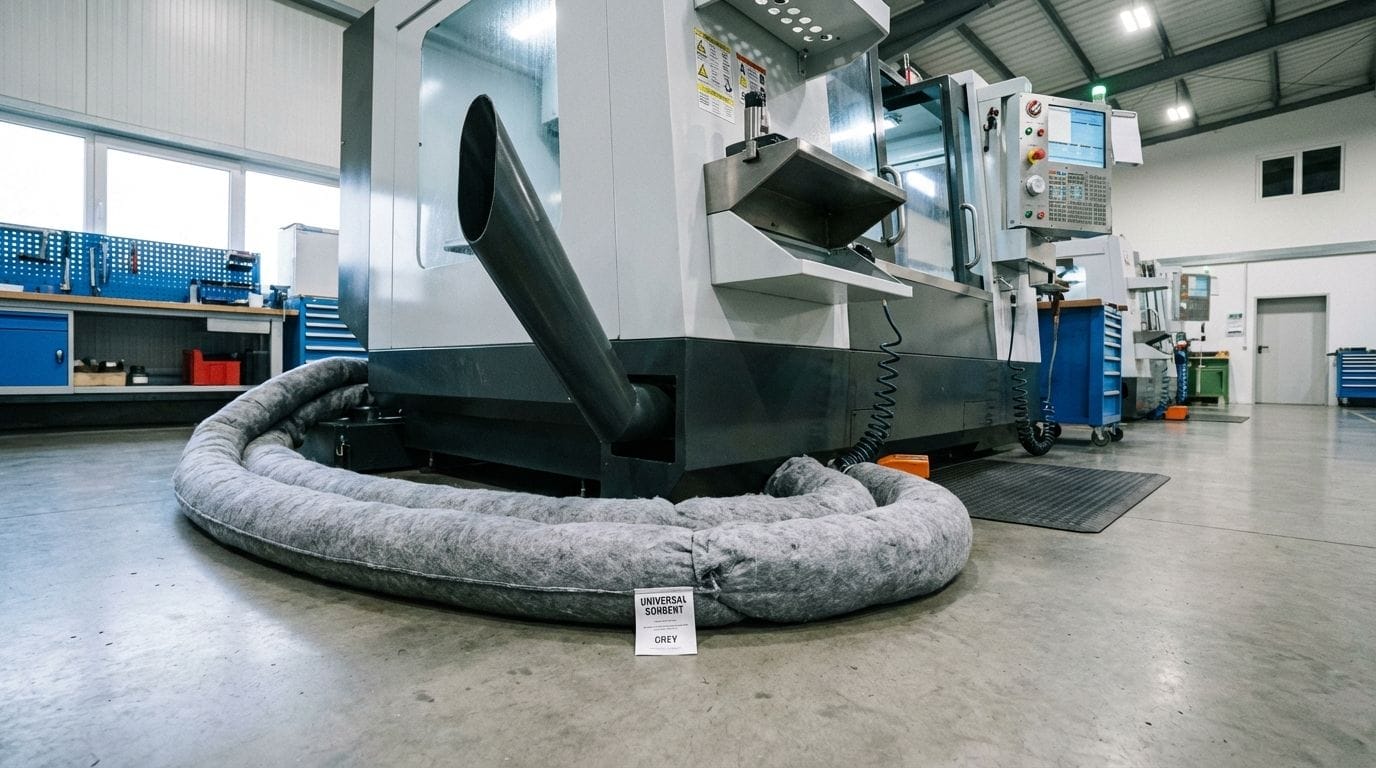
Either scenario benefits from keeping absorbent socks positioned as a permanent containment ring around the base of coolant-fed machines rather than only pulling them out after a spill starts. A ring in place before the leak happens buys time between the first drop hitting the floor and someone noticing the machine needs attention.
Building a Coolant Spill Response Routine
A workable routine starts with matching the absorbent to the machine. Any cell running water-miscible coolant should have universal absorbent pads or coolant-rated absorbent staged within reach, not oil-only pads borrowed from the oil-change bay. Pairing that with absorbent socks for containment and a clearly marked disposal bin for saturated material keeps the whole response contained to under two minutes for a typical drip or small spill.
Training matters as much as stocking. New operators should know, specifically, that coolant is not oil, that the pads for one do not work well on the other, and that a coolant puddle that looks dry may still be slick. A five-minute walkthrough during onboarding, repeated at the machine rather than in a classroom, tends to stick better than a written policy nobody reads twice.
For shops managing multiple fluid types across a facility, cross-referencing AbsorbentX’s maintenance absorbents guide and industrial absorbents guide alongside this article gives a fuller picture of matching absorbent grade to fluid type across an entire maintenance program, not just at the coolant-fed machines.
Frequently Asked Questions
Is machine coolant the same as antifreeze?
No. Machine shop coolant, also called water-miscible cutting fluid, is a water-based emulsion or synthetic solution used to cool and lubricate cutting tools. Automotive antifreeze is a glycol-based fluid used in engine cooling systems. They have different chemistry, different hazards, and different cleanup and disposal requirements.
Can I use oil absorbent pads on a coolant spill?
Standard oil-only pads will underperform badly because their fibers are built to repel water-based fluid. Use a universal absorbent pad or an absorbent specifically rated for water-miscible fluids instead; oil-only pads remain the right choice for straight cutting oil and hydraulic fluid leaks.
Is a coolant spill hazardous waste?
It depends on what has accumulated in the sump. Coolant that has picked up tramp oil, machining fines, or heavy metal contamination may require a hazardous waste determination before disposal, unlike fresh concentrate. Checking with a licensed waste hauler on your specific fluid and contamination level is the safest path.
Why does coolant feel slippery even after I mop it up?
Coolant leaves a thin residual film from its emulsifiers and lubricity additives that plain mopping does not fully remove. A degreaser-rated floor cleaner applied after the bulk absorb step clears that residue and restores normal floor traction.
How often should coolant sumps be checked for leaks?
A daily visual check of fluid level and hose fittings, paired with a weekly closer inspection of pump seals and tank seams, catches most slow leaks before they become a floor-wide spill. Shops running multiple machines often fold this into existing shift-start checklists.