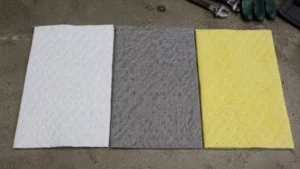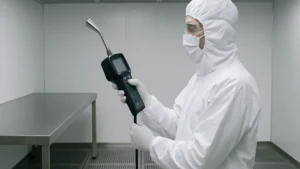
A supplier quotation lands in your inbox and the second line of the spec sheet says “produced in a dust free workshop.” Ten minutes later a competing quote says “manufactured in an ISO Class 8 cleanroom.” The two phrases look like they describe the same thing. They do not. Getting dust free vs cleanroom straight is the difference between taking a supplier at their word and holding a document you can put in front of an auditor.
The short version: cleanroom is a defined, measured, certifiable environment governed by ISO 14644. Dust free is a description. Anyone can write it, nobody audits it, and it carries exactly as much weight as the evidence behind it. This article explains what each term means, where dust-free language is legitimate, and how to vet a supplier claim before it becomes your problem.
What “Dust Free” Actually Means (and What It Doesn’t)
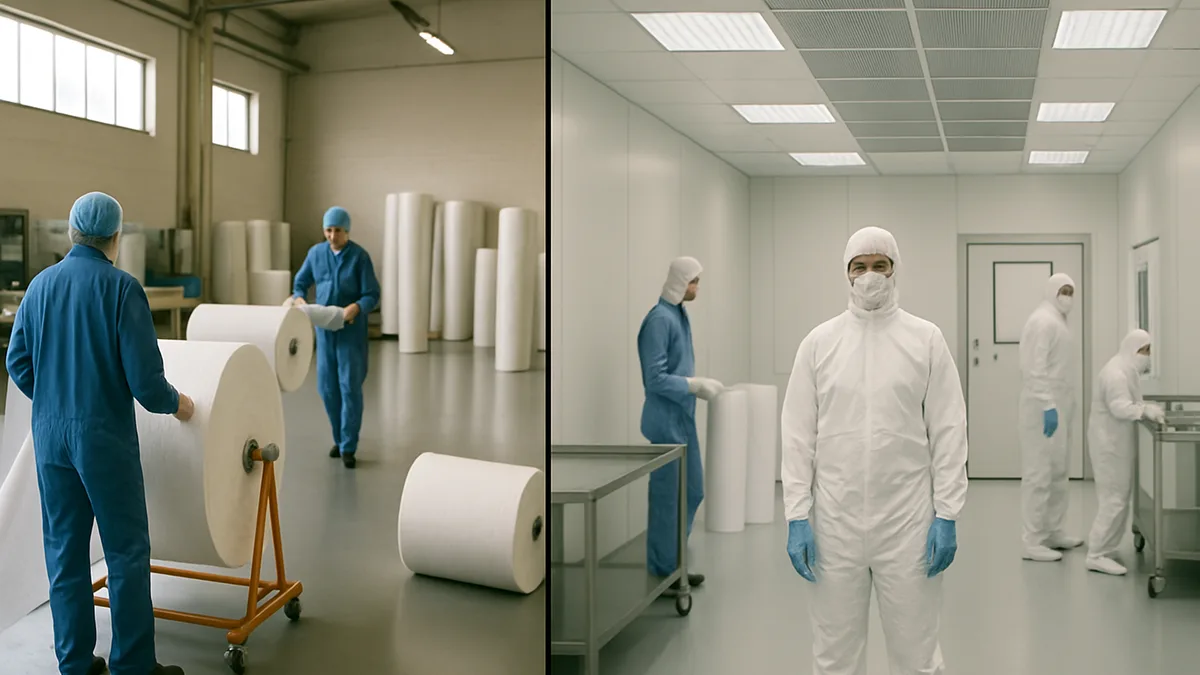
Dust free is a plain-language marketing claim. There is no ISO number behind it, no test method that defines it, no certificate that confirms it, and no body that withdraws it if it turns out to be untrue. A workshop that sweeps twice a shift and a semiconductor fab can both print the phrase on a brochure without breaking any rule.
The phrase is also literally impossible. Even in an ISO Class 5 environment particles are present — the standard sets a maximum concentration, not zero. In practice “dust free” means “cleaner than an ordinary factory floor,” which is a useful description and a worthless specification.
None of that makes the term dishonest by default. It becomes a problem when a buyer reads “dust free workshop,” files it mentally as “certified clean environment,” and then writes that assumption into an internal quality record. The claim itself is vague; the damage comes from treating vague as verified.
What a Cleanroom Is, by Definition
A cleanroom is a room in which airborne particle concentration is controlled, measured and classified against a published standard. The governing document is ISO 14644-1, the international standard for classifying air cleanliness by particle concentration, which defines nine classes — ISO Class 1 at the cleanest end through ISO Class 9 — by the maximum permitted number of particles per cubic metre at threshold sizes from 0.1 µm to 5 µm.
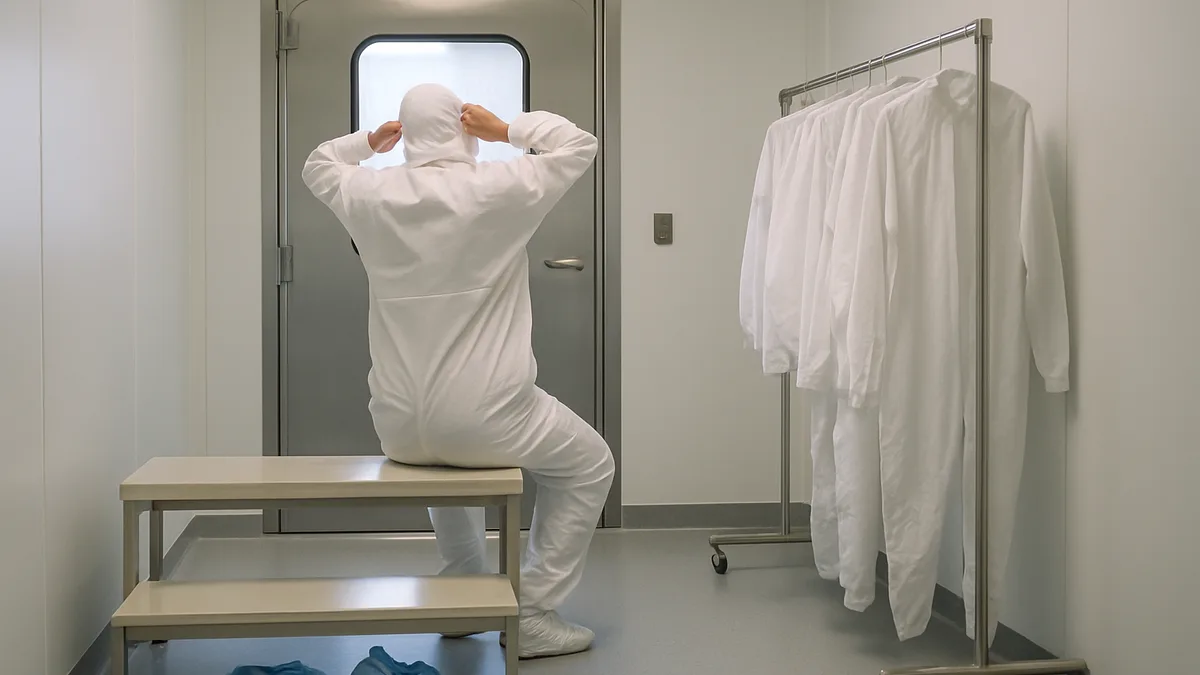
Three properties separate a cleanroom from a merely tidy room. It is classified: a testing body has taken particle counts at a calculated number of sample locations and issued a certificate naming a class. It is monitored: differential pressure, air changes per hour, temperature and humidity are logged rather than assumed. And it is requalified on a schedule, typically every 6 to 12 months depending on class and sector.
The engineering follows from that. HEPA or ULPA terminal filtration, anywhere from roughly 20 to 60-plus air changes per hour at lower classes, positive pressure cascades between zones, gowning airlocks and defined material transfer procedures all exist to hold the measured number where the certificate says it sits. A room with every piece of that hardware and no valid test report is still, formally, not a cleanroom.
Dust Free vs Cleanroom: Side-by-Side Comparison
The table below is the practical form of the distinction. Read it as a checklist rather than trivia — every row is something you can ask a supplier to evidence.
| Factor | “Dust Free” Area | Classified Cleanroom |
|---|---|---|
| Standard behind it | None. Informal and self-declared. | ISO 14644-1, or EU GMP Grades A–D in pharmaceutical work. |
| Measurement | Usually none, or an occasional spot check with no protocol. | Particle counts at defined sample locations, calculated sample size, documented method. |
| Air handling | General HVAC, sometimes filtered supply, occasionally fan filter units over key stations. | HEPA or ULPA terminal filtration, defined air changes per hour, unidirectional flow where required. |
| Pressure control | Rarely designed and almost never verified. | Positive pressure cascade between zones, differential pressure logged continuously. |
| Gowning | Smocks, hairnets and shoe covers, applied informally. | Defined gowning sequence in an airlock, class-appropriate garments, documented training. |
| Monitoring | Visual inspection. | Scheduled particle counts, environmental monitoring records, alarm limits. |
| Documentation | A sentence on a brochure. | Classification certificate, full test report, requalification date, counter calibration records. |
| Requalification | Not applicable. | Typically every 6–12 months, usually by an accredited third party. |
| Relative cost | Low — mostly discipline and housekeeping. | High — construction, HVAC energy, consumables, testing and gowning overhead. |
Notice that the top rows are about physics and the bottom rows are about evidence. A supplier can genuinely have good air handling and still fail every documentation row, and that is exactly the situation that creates audit exposure for the buyer.
Where “Dust Free” Language Is Legitimate
Plenty of honest manufacturers use the phrase, and dismissing it outright would be unfair. A controlled production area that is physically separated from cutting and baling operations, runs filtered supply air, restricts foot traffic and enforces smocks and shoe covers is meaningfully cleaner than an open factory floor. Calling that area dust free is loose language describing a real improvement.
The term also appears on consumables, where it means something narrower and more useful. “Dust free wipes” almost always means low-linting — a wipe that does not shed fibres onto the surface it touches. That is a legitimate product attribute even when the room the wipe was made in has never been classified.
A workable rule of thumb: dust free is acceptable as a description of housekeeping and product behaviour, and unacceptable as a substitute for a classification. A supplier who uses it the first way and can explain what they actually do is showing you something real. A supplier who uses it the second way and gets defensive when asked for a certificate has answered your question.
Why the Distinction Matters Commercially
The first exposure is audit. If your quality system states that a component is produced in a controlled environment and your only evidence is a supplier brochure, a customer or regulatory audit will record that as an unsupported claim. The finding lands on you, not on the factory that wrote the sentence.
The second is contract specification. Medical device, semiconductor, optics and aerospace customers routinely flow a specific class down into purchase orders — “packaged in an ISO Class 8 or better environment,” for example. Substituting a dust free workshop for that requirement is a nonconformance whether or not the parts happen to be clean.
The third is money you only see later. Particle contamination surfaces as coating defects, adhesion failures, optical rejects and field returns, and by then a single rework cycle can dwarf the price gap between the two suppliers you were comparing. Contamination control is cheap at the sourcing stage and expensive at the customer stage.
How to Verify a Supplier’s Cleanroom Claim
Verification is a paperwork exercise, and a fast one once you know what to ask for. Send these requests in writing so the answers land in the supplier file.
- The classification certificate — issued by whom, naming which specific ISO class, and covering which rooms or zones.
- The full ISO 14644-1 test report rather than the cover page: sample locations, number of samples, particle sizes measured, and the pass/fail calculation.
- The occupancy state the test was performed in — as-built, at-rest, or in-operation. This is the most common gap in the whole exercise.
- The date of the last requalification and the scheduled date of the next one.
- Calibration certificates for the airborne particle counter used, current as of the test date.
- A floor plan marking which operations happen inside the classified zone — often it is final packing only, not the whole production line.
- The gowning procedure and training records, plus the environmental monitoring log for the last quarter.
The occupancy-state question deserves emphasis. A room tested at-rest, with equipment installed and running but no personnel present, will always count far cleaner than the same room in operation. A supplier quoting an at-rest ISO Class 7 result for a space where twelve people work a shift has not lied, but the number does not describe your production conditions. Ask for in-operation data and watch how quickly it arrives.
When the honest answer is “we have no certificate, but the area is clean and separated,” that supplier can still be perfectly acceptable. It simply changes what you are entitled to write down: document the actual controls, record it as a controlled clean area rather than a classified environment, and confirm that nothing in your customer specifications demands more.
When You Actually Need a Certified Cleanroom
Not every product justifies the expense. A certified environment is genuinely required when a customer specification or regulation names a class, when the product is implanted, injected or contacts a sterile fluid path, when feature sizes or optical tolerances make a single particle a defect, or when you supply into pharmaceutical and semiconductor chains that audit vendors directly.
A well-run controlled clean area is usually sufficient for industrial wipes, absorbents, general packaging, most automotive and machine-shop consumables, and hygiene-driven rather than particle-driven food-adjacent items. Even then, specify what you need — segregated production, filtered air, defined gowning, no bare-hand contact, sealed poly bagging — instead of accepting “dust free” and hoping for the best.
The practical mistake runs in both directions. Buyers over-specify a cleanroom for a product that never needed one and pay a substantial premium for it, or they under-specify and discover the gap mid-audit. Deciding deliberately, then writing the decision into the purchase specification, avoids both outcomes.
How This Maps to Wipes and Consumables
The same terminology gap runs straight through consumables. A dust free wipe is a marketing description of low linting; a cleanroom wipe is a product with construction features and test data behind it. Both can be good products, but only one of them can be specified.
Cleanroom-grade wipes are typically knitted polyester or polyester-cellulose, laser-sealed or ultrasonically sealed at the edges to stop fibre release, laundered in deionised water, double-bagged in a classified environment, and supplied with lot-level particle count, extractables, ion content and sorbency data. A dust free wipe may be a spunlace nonwoven with cut edges and no test data — often entirely adequate for maintenance, tool wipe-down or oil handling, and not adequate for an optical or medical surface.
If you are choosing between the two for a specific task, our guide to lint-free wipes and how linting is actually measured breaks down the constructions and test methods, while the comparison of shop towels versus industrial wipes covers the everyday trade-offs between cost, absorbency and fibre release.
For fluid control the distinction usually collapses into simple job-matching rather than classification. Oil handling, machine maintenance and spill response are served by absorbent ranges built for capacity and selectivity: oil absorbent pads and the selective oil-only absorbent pads are specified by grade, weight and absorbency rather than by particle class. Applying cleanroom language to a maintenance-bay product is as unhelpful as applying “dust free” to a semiconductor line.
Questions to Put in Your Next Supplier Email
Copy these directly. The quality of the reply tells you more than the answers themselves — a supplier with a real classified environment responds within a day with attachments, while a supplier leaning on the phrase will negotiate around the question.
- Is the production area classified under ISO 14644-1? If so, which class, and can you send the certificate and the full test report?
- Was the classification performed as-built, at-rest, or in-operation?
- When was the last requalification, and who performed it?
- Which specific operations take place inside the classified zone?
- If the area is not classified, what controls are in place — filtration, segregation, gowning, monitoring — and can you describe them in writing?
- For wipes and consumables, is lot-level particle count and edge-sealing data available?
An honest “our workshop is controlled and segregated but not classified” is a perfectly workable outcome. It lets you specify accurately, price accurately, and avoid committing a claim to your quality system that you cannot defend. That is the entire point of getting the terminology right.
The Bottom Line
Dust free is a description; cleanroom is a classification. One is a claim about housekeeping, the other is a number a third party measured and signed. Neither is inherently better — a controlled clean area is the right answer for a large share of industrial products — but only one of them survives an audit.
When you compare quotes, treat “dust free workshop” as the start of a conversation rather than a spec line. Ask for the certificate, ask for the occupancy state, and record what you actually receive. AbsorbentX works with sourcing and QA teams who need that distinction stated plainly in a specification instead of buried in brochure language.
FAQ
Is a dust free room a cleanroom?
Not unless it has been classified. “Dust free room” is an informal description with no standard behind it, while a cleanroom is an environment tested and certified against ISO 14644-1 at a named class. A dust free room may happen to meet a class, but without a test report there is no way to know it and no way to document it.
Are dust free wipes the same as cleanroom wipes?
No. Dust free wipes generally means low-linting, which is a useful but unmeasured description. Cleanroom wipes are laser-sealed or ultrasonically sealed at the edges, laundered and packaged in a classified environment, and supplied with lot-level particle count and extractables data.
What ISO class counts as a cleanroom?
Any class from ISO Class 1 through ISO Class 9 under ISO 14644-1 is a classified cleanroom. ISO Class 9 is only modestly cleaner than typical room air, so the class number matters far more than the word “cleanroom” on its own.
Does a dust free workshop need HEPA filters?
There is no requirement, because there is no standard. Many controlled areas do use filtered supply air or localised fan filter units over critical stations, but a supplier can call an area dust free while running ordinary HVAC, and nobody is checking.
How can I tell if a supplier really has a cleanroom?
Request the classification certificate, the full ISO 14644-1 test report including sample locations and occupancy state, the last requalification date, and the particle counter calibration certificate. A genuinely classified facility produces these quickly; a marketing claim does not.
What is the difference between at-rest and in-operation cleanroom testing?
At-rest means equipment is installed and running but no personnel are present. In-operation means the room is tested under normal working conditions with staff and processes active. In-operation counts are always higher, so always ask which state a quoted class refers to.
Do I need a certified cleanroom for industrial wipes or absorbents?
Usually not. Segregated production, filtered air, defined gowning and sealed packaging are sufficient for most industrial wipes and absorbent products. A certified environment becomes necessary when a customer specification, a regulation, or an optical, medical or semiconductor application requires one.