An oil leak on a production floor rarely announces itself with a dramatic spill. More often it’s a slow drip under a hydraulic press, a hairline weep at a compressor fitting, or a gasket that seeps a few ounces per shift — small enough to ignore until it isn’t. This guide covers oil leaks the way facility and maintenance teams actually deal with them: as a recurring equipment condition that needs a repeatable cleanup, containment, and control system, not a one-time emergency response. AbsorbentX works with plants, fleets, and warehouses that manage dozens of leak points at once, and the steps below reflect what actually keeps floors safe and audits clean.
Common Causes of Industrial Oil Leaks
Most industrial oil leaks trace back to a handful of failure points. Seals and gaskets harden, crack, or shrink with age and heat cycling, especially on hydraulic cylinders, gearboxes, and pump housings that run above 150°F. Fittings loosen from vibration over time — a fitting torqued correctly at installation can back off after a few thousand operating hours on a press or conveyor drive, and that’s the single most common leak source maintenance teams report on hydraulic lines.
Pressure is the other half of the equation. Hydraulic systems operating at 2,000-3,000 PSI will find any weakness in a seal, hose, or fitting far faster than a low-pressure lubrication system will, which is why hydraulic equipment accounts for a disproportionate share of reported machine oil leak incidents. Overfilled reservoirs, contaminated fluid that degrades seal material, and simple wear on rod seals and wiper seals round out the usual list.
A smaller but persistent category is installation error — a gasket seated off-center, a fitting cross-threaded, or the wrong viscosity fluid specified for the seal compound in use. Facilities that log every leak by location and cause typically find that 60-70% of repeat leaks come from the same three or four machines, which is useful data when deciding where to put standing drip pads versus where to schedule a repair.
Why Ongoing Oil Leaks Are a Bigger Problem Than They Look
A slow leak that never grows into a visible spill still creates a slip hazard every single day it’s left unmanaged. Oil films on concrete or coated flooring reduce coefficient of friction dramatically, and OSHA’s walking-working surfaces standard (29 CFR 1910.22) requires floors to be kept clean and, so far as possible, dry — a standing puddle under a machine is a direct housekeeping violation, not just a nuisance.
Left unaddressed, leaks also damage the equipment causing them. Low fluid levels starve pumps and bearings of lubrication, leading to overheating and premature component failure that costs far more to repair than the seal that was leaking in the first place. Contamination is a factor too — dust and metal fines mix into pooled oil and get drawn back into the system, accelerating wear on precision components.
There’s a regulatory and environmental dimension as well. Oil that migrates to a floor drain, storm drain, or bare soil can trigger reporting obligations under the Clean Water Act and state environmental rules, and even small recurring leaks add up to significant volume over a year. The EPA’s used oil management guidance treats chronic small leaks as seriously as one-time spills, since the cumulative environmental exposure is often larger.
Immediate Cleanup Response for an Active Oil Leak
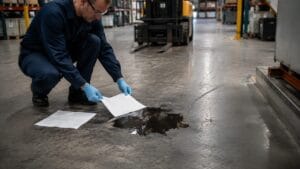
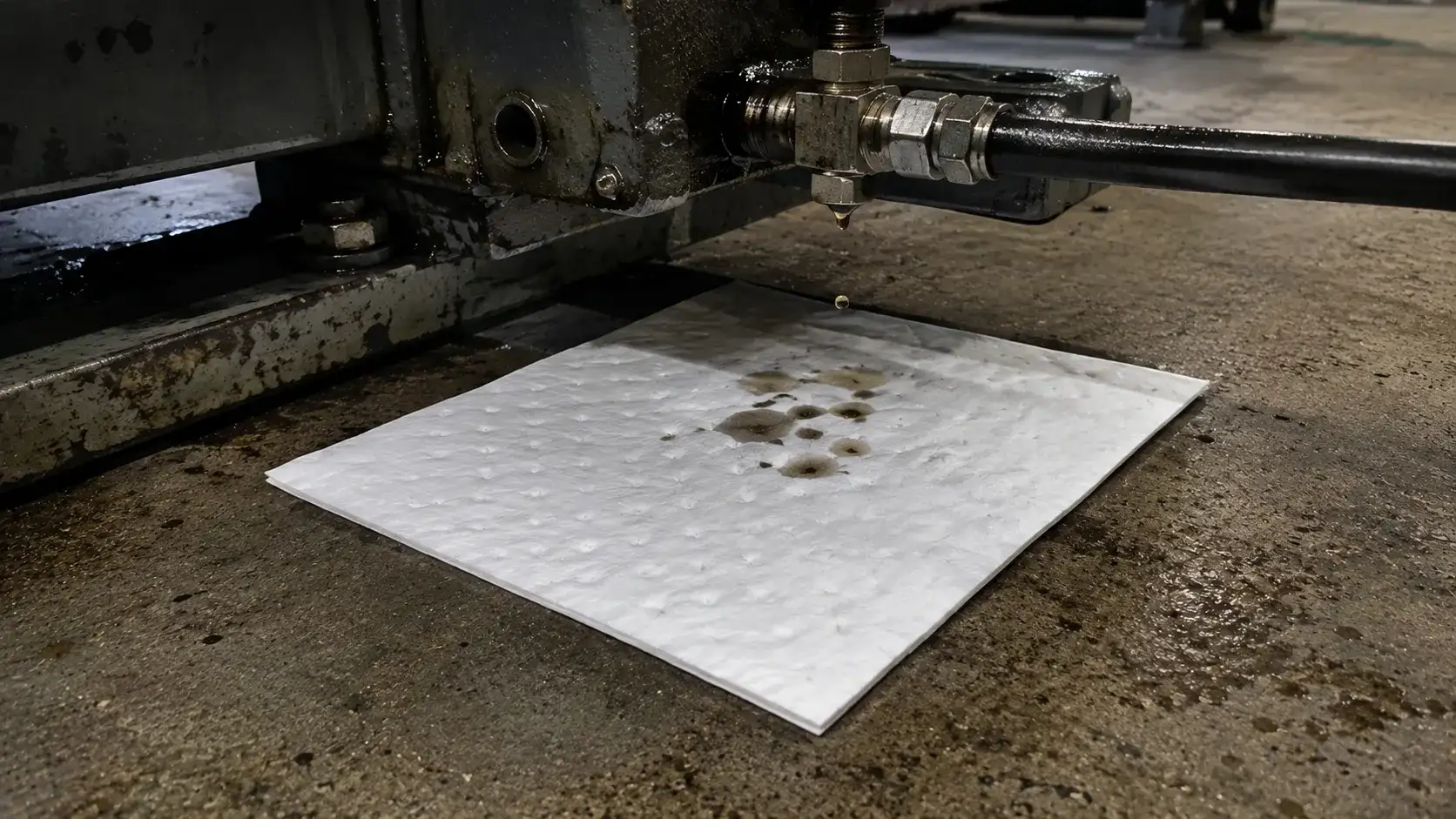
When a leak is discovered, the first move is to get absorbent material under and around the drip point immediately, not to reach for a mop and degreaser. Oil-only absorbent pads placed directly beneath the leak point catch fluid before it spreads across the floor, and because they’re hydrophobic, they won’t soak up ambient moisture or coolant mixed in on a wet shop floor, which keeps disposal volume down.
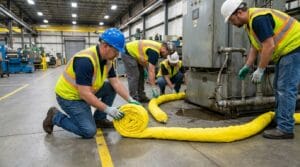
For a leak that has already reached the floor, work from the outer edge of the pool inward with pads or loose absorbent to prevent the oil from spreading further while you place a boom or sock around the perimeter. Press pads firmly onto the surface rather than dragging them, which pulls oil into a smaller area instead of smearing it across a larger one.
AbsorbentX’s oil absorbent pads are graded by weight and thickness, so a heavier hydraulic drip gets a heavier-grade pad instead of burning through three light pads to do the job of one.
Once the immediate area is dry, inspect the surface for residual film — a thin sheen that isn’t visibly wet can still be a slip hazard and should be treated with a second, lighter absorbent pass or a degreasing wipe-down. Log the leak location, approximate volume, and machine ID before disposing of used pads; that log becomes the data set that drives the maintenance decisions in the sections below.
Containment: Keeping a Recurring Leak From Spreading
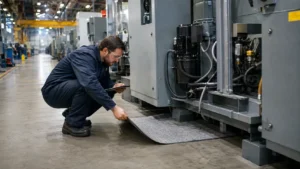
Cleanup handles the mess that’s already happened; containment stops the next drip from becoming a new one. A drip tray or absorbent mat placed permanently under a known leak point catches fluid continuously between maintenance cycles, which is the standard fix for a leak that’s been diagnosed but isn’t scheduled for repair yet. Trays should be sized with margin — a tray that’s an inch or two narrower than the drip radius still lets oil reach the floor on one side.
For leaks near floor drains, aisles, or areas with foot or forklift traffic, an absorbent boom laid in a loose perimeter adds a second layer of containment in case the tray overflows or gets bumped out of position. Booms are also the right call for leaks from mobile equipment — forklifts, generators, compressors on skids — that can’t have a fixed tray underneath them because the equipment moves.
Facilities running multiple leak points benefit from standardizing containment hardware across the floor: the same tray size and pad grade at every drip point simplifies restocking and makes it obvious during a walkthrough which stations are running low. AbsorbentX’s oil-only absorbent pads are graded by weight and thickness for exactly this kind of standardized, facility-wide use.
For a deeper look at building out perimeter containment for larger or less predictable leaks, see AbsorbentX’s oil containment guide, which covers boom placement, secondary containment, and drain protection in more depth.
Long-Term Leak Control: Detection and Preventive Maintenance
Containment buys time; it doesn’t fix the leak. A leak-detection routine built into daily or weekly walkthroughs catches new leaks while they’re still a few drops a shift instead of a puddle. Simple methods work well here — a strip of absorbent tape or a placed pad that’s checked and weighed periodically gives a rough leak rate without any instrumentation, and ultraviolet dye added to hydraulic fluid makes even a faint leak visible under a UV light during inspection.
Preventive maintenance schedules should treat seals, gaskets, and fittings as wear items with a defined service life, not as parts that get replaced only after they fail. Torque-checking fittings on a set interval, replacing rod seals before they crack rather than after, and tracking fluid contamination levels all reduce leak frequency measurably over a year of operation. Plants that move from reactive to scheduled seal replacement commonly report a 30-50% drop in leak-related work orders within two maintenance cycles.
Standing maintenance absorbents — permanent mats under known wear points, absorbent socks around machine bases, and drip pads changed on a fixed schedule rather than only when visibly soaked — turn leak management into a routine restocking task instead of a recurring emergency. That shift is usually what separates a facility with a chronic oil-on-the-floor problem from one that has it under control. See AbsorbentX’s maintenance absorbents guide for a breakdown of standing absorbent programs by facility type.
Choosing the Right Absorbents for Ongoing Machine Leaks
Not every leak calls for the same absorbent. Light hydraulic weeps under a CNC machine or press are well served by thin, high-capacity oil-only pads that fit tightly against the base of the equipment without creating a trip edge. Heavier leaks — gearbox oil, larger hydraulic cylinders, compressor condensate mixed with oil — need a heavier-grade pad or a dedicated drip mat rated for higher absorption volume so it isn’t saturated and replaced every few hours.
Oil-only absorbents matter specifically in wet environments: a facility with coolant, washdown water, or humidity on the floor needs a pad that repels water and absorbs only hydrocarbons, otherwise pads saturate fast with water and stop catching oil at all. This is where general-purpose absorbents fall short compared to oil-only formulations, and it’s a distinction worth specifying correctly on a purchase order rather than defaulting to whatever’s cheapest per case.
For facilities buying in volume — multiple production lines, a fleet maintenance bay, a warehouse with dozens of forklifts — cost per leak point drops significantly by standardizing on bulk cases of a single pad grade rather than mixing brands and grades station to station. AbsorbentX supplies oil-only pads in bulk case quantities built for exactly this kind of facility-wide standardization, with grades from light-duty to heavy hydraulic-service.
Disposing of Oil-Soaked Absorbents Correctly
Used oil-absorbent pads are generally regulated as used oil under EPA rules once they’ve absorbed petroleum-based fluid, which means they can’t just go in the regular trash in most jurisdictions. Facilities should keep a closed, labeled container specifically for oil-soaked absorbents, separate from other waste streams, and check state-specific rules since some states regulate saturated absorbents more strictly than the federal baseline.
A quick squeeze test is a useful field check: if a used pad releases free liquid when compressed, it’s still considered to contain free-flowing oil and typically needs to be handled and disposed of through a licensed used-oil or hazardous-waste hauler rather than standard waste pickup. Pads that no longer release liquid may qualify for disposal as non-hazardous solid waste in many states, but that determination should be confirmed locally rather than assumed.
Keeping a simple log — date, machine, approximate volume absorbed, and disposal method — does double duty. It satisfies most inspection and audit requirements, and it’s the same data that flags which machines are leaking often enough to justify a repair instead of another case of pads. Facilities that skip this step are the ones that get caught off guard during an environmental audit.
Frequently Asked Questions
What is the most common cause of an oil leak in industrial equipment?
Worn or degraded seals and gaskets are the single most common cause, followed closely by fittings that have loosened from vibration over time. Hydraulic systems are especially prone to this because operating pressures of 2,000-3,000 PSI expose any weakness in a seal or connection far faster than a low-pressure system would.
How do you stop a machine from leaking oil without shutting it down?
Placing an absorbent pad, mat, or tray directly under the leak point contains the fluid and keeps the floor safe while the leak is scheduled for proper repair. This isn’t a permanent fix — it’s a containment measure that buys time until maintenance can replace the failed seal, gasket, or fitting.
Are oil-only absorbent pads different from regular absorbent pads?
Yes. Oil-only pads are made from hydrophobic material that repels water and absorbs only petroleum-based fluids, which matters in facilities with coolant, washdown water, or ambient humidity on the floor. General-purpose absorbents soak up water too, saturating fast and losing their ability to catch oil.
How often should drip pads or trays be changed?
It depends on leak volume, but pads should be changed before they’re fully saturated, not after — a saturated pad stops absorbing and lets oil reach the floor underneath it. Facilities on a fixed replacement schedule tied to observed leak rate generally get more consistent floor protection than those changing pads only when visibly soaked.
Can I throw used oil absorbent pads in the regular trash?
In most cases, no. Pads saturated with petroleum products are typically regulated as used oil and need to go in a labeled container for disposal through a licensed hauler, especially if they still release free liquid when compressed. Check state-specific rules, since requirements vary.
What’s the difference between an oil spill and an ongoing oil leak?
A spill is typically a one-time, often larger release that needs immediate emergency response and cleanup. An ongoing leak is a recurring, usually smaller release from equipment that needs a standing containment and maintenance program rather than a single cleanup event — the strategies for managing each differ accordingly.