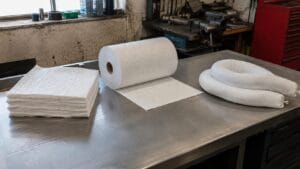

Oil spills are more than just a mess—they are a safety liability and a regulatory headache waiting to happen. Whether you are managing a busy automotive shop or a large industrial warehouse, keeping floors dry is not just about cleanliness; it is a federal requirement under OSHA 1910.22(a)(2). Oil absorbent socks are the standard first line of defense for these situations.
You know how difficult it is to stop a spill once it starts spreading under machinery. That is where these tools prove their worth.
Instead of just throwing down loose clay and hoping for the best, using a contained sock creates an immediate, physical dam. This guide covers the specific types of socks available, the exact color codes you need to know for compliance, and the practical steps to keep your facility safe.
What Are Oil Absorbent Socks
Oil absorbent socks are flexible, tube-shaped barriers designed to encircle spills and contain leaks at the source. Most standard industrial socks measure 3 inches in diameter and come in lengths of 4, 8, or 12 feet. They act as a physical dike that absorbs liquid on contact while preventing it from flowing into walkways or drains.
Definition and Material Composition
These socks consist of a durable outer skin, usually made of polypropylene, which resists tearing even when saturated. Inside, they are filled with high-surface-area sorbent materials. Common fillers include expanded polypropylene for oil-only applications or cellulose and corn cob for universal cleanup.
The choice of filler determines the sock’s performance. Polypropylene fillers are hydrophobic, meaning they repel water while soaking up hydrocarbons. This makes them essential for outdoor applications where you need to trap oil but let rainwater pass through.
How Socks Differ from Pads, Rolls, and Booms
While pads and rolls handle direct cleanup, socks are built for containment. A pad is like a towel, best for wiping up a puddle. A sock is a barrier, best for surrounding a leaking machine base.

| Tool | Primary Function | Best Use Case |
|---|---|---|
| Absorbent Sock | Containment & perimeter control | Wrapping around leaking machine bases or blocking doorways. |
| Absorbent Pad | Direct absorption & wiping | Catching drips on a benchtop or wiping oily parts. |
| Absorbent Boom | Large-scale containment | Floating on open water to contain large oil slicks (5+ inch diameter). |
Booms are significantly larger and feature heavy-duty clips to link them together for marine spills. Socks are smaller and designed for precise placement on factory floors or tight workspaces.
How Oil Absorbent Socks Work
The science behind these socks relies on capillary action. The filler material draws liquid into its void spaces, trapping it effectively. A standard 3-inch by 4-foot polypropylene sock can typically absorb about 0.8 to 1 gallon of oil. This high absorption ratio often allows the sock to hold 10 to 15 times its own weight in liquid.
When you place a sock around a spill, the outer skin allows oil to penetrate quickly while keeping the filler contained. This prevents the “mush” associated with loose clay absorbents. Because the skin is flexible, you can mold it against uneven concrete or curve it around the legs of a hydraulic press to create a tight seal.
Types of Oil Absorbent Socks
Selecting the correct sock is critical for safety and efficiency. The industry uses a standard color-coding system to help workers identify the right tool instantly. Using the wrong type can lead to ineffective cleanup or dangerous chemical reactions.
Oil-Only Absorbent Socks (White)
White socks are designed strictly for hydrocarbons. They are made with hydrophobic polypropylene that repels water entirely. If you throw a white sock into a sump pit filled with water and oil, it will float and absorb only the oil.
- Target Liquids: Gasoline, diesel, hydraulic fluid, motor oil, jet fuel.
- Key Feature: They float on water even when saturated.
- Best Application: Outdoor spills in rain, marine bilges, or storm drain protection.
Universal Absorbent Socks (Grey)
Grey socks are the workhorses of indoor maintenance. They use hydrophilic fillers like cellulose or treated polypropylene to soak up any liquid they touch. These are the standard choice for keeping shop floors dry around machining centers or coolant tanks.

Pro Tip: Never use grey universal socks outdoors if rain is expected. They will absorb the rainwater immediately, becoming heavy, saturated, and useless for blocking any oil.
Chemical-Resistant Absorbent Socks (Yellow)
Yellow socks signal caution. They are engineered with chemically inert materials to handle aggressive fluids that would dissolve or react with standard socks. If your facility handles battery acid, caustic soda, or unknown liquids, yellow is the mandatory color.
These socks effectively contain hazardous spills without degrading. Labs and chemical processing plants keep these in spill kits to manage sulfuric acid or sodium hydroxide leaks safely.
Common Applications for Oil Absorbent Socks
You will find these tools in almost every sector that handles heavy machinery, from automotive repair to food processing. They serve specific roles in keeping operations running smoothly.
Equipment Perimeters and Machine Bases
Leaking hydraulic lines or coolant pans are common in manufacturing. Placing a sock around the base of a CNC machine or injection molder prevents these fluids from migrating into the aisle. This keeps you compliant with OSHA walking-working surface standards.

Drains, Trenches, and Doorways
Protecting storm drains is a priority to avoid EPA fines. A common tactic is to place socks in front of roll-up doors or trench drains during maintenance. This creates a last line of defense. If a drum tips over, the sock buys you time to react before the chemical enters the sewer system.
Containing Leaks Along Irregular Paths
Rigid barriers cannot seal against cracked or uneven concrete. Socks excel here because they are malleable. You can snake them along a winding crack or wrap them tightly around a drum that is leaking from the bottom seam. This flexibility ensures that the liquid stays exactly where you want it.
How to Choose the Right Oil Absorbent Socks
Making the right choice depends on three factors: the liquid type, the volume of the spill, and the location.
First, check the Safety Data Sheet (SDS) of the liquid. If it is an acid, you must use yellow chemical socks. If it is standard motor oil indoors, grey universal socks are the most cost-effective option.
Second, consider the volume. For high-volume leaks, look for socks with larger diameters or consider linking multiple 12-foot socks. A standard 4-foot sock is perfect for a 1-gallon spill, but a ruptured 55-gallon drum requires much more capacity.
Finally, check the filler material if you have specific disposal needs. Some cellulose socks are biodegradable or incinerable, which can lower your waste disposal costs compared to synthetic options.
How to Use Oil Absorbent Socks Effectively
Even the best sock fails if placed incorrectly. Follow these steps to ensure a tight seal and maximum containment.

- Identify the Liquid: Confirm the spill type to choose the correct color (White, Grey, or Yellow).
- Clear Debris: Remove any large trash or debris from the area where the sock will sit to ensure contact with the floor.
- Mold the Barrier: Place the sock at least 6 to 12 inches away from the spill’s edge. Curve the ends inward to trap the liquid.
- The Overlap Rule: If using multiple socks, overlap the ends by at least 8 inches. This prevents liquid from seeping through the joint between two socks.
- Tamp Down: Step lightly on the sock or press it down with your hand to settle the filler and create a seal against the concrete.
- Monitor Saturation: Watch the sock color. As it absorbs, it will darken. Replace it before it becomes fully saturated and starts to leak.
- Do Not Drag: Once a sock is heavy with oil, do not drag it. The skin can tear on rough concrete. Lift it carefully into a disposal bag.
- Use PPE: Always wear nitrile gloves and safety glasses. The sock is safe, but the liquid inside it is hazardous.
Can Oil Absorbent Socks Be Reused
In most industrial cases, oil absorbent socks are single-use items. Once the sorbent material is saturated, its structure collapses and it cannot effectively hold more liquid. Attempting to reuse a saturated sock creates a high risk of secondary spills.
There are rare exceptions, such as specific “wringable” polypropylene socks designed for fuel blending programs, but these are labor-intensive. For standard operations, once a sock has done its job, it becomes waste. Reusing a sock that has absorbed hazardous chemicals is also a safety violation that puts workers at risk of exposure.
Disposal and Waste Management of Oil Absorbent Socks
Disposal is the most complex part of the process because it depends on what the sock absorbed. You must adhere to federal and local regulations, specifically 40 CFR 261, to determine if the waste is hazardous.

- Hazardous Waste: If the sock absorbed a listed hazardous substance (like certain solvents or acids), the sock itself is now hazardous waste. It requires specialized hauling and disposal.
- Non-Hazardous Waste: In some states, socks used for non-hazardous oil may be disposed of in standard landfills if they are not dripping. However, states like California have stricter rules prohibiting this.
- Energy Recovery: Many facilities use waste-to-energy programs. Oil-soaked polypropylene socks have a high BTU value and can often be incinerated for power generation at approved facilities.
- No Free Liquids: Regardless of the method, EPA rules generally require that no “free liquids” can be present. The sock must hold the liquid without dripping.
Safety and Environmental Considerations
Using absorbent socks is a proactive step toward compliance and safety. They directly address two major concerns: worker injury and environmental pollution.
Preventing Slip Hazards and Secondary Spills
Slips, trips, and falls are a leading cause of workplace injuries. A slow oil leak can turn a concrete floor into an ice rink. By confining the leak to a small area with a sock, you maintain safe walkways for your team.
Socks also prevent “secondary spills,” which happen when a liquid flows into a new area, mixing with other chemicals or damaging equipment. Containment keeps the problem isolated and manageable.
Environmental Protection and Compliance Awareness
Preventing runoff is a legal obligation. If oil from your facility reaches a storm drain, you could face significant fines under the Clean Water Act. Absorbent socks are a recognized “Best Management Practice” (BMP) for Stormwater Pollution Prevention Plans (SWPPP).
Keeping spill kits stocked with the right socks shows inspectors that you are prepared. It demonstrates a commitment to protecting local waterways and complying with state and federal environmental laws.
Storage, Handling, and Spill Preparedness
Socks do expire. Polypropylene is sensitive to UV light. If you store white oil socks in direct sunlight, the outer skin will degrade and flake apart within a few months.

- UV Protection: Store socks indoors or in opaque containers to block sunlight.
- Shelf Life: Under proper conditions, polypropylene socks last about 5 years. Cellulose socks may last 1-2 years but are sensitive to moisture and humidity.
- Spill Kits: Place spill kits containing socks near high-risk areas like drum storage, dispensing stations, and loading docks.
- Monthly Inspections: Check your supply monthly. Ensure mice or pests have not nested in cellulose socks, as they can attract vermin.
- Accessibility: Do not bury spill supplies behind pallets. Seconds count when a hose bursts.
- Labeling: clearly label storage bins as “Spill Response” so any employee can find them in an emergency.
Conclusion
Oil absorbent socks are simple tools that solve complex problems. They keep your workers safe from slips, protect your facility from EPA fines, and make the dirty job of spill cleanup much faster.
The key to success is preparation. Know the difference between white and grey socks, keep them stored away from the sun, and train your team on the 8-inch overlap rule. By treating these absorbents as essential safety equipment rather than just shop supplies, you ensure that when a spill happens, it remains a minor incident rather than a major crisis.