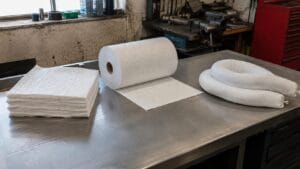
Oil leaks and spills in your shop or workplace can be hard to control and clean. Oil absorbent pads soak up oil quickly, making cleanup safer and easier. This guide will show you how these pads work, the types available, and tips for choosing the right ones for your needs.
Stay with us to learn simple steps for handling oil spills better.
What Are Oil Absorbent Pads?
Oil absorbent pads, often called sorbent sheets or mats, are engineered layers of material designed to selectively soak up hydrocarbons like motor oil, gasoline, and diesel. Unlike a standard shop rag that spreads liquid around, these pads lock fluids inside their fibers. They are a primary defense in complying with OSHA’s walking-working surfaces standard (29 CFR 1910.22), which mandates that floors be kept clean and dry.
The most common material for these pads is polypropylene. Manufacturers use this plastic because it is naturally oleophilic (oil-loving) and hydrophobic (water-fearing). This specific chemical trait allows a crew member to throw a white pad onto a wet floor or even a rain-filled ditch and pull up only the oil, leaving the water behind.
You will typically find these pads in three construction styles:
- Meltblown: Made from random, fast-absorbing fibers. These are great for quick cleanup but can leave lint behind.
- Bonded: The fibers are fused together (often ultrasonically) to create a stronger, lint-free surface that stands up to foot traffic.
- Laminated: These have extra layers for durability, making them suitable for scrubbing or placing under heavy machinery parts.
How Oil Absorbent Pads Work
The science behind these pads relies on surface tension and capillary action. When you place a pad on a spill, the polypropylene fibers physically attract the hydrocarbon molecules. Because the fibers are so fine—often just a few microns thick in high-quality meltblown pads—they create a massive amount of surface area.

This surface area traps the oil in the spaces between the fibers. A standard heavy-weight pad can absorb up to 25 times its own weight in fluid. To put that in perspective, a single 15″ x 19″ pad can often hold more than 30 ounces of oil, which is roughly a quart.
The hydrophobic nature of the material is equally important. The surface energy of the polypropylene is lower than that of water, which causes water to bead up and roll off rather than soaking in. This is why you can use an oil-only pad to skim fuel sheens off a sump pit or a marina slip without wasting the pad’s capacity on the water itself.
Types of Oil Absorbent Pads
Choosing the wrong pad can be a costly mistake. If you use an oil-only pad on a coolant spill, the liquid will just sit there. To make identification easy during an emergency, the industry follows a standard color code system.

| Pad Type | Color Code | Primary Use | Absorbs Water? |
|---|---|---|---|
| Oil-Only | White | Oil, gas, diesel, grease | No (Floats) |
| Universal | Grey / Blue | Coolants, solvents, water, oil | Yes |
| Hazmat | Yellow / Pink | Acids, bases, unknown chemicals | Yes |
Oil-Only Absorbent Pads (White)
These are your go-to solution for outdoor spills or areas where water is present. Because they repel water, they float indefinitely, even when saturated with oil. This makes them standard equipment for marine operations and outdoor storage yards.
In a garage setting, you place these under leaking transmissions or oil drums. If the roof leaks or the bay doors are open during a storm, the rainwater won’t ruin the pad. It stays dry and ready to catch the oil.
Universal Absorbent Pads (Grey)
Universal pads are treated to be hydrophilic, meaning they love water. They soak up almost any liquid they touch, including coolants, cutting fluids, water-based solvents, and oils. Most maintenance shops keep these on hand because they cover 90% of daily spill scenarios.
The grey color hides grime, which allows workers to keep the pad in place longer for small drips without the area looking messy. However, because they soak up water, you cannot use them on rain-soaked surfaces or oil-water separators. They will immediately fill up with water and sink.
Chemical-Resistant Absorbents (Yellow/Pink)
For aggressive liquids like battery acid, caustic soda, or unknown chemicals, you need Hazmat pads. These are made from specially treated polypropylene that resists dissolving or reacting when it touches harsh corrosives.
The bright yellow or pink color is a safety warning. It signals to anyone walking by that the liquid on the floor is dangerous and requires caution. Facility managers often reserve these expensive pads strictly for chemical storage areas or battery charging stations to ensure they are available when a critical safety incident occurs.
Key Materials and Construction
Not all pads are built the same. The way the fibers are put together determines whether a pad falls apart under your boots or lasts for weeks.
Polypropylene Fiber Structure
The core of almost every pad is a web of polypropylene fibers. In “Meltblown” pads, high-velocity air blows molten plastic onto a conveyor, creating a random, lofty web. This structure is excellent for rapid absorption because the oil can easily flow into the loose spaces.
However, pure meltblown pads are weak. If you walk on them, they can tear and stick to your shoes. That is why many modern pads use “Spunbond” technology for the outer layers. Spunbond fibers are continuous and stronger, acting like a skeleton that holds the absorbent core together.
Surface Treatments and Bonding
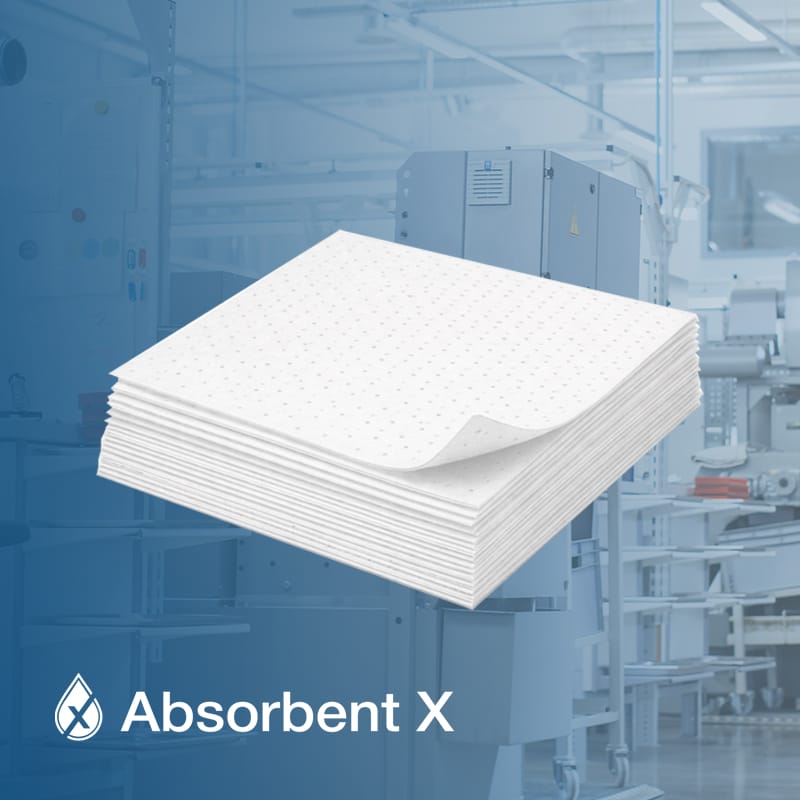
To fix the durability issue, manufacturers use bonding techniques. “Sonic bonding” uses ultrasonic vibrations to fuse the top and bottom layers of the pad together at specific points. This creates the dimpled pattern you see on many pads.

- Dimpling: These small indentations do more than hold the pad together; they speed up wicking. Liquid hits a dimple and spreads quickly across the pad’s width.
- Perforations: Many rolls and pads come with perforation lines. This lets you tear off exactly the size you need—like a paper towel—reducing waste.
- Surfactant Treatment: Universal pads are coated with a surfactant (a soap-like agent) that breaks the surface tension of water, allowing the naturally plastic fibers to soak up aqueous fluids.
Thickness and Weight Options
You will usually see pads sold as Light, Medium, or Heavy weight. This refers to the density of fibers and directly impacts how much liquid they hold.

Pro-Tip on Capacity: A “Heavy Weight” pad typically absorbs about 28-32 ounces per pad. A 100-count bale of these pads will soak up roughly 22 to 25 gallons of fluid total. Always check the “gallons per bale” rating on the package to ensure you have enough coverage for your facility’s storage capacity.
How to Choose Oil Absorbent Pads
Selecting the right product keeps your shop compliant with EPA regulations, specifically the Spill Prevention, Control, and Countermeasure (SPCC) rule (40 CFR 112). This rule requires facilities with significant oil storage to have appropriate spill control measures in place.
Type of Liquid Absorbed
Start with the liquid. If you are outdoors or in a wash bay, you must use Oil-Only (White) pads. Using a Universal pad here creates a heavy, soggy mess of rainwater that you then have to pay to dispose of.
Indoors, Universal (Grey) pads are the safer bet for general maintenance. They handle the “mixed fluids” found in shops—like a spill that is half antifreeze and half motor oil.
Work Environment Conditions
Consider foot traffic. For a walkway or a spot in front of a workbench, you need a “Fine Fiber” or bonded pad. These resist abrasion and won’t leave lint on shoes, which can track oil into offices or breakrooms. For catching drips under a machine where no one walks, a loose-stacked meltblown pad is cheaper and absorbs just as well.
Absorption Capacity Requirements
Match the pad to the leak volume. A slow drip from a hydraulic line doesn’t need a heavy-weight pad; a light-weight option is cost-effective and sufficient. However, for emergency spill response kits, always stock heavy-weight pads. When a drum punctures, you need maximum absorption speed and volume immediately.
Typical Use Scenarios
Different areas of your facility demand different strategies. Here is how pros deploy these pads effectively.
Machine and Equipment Leaks
CNC machines and hydraulic presses often leak fluids steadily. Placing a grey universal pad directly on the machine’s catch tray keeps the equipment cleaner than letting it pool. For older machines that leak onto the floor, use a darker colored mat to mask the stain, so the shop looks professional between cleanings.
Spill Response and Containment
In a sudden spill, speed is everything. Your first move is containment. Use absorbent “socks” (flexible tubes filled with absorbent material) to circle the spill and stop it from spreading. Once contained, throw pads onto the center of the pool. This prevents the liquid from reaching floor drains, which is a critical step in avoiding environmental fines.
Preventive Floor Protection

High-traffic aisles in manufacturing plants often get a fine mist of oil from the air or tracking. Laying down a roll of “traffic mat” (a durable, dark-colored absorbent rug) prevents slip-and-fall accidents. With the average cost of a slip-and-fall injury exceeding $40,000 according to industry safety data, this preventive measure pays for itself quickly.
How to Use Oil Absorbent Pads Properly
Throwing a pad on a spill seems simple, but technique matters for efficiency and safety.
Placement and Coverage
Don’t just pile pads on top of each other. Pads work best when they have full contact with the liquid. Lay them out flat. If the spill is large, use the “shingling” method: overlap the edges of the pads slightly, like roof shingles. This prevents the liquid from seeping up through the cracks between pads.
Saturation Indicators
Watch the pad. As it fills, the color deepens. A white oil pad will turn translucent and brown as it saturates. Once the oil reaches the edges of the pad, it is full. Leaving a saturated pad on the floor is a hazard—it can become slippery and may start releasing oil back onto the floor if stepped on.
Common Usage Mistakes
The most common error is using the wrong pad for the fluid. We often see white pads thrown on coolant spills, where they do absolutely nothing. Another mistake is “wringing out” pads to reuse them. Unless you have a specialized mechanical wringer designed for this, manual wringing is dangerous. It exposes workers to hazardous fluids and often damages the pad’s fibers, making it useless for the next spill.
Can Oil Absorbent Pads Be Reused?
Generally, no. While it is physically possible to squeeze oil out of a polypropylene pad, it is rarely worth the risk. The structure of the fibers breaks down after the first use, significantly lowering absorption capacity. More importantly, reusing pads increases the handling time of hazardous waste, raising the risk of skin contact or inhalation of fumes. For safety and compliance, treat them as single-use items.
How to Dispose of Used Oil Absorbent Pads
Disposal is where many companies get into trouble. Just because the pad starts as plastic doesn’t mean it goes in the recycling bin. The fluid dictates the disposal method.
In the United States, the EPA generally does not list used oil absorbents as hazardous waste if they are not dripping and the oil itself isn’t contaminated with heavy metals (like arsenic or lead). However, you must verify this with a test.
The “Rule of 20” Guideline: To determine if your waste is hazardous, labs often use the “Rule of 20.” If the total concentration of a toxic contaminant in your waste (in mg/kg) divided by 20 is still less than the regulatory limit, it likely passes the TCLP (Toxicity Characteristic Leaching Procedure) test. If it fails, you must manage it as hazardous waste.

- Drain Free-Flowing Oil: EPA rules often allow non-hazardous disposal if the pads are not “dripping.” Wring out or centrifuge pads to recover usable oil if your facility has the equipment.
- Check State Rules: Some states, like California, have stricter standards than federal rules. Always check with your local environmental agency.
- Incineration: Many facilities prefer sending used pads to waste-to-energy plants. Polypropylene burns clean and has a high heat value (BTU), making it a good candidate for energy recovery.
- Segregate Streams: Never mix pads soaked in solvents with pads soaked in oil. The solvent pads are almost always hazardous waste and will contaminate the entire load, spiking your disposal costs.
Storage and Shelf Life
Polypropylene is a stable plastic, meaning these pads have a very long shelf life—often 5 years or more—if stored correctly. The enemy is UV light. Direct sunlight will degrade the plastic over time, making the pads brittle and flaky. Keep them in a cool, dark cabinet or their original cardboard dispenser boxes. If you keep a spill kit outside, ensure the container is UV-resistant and weather-sealed to keep the pads dry and ready for action.
Conclusion
Oil absorbent pads are simple tools, yet they play a big part in keeping workplaces safe. A 60-cent pad can save you from a $40,000 injury claim or a hefty EPA fine. By understanding the color codes—White for oil, Grey for universal, and Pink/Yellow for chemicals—you ensure your team reacts instantly and correctly to any spill.
Keep your spill kits stocked, check your disposal procedures, and use the right pad for the job. It’s the smartest insurance policy on your shop floor.