Oil cleanup on a plant floor is a different job than oil cleanup on open water, and picking the wrong method wastes labor, wastes material, and can leave a slip hazard or a stained floor behind. Facilities managers, EHS coordinators, and maintenance teams generally choose between six core approaches: absorbent pads and rolls, absorbent socks and booms, granular sorbents, skimmers, vacuum recovery systems, and bioremediation. Each one fits a different spill size, surface, and budget, and most industrial sites end up using two or three of them together rather than relying on just one.
This guide compares all six methods side by side, walks through how to match a method to your spill and surface, and gives a step-by-step procedure for the technique most plants reach for first: absorbent pads. It also covers disposal, because how you clean up oil determines how much you pay to get rid of it.
Comparing the Core Oil Cleanup Methods
The table below summarizes how each method performs on cost, surface compatibility, and disposal burden, based on typical use in manufacturing plants, fleet garages, warehouses, and processing facilities. None of these numbers are absolute — a 55-gallon drum leak and a 5-gallon sump overflow call for different math — but the ranking holds across most industrial settings.
| Method | Best For | Surface | Cost per Gallon Recovered | Reuse / Disposal |
| Absorbent pads & rolls | Drips, wipe-downs, small-to-mid spills (under 20 gal) | Concrete, machine bases, water sheen | Low-moderate | Single-use; incinerate or landfill per local rules |
| Absorbent socks & booms | Containing a spreading spill, ringing drains/equipment | Concrete, asphalt, water perimeter | Moderate | Single-use; heavier gauge units can be wrung and reused briefly |
| Granular/loose sorbents | Large puddles, uneven or textured floors, parking lots | Concrete, asphalt, gravel, soil | Low per pound, higher in labor | Swept up, bagged; some clay types add landfill weight/cost |
| Skimmers (belt, drum, brush) | Standing water with a floating oil layer, sumps, retention ponds | Water only | Low per gallon at volume, high upfront equipment cost | Recovered oil often reusable/recyclable; minimal solid waste |
| Wet/dry vacuum systems | Sumps, trenches, oil-water separators, indoor spills near electronics | Concrete floors, sumps, tanks | Moderate-high (equipment + labor) | Recovered liquid often sent for oil recycling |
| Bioremediation | Soil contamination, long-term site remediation, porous surfaces | Soil, gravel, some concrete | Low material cost, slow (weeks-months) | Breaks down in place; no bagged solid waste to haul |
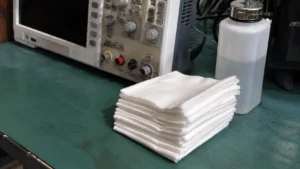
Absorbent pads and rolls remain the default choice for the majority of industrial spills because they require zero setup, work on contact, and one operator can deploy them without training. A single 15″ x 19″ heavy-weight pad typically holds 0.3-0.5 gallons of oil depending on grade, and a case of 100 pads runs through most maintenance drip stations in a matter of weeks rather than days. AbsorbentX’s
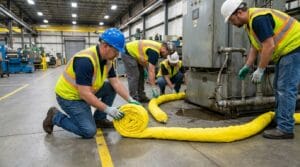
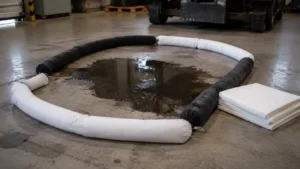
Socks and booms earn their keep on anything that spreads — a ruptured drum, a leaking transformer, or a spill headed toward a floor drain. Ringed around the perimeter and worked inward, a 3″ x 4″ sock typically holds about half a gallon and buys time before the bulk of the liquid is absorbed with pads or granular material. Skimmers and vacuum systems only make sense once there is standing liquid to recover — a sump, a trench, an oil-water separator, or a retention pond — and they pay for themselves fastest at facilities recovering oil often enough to justify the equipment cost.
Method 1: Absorbent Pads and Rolls
Pads and rolls made from melt-blown polypropylene are the fastest way to handle drips, small leaks, and wipe-downs around machinery. Oil-only grades repel water, so they can be tossed directly onto a puddle that includes rainwater or coolant without soaking up liquid you don’t need to dispose of. Rolls with perforated sheets let a technician tear off exactly the size needed instead of opening a fresh pad for every small drip, which cuts material cost on routine maintenance rounds.
The trade-off is capacity: pads saturate quickly on anything larger than a few gallons, and using pads alone on a 20-gallon spill means burning through an entire case and generating a proportional amount of solid waste. For facilities standardizing on one absorbent type, AbsorbentX’s
Method 2: Absorbent Socks and Booms
Socks and booms exist to control, not just soak. Wrapped around a leaking drum or laid across a doorway, they stop oil from reaching an expansion joint, storm drain, or aisle before it spreads further. Corn cob and polypropylene-fill socks are the two most common fills; corn cob costs less per foot but performs slightly worse on cold or viscous oils.
Booms do the same job on water — ringing a spill on a retention pond or in a loading dock sump to keep it from drifting toward an outfall. The main limitation is that socks and booms only contain oil; they still need to be paired with pads, granular sorbent, or a skimmer to actually remove the liquid once it’s corralled.
Method 3: Granular and Loose Sorbents
Granular sorbents — clay, corn cob, cellulose, or synthetic polymer granules — are the fastest way to cover a large puddle on an uneven or textured surface where a pad can’t make full contact. Poured directly over the spill, they typically need 10-20 minutes of dwell time before the saturated material is swept or shoveled up, making them well-suited to parking lots, loading docks, and gravel yards.
Clay-based sorbents are the cheapest per pound but add significant dead weight to disposal drums, since clay doesn’t compress and holds moisture. Synthetic granular sorbents cost more upfront but absorb 2-3 times their weight in oil and leave less total waste volume, which often lowers total disposal cost even though the material price per bag is higher.
Method 4: Skimmers
Skimmers recover free-floating oil from standing water — sumps, oil-water separators, cooling towers, and retention ponds — rather than absorbing it into a disposable material. Belt and drum skimmers work best on thicker oils and can run continuously with minimal supervision, while brush and rope-mop skimmers pick up thinner sheens more efficiently but need more frequent maintenance.
Because skimmers recover oil as a reusable liquid rather than a saturated solid, they generate far less waste per gallon than any absorbent method, and the recovered oil can often be sold or recycled rather than landfilled. The downside is a real equipment cost and a learning curve, so skimmers make the most financial sense at facilities dealing with recurring oil-in-water issues rather than one-off spills.
Method 5: Vacuum Recovery Systems
Wet/dry vacuum units built for oil recovery pull liquid directly out of sumps, trenches, and tank bottoms into a sealed holding tank, which is faster than absorbent methods on any spill over roughly 10 gallons. Industrial models with explosion-proof motors are standard around fueling stations and anywhere flammable vapors are a concern.
Vacuum recovery shines indoors, particularly near electrical panels or sensitive equipment where loose granular material or wet pads would be a housekeeping problem. It’s a poor fit for thin sheens on textured outdoor surfaces, where a vacuum simply can’t create enough suction against an uneven substrate — that’s still a job for pads or granular sorbent.
Method 6: Bioremediation
Bioremediation uses naturally occurring or supplemented microbes to metabolize petroleum hydrocarbons into water and carbon dioxide, breaking oil down in place instead of physically removing it. It’s the standard approach for soil contamination under a leaking tank or along a pipeline right-of-way, where excavation and disposal would be far more expensive than treatment.
The trade-off is time: full remediation of a contaminated soil site typically takes weeks to several months depending on contaminant concentration, temperature, and oxygen availability, and it isn’t effective on every compound. Bioremediation is rarely the first response to an active spill — it’s what happens after the free liquid has already been physically removed with pads, sorbent, or a vacuum system.
Choosing the Right Method by Spill Size and Surface
Spill size is the first filter. Under about 5 gallons on a hard indoor surface, pads alone usually handle it in under ten minutes. Between 5 and 20 gallons, most crews ring the spill with a sock or boom first, then finish with pads or granular sorbent depending on the floor texture. Anything over 20 gallons, or any spill reaching standing water, typically calls for a vacuum unit or a combination of granular sorbent plus a skimmer if the liquid has pooled.
Surface matters just as much as volume. Smooth concrete favors pads and rolls, which make full contact and lift cleanly. Textured concrete, asphalt, and gravel favor granular sorbent, since pads can’t reach oil trapped in surface pores. Oil on standing water calls for booms to contain it and a skimmer or oil-only pads to remove it — never granular clay sorbent on water, since most clay-based products sink and complicate recovery. Oil that has penetrated soil is the one case where physical removal alone won’t finish the job; excavation or bioremediation is usually required to address what’s already below the surface.
Facilities that see a recurring spill type — a specific machine that weeps hydraulic fluid, a loading dock with regular drum handling — do best by keeping AbsorbentX
Step-by-Step: Cleaning Up an Industrial Oil Spill with Absorbent Pads
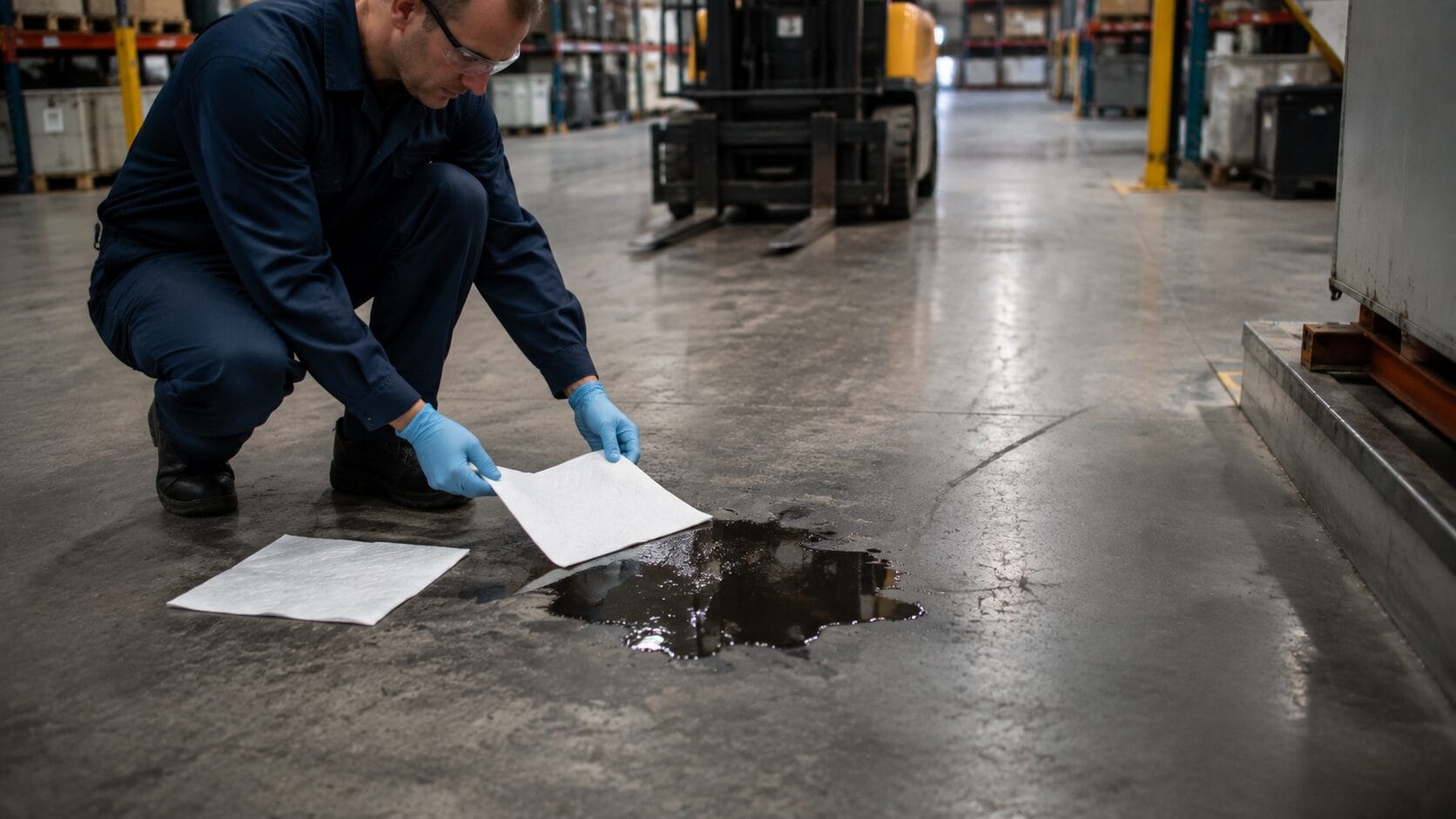
Absorbent pads handle the majority of day-to-day industrial oil spills, so it’s worth having the procedure standardized rather than improvised each time. The sequence below assumes a spill under 20 gallons on a hard indoor surface, which covers most maintenance-area and shop-floor incidents.
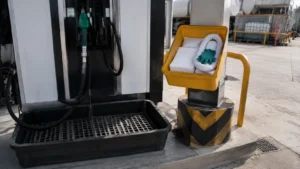
- Shut off the leaking equipment or plug the source before starting cleanup, and place warning cones or tape around the wet area to prevent foot traffic.
- Put on nitrile gloves and, if the oil is unidentified, safety glasses — most industrial oils aren’t acutely hazardous on skin contact but housekeeping habits matter for consistency.
- Ring the outer edge of the spill with an absorbent sock or a folded pad if it’s actively spreading toward a drain or aisle.
- Lay oil-only pads flat over the spill, working from the outside edge inward, and press down to maximize contact with the floor.
- Let pads sit for 1-2 minutes to fully saturate rather than swapping them too early, then flip a pad over to use its dry side before discarding it.
- Continue layering fresh pads until the floor no longer transfers oil to a clean pad pressed against it.
- Bag saturated pads in a puncture-resistant liner and label the container per your facility’s waste stream before moving to a final degreaser wipe-down.
Disposal Considerations
How oil-contaminated absorbents get classified depends on what they absorbed. Used pads and socks that only contacted non-hazardous lubricating or hydraulic oil are typically handled as industrial solid waste in most states, while pads that absorbed a listed hazardous waste, a hazardous fuel, or oil mixed with a hazardous solvent generally must be managed as hazardous waste under RCRA. Facilities should confirm classification with their state environmental agency or waste hauler rather than assuming, since state rules vary more than federal ones on used absorbents.
Documenting the volume and source of every spill also matters for reporting thresholds — the EPA’s oil spill prevention and response guidance outlines when a release requires notification versus routine internal cleanup, which is worth reviewing alongside your facility’s own spill response plan.
Weighing waste before it leaves the site is the easiest way to catch a costly habit early: a plant using clay granular sorbent on every spill, for instance, often finds it’s paying to landfill mostly clay weight rather than oil. Switching to lighter synthetic sorbent or oil-only pads for smaller spills, and reserving granular material for large outdoor spills, typically cuts total disposal weight without changing cleanup speed.
For a deeper walkthrough of building a facility-wide response plan around these methods, see AbsorbentX’s oil spill guide and spill cleanup guide, which cover kit staging, training, and reporting steps that sit alongside the method choices above.
FAQ
What is the fastest oil cleanup method for a small industrial spill?
Absorbent pads are fastest for spills under roughly 5 gallons on a hard surface — no setup or mixing is required, and one worker can contain and lift the oil in a few minutes using pads alone.
What absorbs oil the best?
For pure oil on a hard surface, oil-only polypropylene pads and synthetic granular sorbents perform best because they absorb several times their own weight and repel water, so they don’t waste capacity on rainwater or coolant mixed into the spill.
Can you use kitty litter or sand for an oil spill?
Clay-based cat litter and sand will absorb oil in a pinch, but they hold far less oil per pound than purpose-made sorbents, don’t compress for disposal, and can scratch or embed in some floor coatings — most facilities keep them as a backup, not a primary method.
How long does bioremediation take to clean up an oil spill?
Bioremediation of contaminated soil typically takes several weeks to a few months, depending on the contaminant concentration, soil temperature, oxygen levels, and nutrient availability — it’s a follow-up treatment for what’s left in the ground, not a response to an active surface spill.
Do I need a skimmer for a spill that reaches a sump or retention pond?
Not always — a small amount of oil on a sump can often be handled with oil-only pads or a boom and sorbent combination. Skimmers make sense when oil recovery from water is a recurring issue rather than a one-time event, since the equipment cost is easier to justify against repeated use.
Is used oil absorbent pad considered hazardous waste?
It depends on what the pad absorbed. Pads that only contacted non-hazardous lubricating oil are usually solid industrial waste, while pads that absorbed a listed hazardous material typically must be managed as hazardous waste — confirm with your state agency or waste hauler rather than assuming.