Lint free wipes are engineered to clean sensitive surfaces without leaving behind the fibers and particles that ordinary rags shed. From wiping down electronics and optics to critical work in cleanrooms, the goal is the same: remove contamination without adding any of your own. Understanding what makes a wipe genuinely low-lint, and which material suits which job, is the key to choosing well.
This guide explains what “lint free” really means, the main materials used, how construction and edging reduce particles, and the tasks each wipe suits best. Whether you work in electronics, optics, a cleanroom, or a workshop, the same principles apply. By the end you will be able to match a lint-free wipe to your task with confidence, and to tell a genuinely low-lint wipe from one that only claims to be.
What Does “Lint Free” Actually Mean?
No wipe sheds literally zero fibers, so “lint free” is really shorthand for very low-linting — a wipe engineered to release as few particles as possible during use. The term describes performance rather than a strict absolute, and the best wipes shed far fewer particles than a cotton rag or paper towel. For sensitive work, that difference is what matters.
Lint matters because stray fibers cause real problems on sensitive surfaces. On electronics they can bridge contacts or trap under components, on optics they scatter light and scratch coatings, and in cleanrooms they add to the particle count a facility works hard to control. A wipe that leaves fibers has failed at its one job, however well it cleaned otherwise.
The cost of a stray fiber is also out of all proportion to the wipe itself. A single fiber can mean a rejected circuit board, a scrapped optical component, or a failed cleanroom audit, each far more expensive than the wipe that caused it. That imbalance is why sensitive industries treat wipe selection as a genuine quality control, not a trivial purchase.
So when a wipe is sold as lint-free, the useful question is how low-linting it is and whether that suits your task. The materials and construction below are what determine the answer, and they vary widely between products.
Lint Free Wipe Materials
Several materials are used for low-lint wipes, each with a different balance of cleanliness, absorbency, and cost. Continuous-filament polyester is one of the cleanest, shedding very little because its long fibers do not break apart easily, which makes it a favourite for the most critical, cleanliness-sensitive work. Microfiber, a fine synthetic blend, combines low lint with excellent particle pickup and absorbency for general precision cleaning.
Polyester-cellulose blends offer higher absorbency at a lower cost, making them a practical choice for general-purpose low-lint wiping where the very strictest cleanliness is not required. Nonwoven synthetic wipes provide a durable, economical option for industrial tasks that still need to stay reasonably clean.
The table below summarises the common materials and where each fits. Matching material to task is the core of the choice, and it is worth getting right because the cheapest wipe is rarely the cheapest overall once rework is counted.
| Material | Strength | Best for |
| Continuous-filament polyester | Very low lint | Cleanrooms, optics, critical electronics |
| Microfiber | Low lint + strong pickup | Precision cleaning, optics, screens |
| Polyester-cellulose blend | Absorbent, cost-effective | General low-lint wiping, labs, light industry |
| Nonwoven synthetic | Durable, economical | Industrial and automotive tasks |
How Wipes Are Made Low-Lint
Construction matters as much as material. Knitted continuous-filament fabrics shed less than cut-staple ones because there are fewer loose fiber ends to release, and tightly woven or knitted structures hold their fibers in place under friction. The way a wipe is built largely decides how clean it stays in use.
Edges are a hidden source of lint, since a plain cut edge frays and releases particles. The cleanest wipes use sealed or laser-cut edges that fuse the fibers so nothing sheds from the border, which is why cleanroom-grade wipes almost always feature them. Laundered and packaged under controlled conditions, high-grade wipes reach the user already low in particles.
Packaging plays a part too, especially for the cleanest grades. A wipe manufactured to be low-lint can still pick up particles from a poor package or from open storage, so cleanroom wipes are sealed and handled to preserve their cleanliness right up to the point of use. For critical work, how the wipe is packaged and opened matters almost as much as how it was made.
These details are why two wipes of the same material can perform very differently. When cleanliness is critical, construction and edging are worth checking as closely as the fabric.
Uses for Lint Free Wipes by Task
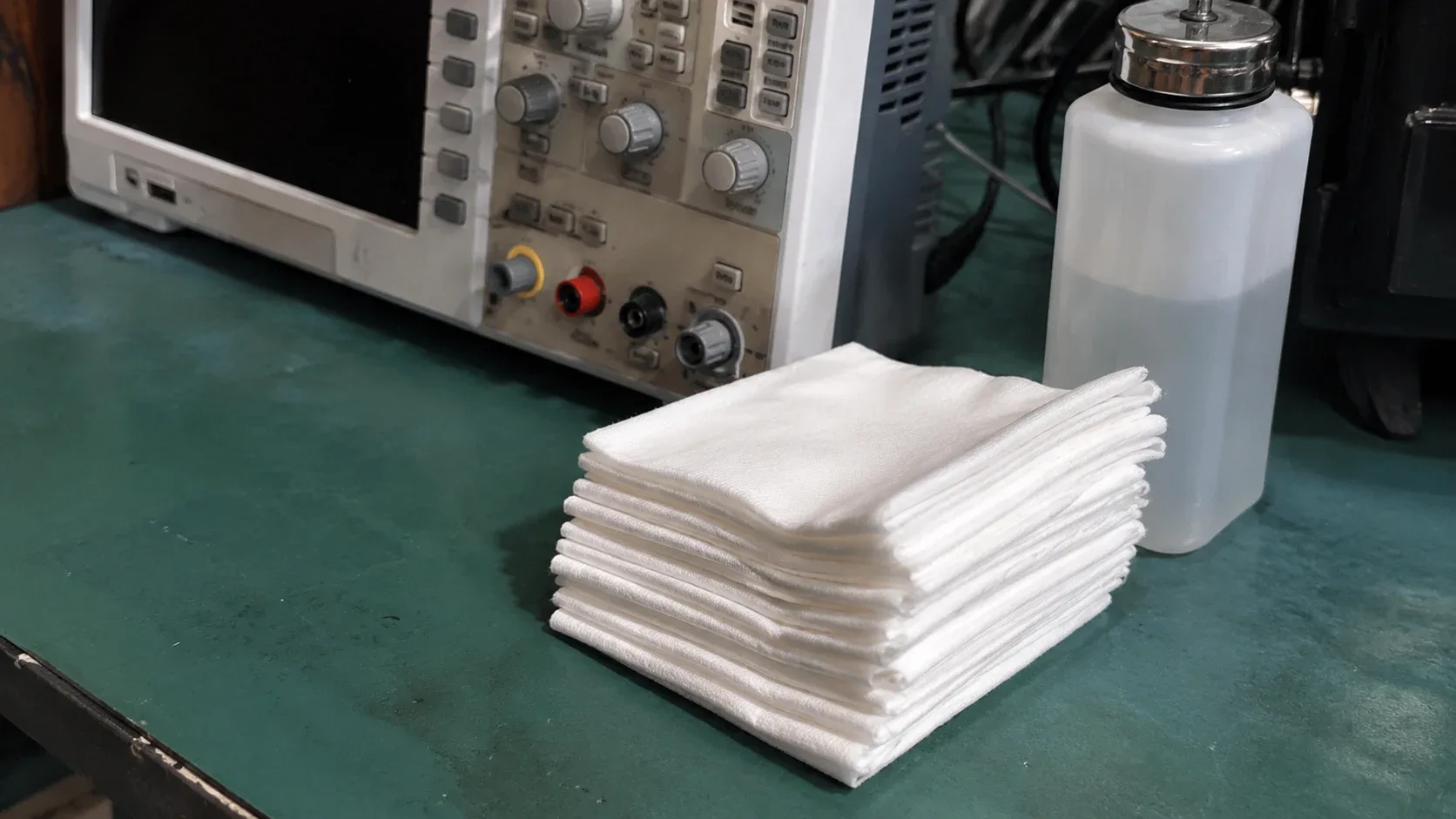
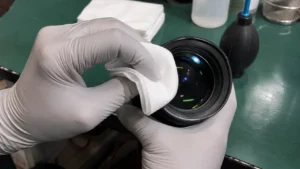
Lint-free wipes serve a wide range of tasks, and the right choice depends on how sensitive the surface is. In electronics manufacturing and repair they clean boards, connectors, and screens without leaving fibers that could cause intermittent faults or shorts, while in optics they wipe lenses, sensors, and coatings without scratching or scattering light, where even a tiny fiber degrades performance.
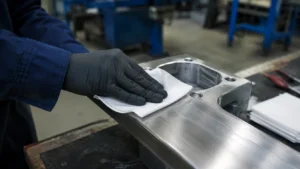
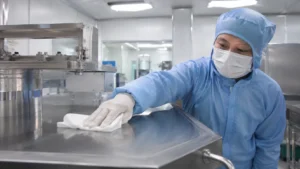
In cleanrooms and labs they are essential for wiping surfaces and equipment without adding to the particle count, which is why controlled environments specify sealed-edge, high-grade wipes. In industrial and automotive settings, more economical low-lint wipes handle precision cleaning, paint prep, and final wipe-downs where a clean finish matters.
Matching the wipe grade to the sensitivity of the task keeps you from either under-performing or over-paying. A cleanroom wipe on a workshop bench is wasted, and a workshop wipe in a cleanroom is a risk to the whole environment.
Pre-saturated wipes add another dimension to the choice. Wipes pre-wetted with a solvent such as isopropyl alcohol offer consistent, controlled cleaning for electronics and precision surfaces, removing the guesswork and mess of applying fluid by hand each time. Dry wipes remain the flexible default where you want to choose and control the cleaning agent yourself.
Absorbency and solvent compatibility are worth checking here as well. A wipe that holds solvent well cleans more effectively in one pass, but it must also resist the solvent without breaking down or shedding, which points back to the material and construction. Matching the wipe to both the surface and the cleaning fluid gives the cleanest result.
How to Choose a Lint Free Wipe
Start with the sensitivity of the surface. Critical electronics, optics, and cleanrooms call for the lowest-linting materials — continuous-filament polyester or microfiber with sealed edges — while general industrial and automotive tasks are well served by more economical blends and nonwovens. Matching grade to sensitivity is the first decision.
Then consider what the wipe must do beyond staying clean. If it needs to absorb solvent or hold cleaning fluid, a more absorbent blend helps; if it must resist tearing during heavy use, durability matters. Size, packaging, and whether the wipe is dry or pre-saturated round out the choice, and each can matter more than expected for a specific task.
For controlled environments, always confirm the wipe’s grade and edge sealing meet your cleanliness requirement. In those settings the specification is not a preference but a control that keeps the whole environment within limits, and substituting a lower grade to save money can quietly undermine it.
Lint Free Wipes vs. Shop Towels and Rags
It helps to place lint-free wipes against the alternatives. Ordinary rags and paper towels are cheap and fine for rough cleanup, but they shed fibers freely and are unsuitable for sensitive surfaces. Reaching for a rag on an optical lens or a circuit board is exactly the mistake lint-free wipes exist to prevent, and it is a surprisingly common one in busy workshops where the nearest cloth wins.
Shop towels sit in between, offering more durability and less lint than a rag but far more than a true low-lint wipe. They suit general workshop cleaning but not precision or controlled work. Choosing the right product for the surface, rather than defaulting to whatever is nearest, is what protects sensitive work.
For a fuller comparison, see our guide on shop towels vs wipes.
The practical takeaway is to keep more than one product on hand and use each for its proper job. Rags and shop towels for rough cleanup and spills, lint-free wipes for anything sensitive. Trying to save money by using a rag on a precision surface almost always costs more in the end than simply reaching for the right wipe.
Buying Lint Free Wipes in Bulk and OEM
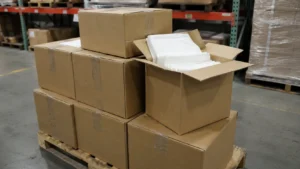
For distributors and high-volume users, wipe quality comes down to consistent low-lint performance and reliable edge sealing across every batch. A wipe that tests clean as a sample but sheds unevenly at volume undermines the sensitive work it is meant to support, so consistency matters more than a marginal price difference. Confirm the grade and construction before committing to an order.
As part of its industrial wipes line, AbsorbentX supplies lint-free wipes in a range of materials and grades, with private-label and OEM options for bulk orders. Matching the wipe to your customers’ tasks — from cleanroom to workshop — is what drives repeat business. Explore the range and talk to us about custom specifications, or read how to choose an oil absorbent pads supplier for the same sourcing principles applied to wipes and absorbents alike.
The Bottom Line
Lint free wipes are low-linting cleaning wipes engineered to clean sensitive surfaces without leaving fibers behind. The material and construction — from continuous-filament polyester and microfiber to sealed edges — decide how clean a wipe truly is, and the right grade depends on how sensitive your particular task is.
Match the wipe to the surface: the lowest-linting grades for electronics, optics, and cleanrooms, and economical blends for industrial and automotive work. Choose on grade and construction rather than price alone, and a lint-free wipe will clean without ever adding to the problem.
Kept alongside your absorbents and shop towels, a good lint-free wipe rounds out a complete cleaning and spill-control kit. Each product has its place — absorbents for spills, shop towels for general cleanup, and lint-free wipes for anything sensitive. Stocking all three means whatever the surface, the right tool is always within reach.
Frequently Asked Questions
What does lint free mean for a wipe?
It means very low-linting — a wipe engineered to release as few fibers and particles as possible during use. No wipe sheds literally zero, so the useful question is how low-linting it is and whether that suits your task.
What are lint free wipes made of?
Common materials include continuous-filament polyester (very low lint), microfiber (low lint with strong pickup), polyester-cellulose blends (absorbent and economical), and durable nonwoven synthetics for industrial tasks.
What are lint free wipes used for?
Cleaning sensitive surfaces without adding contamination — electronics and boards, optics and lenses, cleanroom and lab surfaces, and precision industrial or automotive work such as paint prep and final wipe-downs.
How do I choose a lint free wipe?
Match the grade to the surface sensitivity: lowest-linting sealed-edge materials for electronics, optics, and cleanrooms; economical blends and nonwovens for general industrial and automotive tasks. Then consider absorbency, durability, and packaging.
Are lint free wipes better than shop towels or rags?
For sensitive surfaces, yes. Rags and paper towels shed fibers freely, and shop towels shed less but still too much for precision work. Lint-free wipes are engineered specifically to clean without leaving particles behind.