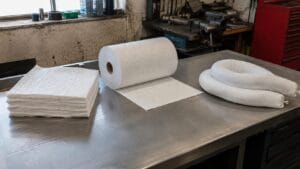

Oil spills at work or in the water create immediate safety risks and financial headaches. From slippery floors in a machine shop to environmental hazards in a local waterway, the cost of a slow response adds up fast. Oil absorbent rolls are your first line of defense to soak up oil fast and stop damage to people, equipment, and the environment.
This guide breaks down exactly what these rolls are, the science behind how they work, and the specific scenarios where you should use them for safe cleanup.
You need to know how to choose the right material for your specific spill risks. We will look at the data, the different types available, and how to use them to make spill response easier and safer every time.
What Are Oil Absorbent Rolls?
Oil absorbent rolls are continuous sheets made from specialized sorbent materials designed to trap liquids. Unlike granular clay (often called “kitty litter”), which can be messy and heavy, these rolls are lightweight and highly efficient. People use them to stop spills from spreading in workshops or during cleanup at industrial sites.
The core material is almost always meltblown polypropylene. This is a thermoplastic polymer that is naturally oleophilic (oil-attracting) and hydrophobic (water-repelling).
According to industry data from 2024, high-quality polypropylene absorbents can retain up to 25 times their own weight in liquid. This efficiency is why they are standard issue for spill response.
Each roll can cover a large area and is easy to cut for different sizes. The rolls improve workplace safety by trapping leaks before they reach drains or soil. The Environmental Protection Agency (EPA) emphasizes that proper containment is essential for quick spill response and environmental protection.
Using these rolls helps meet strict waste management rules and keeps harmful liquids off surfaces. They allow you to address a leak immediately rather than waiting for a third-party cleanup crew.
Different Types of Absorbent Rolls
Not all rolls are the same. Absorbent rolls come in several types to fit different spill response needs. Manufacturers use a universal color-coding system to help workers identify the right roll instantly during an emergency.
Choosing the wrong type can be dangerous. For example, using a water-repelling roll on a coolant spill will just push the liquid around.
Oil-Only Rolls (White)
Oil-only rolls soak up oil and other hydrocarbons fast. The most critical feature of these rolls is that they do not pick up water. Because they are white, it is easy to see when they are fully saturated with dark oil.
These are made from meltblown polypropylene and work well on land or water. Use them around machines, in workshops, or during an oil spill cleanup near rivers and lakes. Because they float indefinitely even when saturated, they are the standard choice for marine spill response.
Key Characteristics:

- Repels Water: Perfect for outdoor use where rain or water is present.
- High Buoyancy: Ideal for skimming sheens off ponds or sumps.
- Target Fluids: Diesel, gasoline, hydraulic fluid, grease, and lubricating oils.
Each roll stays strong even when wet, which helps keep the area safe. Many industries use these sorbent rolls for quick spill response and surface protection. Perforated designs let you tear off only what you need to reduce waste.
These rolls show great durability and high absorbency while staying light for easy handling by workers focused on safety equipment use and effective waste management practices.
Universal Absorbent Rolls (Gray)
Universal absorbent rolls soak up oil, water, coolants, and many chemicals. Manufacturers treat the polypropylene with a surfactant (a wetting agent) that allows the plastic fibers to accept water-based fluids instead of repelling them.
These rolls use thick layers of polypropylene to hold spills from fuels, oils, and non-hazardous liquids. These rolls work well for spill response in workshops or industrial areas where leaks can include mixed fluids.
The material resists tearing and stays strong when wet. Many universal absorbent rolls are gray to hide dirt during cleanup jobs. This allows you to leave them down longer in foot traffic areas without them looking messy immediately.

“For general maintenance shops, Universal rolls are the most cost-effective choice because they handle 90% of common shop fluids, including antifreeze and cutting fluids.”
Perforations make it easy to tear off the right size sheet for small drips or large spill containment. Use these rolls under leaky machines or along walkways to keep surfaces safe and dry.
This helps protect employees and supports workplace safety rules set by OSHA for environmental protection and waste management.
Hazmat Chemical Rolls (Yellow)
Hazmat Chemical Rolls handle dangerous spills fast. They soak up acids, bases, coolants, and strong cleaners. The industry standard bright yellow color warns workers that the absorbed liquid is hazardous and requires special handling.
Hospitals, labs, and chemical plants use these rolls for safety and compliance with OSHA standards. Unlike standard rolls, the polypropylene in Hazmat rolls is treated to resist degradation when in contact with harsh corrosives like sulfuric acid or sodium hydroxide.
These absorbent materials do not break down with harsh chemicals. Each roll helps stop leaks from spreading by trapping liquids right away. Use Hazmat Chemical Rolls where hazardous waste management needs strict control over cleanup.
Manufacturing Technology and Materials
Oil absorbent rolls use special materials and smart production methods to boost spill response. Understanding how they are built helps you buy the right durability for your floor traffic.
Meltblown Polypropylene Explained
Meltblown polypropylene is a special plastic fiber. Manufacturers use heat and air to melt small beads of polypropylene and then force the liquid through tiny holes. This process creates a web of fine, lightweight fibers.
These fibers are strong and form sheets that soak up oil fast. Many oil absorbent rolls use this material because it works well for hydrocarbon cleanup and spill response.
These fibers act like tiny sponges for oil, fuels, or other hydrocarbons. Water does not stick to them because they have hydrophobic properties. They repel water but attract oils easily (oleophilic).
Cleanup crews rely on these absorbent materials in workshops and during chemical spills for environmental protection and workplace safety. Meltblown polypropylene also helps keep surfaces dry and safe in factories, marine settings, or automotive shops where quick oil containment is critical.
Bonded vs. Perforated Finishes
The finish of the roll determines its strength. A simple meltblown sheet is absorbent but can tear under foot traffic. To fix this, manufacturers bond the layers.

| Feature | How It Works | Best Application |
|---|---|---|
| Sonic Bonding | Layers are fused with ultrasonic heat points (dimples). | High-traffic aisles and industrial walkways. |
| Perforations | Small cuts placed every 10-18 inches. | Precision cleanup to reduce waste. |
| Lamination | A spun-bond top layer is added for extra strength. | Heavy-duty machinery areas requiring lint-free wiping. |
Bonded finishes use heat or pressure to stick the fibers together. This makes the absorbent roll strong and lint-free. It holds up well during oil spill cleanup, even when moved around a lot in a workshop or along a waterway.
Perforated finishes have small cuts or holes at set points across the roll. You can tear off just what you need for each spill response job. This design lowers waste, saves money on supplies, and keeps absorbency high for hydrocarbon cleanup in any area.
Hydrophobic and Oleophilic Properties
Oil absorbent rolls have special properties that help with hydrocarbon cleanup. They are hydrophobic, which means they push away water. This keeps them dry and ready to soak up oil or fuel spills even on wet surfaces.
These rolls also show oleophilic traits, so they bond well with oils and fuels. The fibers attract hydrocarbons quickly, making spill response fast in workshops and at accident sites.
These sorbent materials do not take in water but pull in oils like magnets grab metal. Such features make them ideal for marine oil spill cleanup, industrial maintenance supplies, and environmental protection work near waterways.
Using these absorbent materials helps safety teams keep workplaces clean while stopping hazardous waste from spreading into the environment during emergencies or daily operations.
Key Benefits of Using Sorbent Rolls
Sorbent rolls offer strong support for spill response and hydrocarbon cleanup in many workplaces. These absorbent materials help improve safety, cut costs, and keep your space clean during routine maintenance or emergencies.
High Absorbency Capacity

Oil absorbent rolls take in a lot of oil fast. One standard heavyweight roll (typically 30 inches by 150 feet) can soak up approximately 40 to 50 gallons of oil depending on the viscosity of the fluid. Some rolls use meltblown polypropylene fiber, which pulls in and traps oil without letting it go.
These sorbent materials work even on water because they only take in oils, not water. Large spills at workshops or factories need quick action.
Using these absorbent materials stops the spread and makes cleanup safe. The high efficiency helps protect workers and meets environmental safety rules for spill response, especially near waterways or on factory floors.
Choosing a roll with strong absorbency means less product used for each event. This makes waste management easier and saves money over time.
Cost-Effectiveness for Large Areas
Sorbent rolls cover big spaces fast, cutting spill response costs. One roll handles more surface area than loose absorbent pads or granular products. This means fewer materials and less time spent on cleanup work in workshops and industrial sites.
Granular absorbents require sweeping and shoveling, which increases labor costs. Rolls are simply laid down and picked up.
Large facilities save money by buying rolls in bulk for ongoing maintenance supplies. These absorbent materials lower waste management expenses because they reduce product use per spill.
Durability and Lint-Free Features
Oil absorbent rolls use strong fibers, such as meltblown polypropylene, which hold up well under heavy use. They do not tear easily, even on rough floors or during fast cleanup of oil spills in a workshop or near machines. This strength makes them reliable for harsh jobs and repeat handling.
These rolls do not leave behind lint or fiber residue after wiping surfaces. Workers can clean spills confidently, knowing that the rolls will not cause extra mess on tools or flooring. This is key for safety equipment and surface protection in spill response and industrial cleaning needs.
Common Applications and Industries
Many businesses use absorbent rolls for fast hydrocarbon cleanup and effective spill response. These rolls support environmental protection and workplace safety in many fields.
Marine and Waterway Oil Spills
Oil absorbent rolls help control oil spills on water quickly and safely. These rolls float, so they work well for cleaning up fuel or hydrocarbon spills in lakes, rivers, and harbors.
The material only absorbs oil, not water. This lets teams remove oil while leaving clean water behind.
Oil containment is key in protecting fish, plants, and birds. Fast spill response cuts down on damage to the environment. Many ports keep sorbent materials ready for emergencies. Strong absorption keeps cleanup costs low and meets safety rules like those from the EPA.
Using these rolls helps protect marine life while supporting environmental protection goals during hazardous waste management tasks on waterways.
Industrial Machinery Maintenance
Factories and plants use absorbent rolls to keep machines clean. These rolls collect leaked oils, fuels, and coolants fast, stopping slips or damage. Workers place them under gear that tends to drip or near valves during equipment maintenance.
Using absorbent materials prevents hydrocarbon buildup on floors and keeps surfaces safe for everyone. Quick spill response protects workers from accidents while meeting workplace safety rules.
Rolls help avoid downtime by making cleanup easy and quick. Many workshops trust these sorbents because they save money on cleaning costs and support efficient industrial cleaning routines.

Automotive Workshops
Oil absorbent rolls help keep automotive workshops clean and safe. Mechanics use these rolls to soak up oil, fuels, and other fluids during repairs. Fast spill response stops slips and meets workplace safety rules.
Rolls handle leaks from engines or hydraulic lines quickly. Absorbent materials protect floors, tools, and equipment from damage. A single roll can absorb several gallons of hydrocarbon spills, stopping spread across work areas.
Workshops rely on sorbents for daily maintenance cleanup and larger accident events both. Using proper absorbency products also protects the environment by making hazardous waste management easier.
How to Choose the Right Weight
Selecting the right weight of oil absorbent roll ensures you handle spills efficiently and stay prepared. Rolls are typically sold in “Light,” “Medium,” and “Heavy” weights, which refers to the thickness and density of the fabric.
Light Weight for Wipe-Downs
Light weight oil absorbent rolls make daily cleaning simple and fast. Workers can carry these rolls with ease, even in tight spots or around crowded machinery. One person easily handles light rolls for small spills, drips, and surface protection during equipment maintenance.
These absorbent materials keep hands clean by picking up hydrocarbons like motor oil, diesel fuel, or other workshop fluids. Perforated sheets allow workers to tear off just what you need. This saves resources and reduces waste management costs.
Each roll offers high absorbency despite its thin form, making it perfect for spill response teams who act quickly. Light weight options fit well into safety cabinets or carts for quick access in any facility needing regular wipe-downs and environmental protection.
Heavy Weight for Major Spills
Heavy weight oil absorbent rolls work best for big leaks and major spills. They are thick and can soak up large amounts of oil or fuel quickly. Factories use them during emergency spill response situations, especially around machines or on floors where heavy equipment runs.
These rolls help protect workers’ safety by stopping slips and falls. One roll can absorb many gallons of hydrocarbons, like motor oils or diesel. Heavy weight rolls often meet EPA rules for workplace safety and environmental protection.
Use these sorbent materials in places with high traffic or regular oil spill cleanup needs. This keeps work areas clean and lowers the risk of chemical spills spreading into drains or water sources.
Step-by-Step Guide on How to Use
Using these rolls requires a tactical approach to prevent the spill from growing. Follow these simple steps to use oil absorbent rolls for safe, quick spill response.
Proper Deployment Techniques
First, always ensure you are wearing the correct Personal Protective Equipment (PPE) for the liquid you are cleaning. Then, follow this deployment strategy:

- Contain the Perimeter: Do not throw the roll directly on the center of the spill. Unroll the material to create a “berm” or barrier around the edges to stop it from spreading.
- Work Inward: Once the perimeter is secure, place sheets over the center of the pool.
- Ensure Contact: Press gently with a broom or foot to make sure the mat makes full contact with the surface for better absorbency.
Use sorbent materials in strips or sheets as needed to cover larger spills in workshops, marine docks, or factory floors. Overlap each roll section slightly to prevent gaps.
For outdoor use during windy weather, weigh down edges with heavy tools, sandbags, or maintenance supplies to keep them from shifting. Check and replace soaked rolls quickly for safety and environmental protection.
Store extra rolls close by for fast spill response in industrial settings or automotive work areas.
Using Perforations for Efficiency
After using proper deployment techniques, focus shifts to how perforations increase efficiency. Perforated oil absorbent rolls allow users to tear off only what is needed for a spill response.
This feature reduces waste and saves on cost since the remaining roll stays clean and dry. Smaller pieces help with hydrocarbon cleanup in tight places like under machinery or along workbenches in automotive workshops.
Workers can quickly manage spills without stopping production lines or opening new rolls. Oil-only absorbent materials with perforations also improve safety by making it easy to address leaks fast, helping maintain environmental protection standards at worksites and keeping maintenance supplies costs low.
Storage and Shelf Life Best Practices
Store oil absorbent rolls in a dry, cool area. While polypropylene is tough, UV light is its enemy. Prolonged exposure to direct sunlight will break down the fibers, causing them to flake and lose strength.
Keep them off the ground to avoid moisture and dirt. Use shelves or pallets for better air flow. Avoid placing heavy objects on top of the rolls, as this can flatten and decrease their absorbency.
Check expiry dates from the manufacturer if provided; most sorbent materials last up to five years in proper conditions. Seal opened packages tightly after use to stop dust or spills from reducing quality. Keeping storage areas clean supports safe and quick spill response during emergencies involving fuels, oils, or other hydrocarbons.
Disposal and Environmental Compliance
Proper disposal of used absorbent rolls helps meet safety rules at work. Stay updated on local waste laws for safer cleanup and less harm to the environment. The moment an absorbent pad soaks up a hazardous liquid, the pad itself becomes hazardous waste.
OSHA and EPA Regulations
OSHA needs workplaces to use oil absorbent rolls for chemical and oil spills under its spill response rules. Specifically, OSHA standard 29 CFR 1910.120 (HAZWOPER) outlines the requirements for emergency response operations.
Workers must wear safety equipment, like gloves and goggles, while handling sorbent materials. The EPA has strict rules for storing, using, and throwing away used absorbents.
Used rolls with oils or fuels often count as hazardous waste under the Resource Conservation and Recovery Act (RCRA). You have to follow local waste management steps for safe disposal. Failing these standards risks heavy fines or shutdowns during inspections.
Incineration and Waste Management
Oil absorbent rolls are often treated as hazardous waste after use. Many facilities choose incineration for safe disposal. This method burns the used sorbent materials at high heat, destroying hydrocarbons and other chemicals from oil spill cleanup.
Incinerators must follow EPA regulations to control air pollution and limit harmful emissions. Some specialized plants can even recover energy from this process. Proper labeling and storage before transport to a certified facility help meet OSHA safety equipment rules.
Never mix used absorbent materials with regular trash or pour leftover liquids down drains. Follow workplace safety rules to protect workers during handling, packaging, and shipping of oily waste. Working with approved hazardous waste management companies supports environmental protection goals and reduces risks in industrial cleaning jobs.
Conclusion
Absorbent rolls make cleanup safer and easier. They help protect workers, equipment, and the environment from harmful oil spills. With the right roll, you can handle large or small spills fast and efficiently.
Use this guide to choose smartly and store your rolls with care.
If you need help selecting products for your site, feel free to contact us. We supply professional oil absorbent products for industrial use.