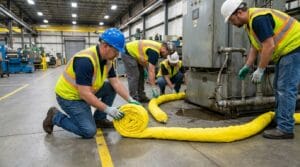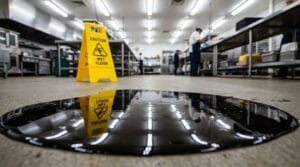

Oil spills on work floors create slippery dangers that put workers at risk every day. Each year, these spills cause thousands of injuries in shops and factories. This blog post guides you through easy steps to stop oil from spreading and to clean it up fast.
Discover safe floors now.
Why Oil Contamination Is a Serious Floor Safety Issue
After covering the basics in the introduction, let’s examine why oil contamination poses a serious floor safety issue in the workplace. Oil creates slick surfaces that lead to slips and falls, which rank as top hazards in many industries.
Workers face high risks when floors get coated in oil, as it hides dangers and slows down safe movement. Safety experts note that these spills cause thousands of injuries each year, often from simple accidents during routine tasks.
Contamination also harms equipment and boosts cleanup costs over time. It spreads fast, turning clean areas into unsafe zones without proper control. Use absorbents right away to cut these risks and keep floors safe.
Maintenance teams must spot early signs of oil buildup to avoid bigger problems. Protective practices help everyone stay alert and prevent serious falls.
Understanding How Oil Reaches Work Floors
Oil often seeps onto work floors through common paths that demand attention. Workers must identify these sources to stop contamination early and maintain safe spaces.

Leaks from Equipment and Machinery
Equipment leaks oil onto work floors in many ways. Machines often drip during normal use. Pumps and engines wear out over time. This causes small spills that build up. Workers must check seals and gaskets often.
Regular maintenance stops these leaks early. Use absorbents under machines to catch drips right away. Safety improves when you fix issues fast.
Oil from machinery creates big hazards in the workplace. It leads to slips and falls. Contamination spreads if not controlled. Place protective equipment around high-risk spots. Clean up spills with the right tools.
Follow good practices to keep floors safe. This reduces risks for everyone.
Drips During Maintenance and Refilling
Leaks from equipment often lead to ongoing contamination, but drips during maintenance and refilling add another layer of risk. Workers handle oil changes, filter replacements, and fluid top-offs in these tasks.
These actions cause small spills that spread quickly on work floors. Safety demands quick action to prevent slips and hazards.
Place absorbents under machinery during refilling to catch drips right away. Use drip pans or mats in maintenance zones for better spill control. Train teams on proper handling practices to cut down contamination.
Clean up any oil right after tasks to keep workplaces safe. Protective equipment helps workers avoid direct contact with spills.

Oil Tracking from Wheels and Foot Traffic
Oil tracks onto work floors from wheels and foot traffic. Workers move through oily areas, and they spread the mess. Forklifts and carts pick up oil from leaks, then roll it across the workplace.
This creates slick spots that lead to slips and hazards. Safety suffers when contamination builds up unnoticed.
Place absorbents under equipment to catch drips first. Use mats at entry points to trap oil from shoes and tires. Clean wheels often during maintenance to stop tracking. These practices cut down on spills and boost workplace safety.
Protective equipment helps workers avoid direct contact with oily floors.
The Safety Risks of Oil-Contaminated Floors
Oil on work floors boosts dangers for everyone, from slippery spots that cause falls and injuries, to hidden safety lines that confuse paths, and even slower escapes in emergencies that put lives at risk, so read on to discover ways to fix these issues.
Slip and Fall Hazards
Oil contamination creates major slip hazards in the workplace. Workers face high risks when they step on slick surfaces. These slips lead to falls that cause injuries. Safety experts report that oil spills account for many accidents each year.
Use absorbents to soak up oil right away. This action prevents slips and boosts workplace safety.
Protective equipment helps workers avoid these hazards. Wear non-slip shoes in oily areas. Clean up spills with proper tools and practices. Maintenance teams must check floors often.
Good habits reduce contamination and keep everyone safe.

Reduced Visibility of Floor Markings
Oil covers floor markings in workplaces. This hides important lines that guide safe paths. Workers miss hazard zones or exit signs because of the contamination. Safety drops when people ignore these marks during tasks.
Spills cause this issue fast if not handled with absorbents.
Floors lose clear visibility from oil buildup over time. Maintenance teams struggle to spot warnings under the mess. Hazards grow in busy areas without quick cleaning. Protective equipment helps, but prevention matters more.
Oil also raises risks during emergency movement.
Increased Risk During Emergency Movement
Oil contamination hides floor markings and ramps up dangers when workers must move fast in emergencies. People rush to exit during fires or alarms. Slippery spots from spills cause quick falls.
These hazards turn simple evacuations into chaos. Safety drops as oil slows down safe paths.
Workers face higher injury risks in these moments. Spills spread across walkways and create unseen traps. Use absorbents right away to cut these threats. Maintenance teams should check floors often.
Protective equipment helps, but prevention beats cleanup. Keep workplace practices strong to avoid such slips.

Controlling Oil at the Source
Stop oil leaks right where they start by placing drip pans under machinery. Position absorbent mats in spots prone to spills to catch drips early and keep floors dry.
Managing Leaks Around Equipment Bases
Equipment leaks often start at the base, causing oil contamination on work floors. Workers must check machines daily for signs of wear. Place drip pans under equipment to catch small spills right away.
These pans stop oil from spreading and reduce slip hazards in the workplace. Use absorbents like pads or socks around the base for quick cleanup. Seal cracks in the floor near equipment to block leaks from seeping in.
Maintenance teams should schedule regular inspections to fix leaks early. Train staff on proper handling of protective equipment during repairs. This practice boosts safety and cuts down on contamination risks.
Absorbents help contain oil before it reaches walkways. Keep spare supplies nearby for fast response to any spill.
Using Preventive Placement Near High-Risk Areas
After managing leaks around equipment bases, focus next on preventive placement near high-risk areas to boost workplace safety. Identify zones like refilling stations or maintenance bays where oil spills often happen.
Place oil absorbents there ahead of time. These absorbents catch drips before they spread and cause contamination. Workers stay safer this way.
Use barriers or mats in high-traffic spots to block oil from reaching walkways. This step cuts slip hazards right at the source. Train your team to check and replace these items during routine maintenance.
Proper placement keeps floors clean and reduces risks in the workplace.
Containing Oil Before It Spreads Across Floors
Workers stop oil from spreading by deploying barriers around leaky machines right away. These barriers, combined with quick-response absorbents, keep spills in check and protect key areas from harm.
Protecting Walkways and Work Zones
Protect walkways and work zones to stop oil contamination. Use absorbent mats in high-traffic areas. These mats soak up spills fast and keep floors dry. Place barriers around oily equipment to block drips from spreading.
This step cuts slip hazards in the workplace.
Workers stay safe with these practices. Choose oil absorbents that match your floor type for best results. Clean up small spills right away with the right tools. Follow safety protocols to maintain clean zones.
Risk management starts here and prevents bigger problems.

Blocking Oil from Reaching Drains and Corners
Place absorbents around drains to stop oil spills from flowing in. Workers use these materials to block contamination right away. This step protects the workplace from hazards like slips.
Safety protocols demand quick action here. Oil can hide in corners and cause big problems later.
Team leads train staff on using protective equipment for this task. They set up barriers to keep oil in one spot. Cleanup becomes easier with these practices. Absorbents soak up the mess before it spreads.
Maintenance crews check these areas often to ensure safety.
Creating Controlled Spill Areas
Creating controlled spill areas helps contain oil before it spreads. Workers set up these zones in high-risk spots, like near machinery or storage tanks. They use barriers such as berms or curbs to trap the oil.
Absorbents play a key role here; place mats or pads inside the area to soak up spills fast. This practice boosts workplace safety and cuts slip hazards.
Teams check these areas often as part of maintenance routines. They block oil from drains with protective covers or seals. Safety protocols guide the setup, ensuring quick cleanup.
Oil absorbents in these zones aid contamination control and support environmental protection. Such steps reduce risks during spills and keep floors safe.
Cleaning Oil-Contaminated Floors the Right Way
Oil contamination on work floors poses serious safety hazards like slips and falls. Proper cleaning methods use absorbents and protective equipment to ensure a safe workplace.

- Assess the spill area first to identify the extent of contamination. Workers must wear protective equipment, such as gloves and non-slip boots, to avoid hazards during cleanup. This step prevents slips and protects against skin contact with oil.
- Apply absorbent materials directly on the oil spill to soak up the liquid. Choose granular absorbents for quick action on large areas, or pads for smaller spots. Press them down firmly to maximize absorption and reduce spread.
- Let the absorbents sit for a few minutes to fully draw in the oil. This process cuts down on cleaning time and improves safety by containing the hazard. Check that no oil remains visible before moving on.
- Sweep up the saturated absorbents with a broom or use a vacuum designed for liquids. Dispose of them in approved containers to follow workplace safety practices. This keeps the floor clear and prevents re-contamination.
- Wash the floor with a degreasing cleaner and hot water. Scrub vigorously with a brush to lift any leftover residue. Rinse well to remove all soap, which could cause new slip hazards.
- Dry the area completely using fans or absorbent cloths. Inspect for any shiny spots that might indicate remaining oil. Mark the zone as off-limits until dry to maintain safety and avoid accidents.
- Document the cleanup in maintenance logs for future reference. Train staff on these practices to handle spills effectively. Regular checks ensure ongoing contamination control in the workplace.
Conclusion
Keep work floors safe with strong oil control methods. Use absorbents to catch leaks early and clean spills right away. These steps cut slip risks and boost workplace safety for all.