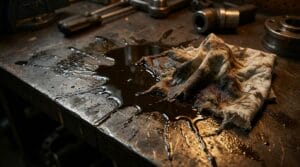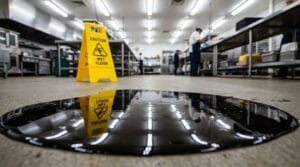

You know the feeling. You walk into the shop on a Monday morning, coffee in hand, only to find a slick, shimmering puddle creeping out from under your primary CNC machine. It’s not just a slip hazard; it’s a sign that your machine is bleeding money.
From what I’ve seen in the industry, most shops treat these leaks as a janitorial problem—something to mop up and forget. But that 680-credit-score mindset separates the average shops from the top-tier precision operations.
A leak is actually a mechanical symptom. It tells you that seals are failing, vibration is loosening fittings, or your preventive maintenance schedule has a gap.
This post breaks down exactly where these leaks start, why the “standard” fixes often fail, and the specific 2026 protocols you need to stop them for good.
Understanding Where Oil and Coolant Leaks Come From
Leaks rarely happen by accident. They are usually the result of thermal expansion and vibration working against your machine’s joints. As a CNC machine runs, it heats up, causing metal components and seals to expand. When the machine cools down overnight, those parts contract.
Over hundreds of cycles, this “breathing” motion creates microscopic gaps in gaskets and O-rings. If you combine that with the constant high-frequency vibration of cutting metal, you have a recipe for fluid failure.
Common Leak Points in CNC Machines
You probably know to check the obvious spots, but the real culprits are often hidden behind sheet metal or under heavy covers. Knowing exactly where to look saves hours of diagnostic time.

- Spindle Seals: These are the most common failure point. A worn labyrinth seal allows coolant to migrate into the spindle bearings, which can lead to a $15,000+ repair bill if not caught early.
- Way Cover Wipers: Often ignored, the brass or rubber wipers on your telescoping way covers are critical. If they are damaged, chips and coolant bypass the cover and flood the ways, leaking out the back of the machine.
- Pneumatic Tool Changers: The solenoids and O-rings here are prone to drying out. A hiss of air often precedes a fluid leak in these systems.
- High-Pressure Hydraulic Lines: These systems often operate at 1,000+ PSI. Even a pinhole failure here creates a fine mist that coats the entire shop floor.
- Coolant Return Screens: If the return screen in the chip conveyor is clogged, coolant backs up inside the enclosure. It will eventually rise high enough to spill out of seams that were never designed to hold standing water.
- Bulkhead Fittings: Check where hoses pass through the machine’s enclosure. These bulkheads often loosen due to vibration, allowing fluid to weep down the back panel.
Why Leaks Persist Even After Maintenance
It is frustrating to fix a leak only to see it return three days later. This usually happens because the repair addressed the symptom, not the root cause. A common mistake is reusing “crush washers” or copper gaskets. Once these metal seals have been compressed, they work harden and cannot form a proper seal a second time.
Another major issue is the use of the wrong sealant. Using standard white Teflon tape on hydraulic fittings is a rookie move. The tape can shred, sending tiny fragments downstream to clog sensitive valves. For hydraulic and pneumatic fittings, pros use a specific anaerobic sealant like Loctite 545. It cures only when confined between metal threads, ensuring a vibration-proof seal without the risk of system contamination.
Why Oil and Coolant Leaks Must Be Controlled Early
Ignoring a “small” leak is a financial gamble. The costs compound daily, often in ways that do not show up immediately on a balance sheet but devastate the bottom line over a fiscal year.
Safety Risks on CNC Shop Floors
The safety data is clear and alarming. According to recent OSHA statistics and insurance reports, the average workers’ compensation claim for a slip-and-fall injury has risen to approximately $49,000. That is just the direct cost.
OSHA standard 1910.22(a)(2) explicitly requires that “The floor of each workroom is maintained in a clean and, to the extent feasible, in a dry condition.” A persistent leak puts you in direct violation of this federal mandate. Beyond the fines, oil-soaked concrete becomes a fire hazard and can degrade the rubber soles of safety boots, reducing their grip and increasing accident risks further.
How Leaks Affect Productivity and Equipment
Productivity loss from leaks is measurable. A 2024 report by Siemens highlighted that unplanned downtime in heavy manufacturing can cost upwards of $260,000 per hour. While a smaller shop might not hit that figure, losing just one hour of spindle time a day on a primary machine can bleed tens of thousands of dollars a year.

“A hydraulic fluid leak of just one drop per second translates into 420 gallons lost per year. At an average cost of $40 per gallon for quality hydraulic oil, you are literally pouring $16,800 down the drain annually—from a single leak.”
Leaks also destroy coolant chemistry. When hydraulic oil leaks into your coolant tank (known as “tramp oil”), it creates a breeding ground for anaerobic bacteria. This leads to the dreaded “Monday morning smell,” skin dermatitis for operators, and poor tool life. You end up paying twice: once to replace the lost oil, and again to pump out and replace the spoiled coolant.
Controlling Oil and Coolant at the Source
The best way to handle a leak is to stop it before it hits the floor. Implement a “Weekly Walkaround” protocol where operators inspect specific high-risk zones. Provide them with the right tools, like torque wrenches, to ensure fittings are tightened to spec—over-tightening is just as bad as under-tightening.

For hard-to-find leaks, use technology. A UV leak detection kit (like those from Spectroline) is an invaluable investment. You add a small amount of fluorescent dye to the reservoir and run the machine. Under a UV light, the leak source glows a bright yellow-green, pinpointing the exact origin—even if it’s a hairline crack in a casting.
Mark verified leaks with bright red “Repair Tags” immediately. This visual management communicates to the next shift that the issue is known and prevents the “I thought someone else fixed it” syndrome.
Containing Leaks Before They Spread
If you cannot fix a leak immediately due to production schedules, you must contain it. Do not rely on rags. Place low-profile drip pans under the leak point. For leaks near walkways, use polypropylene absorbent socks. These flexible tubes can be molded around the base of a machine to create a dam.
Brands like New Pig and Brady SPC manufacture socks specifically designed to hug corners and absorb fluids on contact. This containment buys you time to schedule a proper repair without compromising shop safety. Swap out saturated socks daily; a soaked sock is no longer a barrier—it’s a bridge for the fluid to cross.
Cleaning Up Oil and Coolant the Right Way
When a spill happens, speed and method matter. Using the wrong tools can turn a small puddle into a large slick.
Why Traditional Cleaning Methods Fall Short
Mops are the enemy of a clean machine shop. They tend to spread oil into a thin, invisible film rather than removing it. This film is incredibly dangerous because it looks dry but offers zero traction.
Clay granules (often called “kitty litter”) are also outdated. They are heavy, dusty, and inefficient. The silica dust they create is a respiratory hazard, and the granules often get kicked under machines where they turn into a sludge that is difficult to remove.
Using Absorbents for Faster and Safer Cleanup
Modern synthetic absorbents are far superior to clay. A melt-blown polypropylene pad acts like a magnet for oil while often repelling water. Here is how the two compare:

| Feature | Clay Granules | Polypropylene Pads |
|---|---|---|
| Absorption Ratio | 1:1 (Absorbs its own weight) | 10:1 to 25:1 (High efficiency) |
| Cleanup Speed | Slow (Requires sweeping/shoveling) | Fast (Wipe and toss) |
| Disposal Cost | High (Heavy weight = higher fees) | Low (Lightweight, burns to <1% ash) |
| Shop Cleanliness | Leaves dust and grit | Leaves zero residue |
For the best results, follow this 2026 standard cleanup protocol:
- Contain: Surround the spill with absorbent socks to stop the spread.
- Absorb: Place absorbent mats (like the PIG Mat) directly onto the liquid. Let them sit for a few seconds to wick up the fluid.
- Extract: For large coolant spills, use a specialized “shop vac” or sump sucker designed for liquids. Do not use a standard vacuum.
- Finish: Wipe the area with a degreasing wipe to remove the final oily film that causes slips.
Preventive Leak Management in CNC Workshops
Prevention is cheaper than reaction. Shift your maintenance culture from “fix it when it breaks” to “maintain it so it doesn’t.”
Start by digitizing your logs. Use a simple tablet-based system or a whiteboard near the machine to track when coolant concentrations are checked and when seals are inspected. If you see that a specific machine requires a top-up of hydraulic fluid every week, do not just refill it—flag it for inspection.

Train your team to look for the “early warning signs” of leaks, such as damp spots on hydraulic hoses or a drop in coolant pressure. Catching a loose fitting today takes five minutes; replacing a seized spindle bearing next month takes five days.
Conclusion
Stopping oil and coolant leaks in a precision CNC machine shop isn’t just about housekeeping. It’s about protecting your profit margins, ensuring OSHA compliance, and keeping your most valuable asset—your machinists—safe from harm.
Don’t wait for the next slip-and-fall injury or the next $20,000 repair bill. Audit your shop for leaks this week, upgrade your absorbents to modern polypropylene options, and treat every drop of lost fluid as a drop of lost revenue. Take control of your floor, and the productivity will follow.