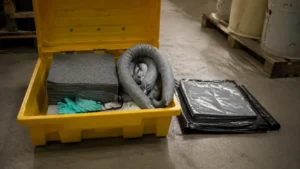

Are you struggling to find an oil absorbent pads supplier that actually understands your safety requirements? I’ve seen it happen too often: a facility manager buys the cheapest “absorbent” pads on the market, only to watch them disintegrate the moment they hit a hydraulic fluid spill. That’s not just a mess; under US regulations like the EPA’s SPCC rule, that’s a compliance risk you can’t afford.
In this guide, I’m going to walk you through exactly how to vet a supplier, from deciphering technical specs like “meltblown” versus “bonded” to understanding the shipping logistics that actually save you money. We will move beyond the basic sales pitch and look at the data that matters.
Let’s break down the material science, the testing standards, and the smart questions you need to ask to secure a supply chain that keeps your operation safe and compliant.
Understanding Your Specific Needs Before Sourcing
Before you even look at a catalog, you need to audit your facility’s specific risks. Most people think a pad is just a pad, but in the industrial safety world, using the wrong type can actually spread a spill rather than contain it. You need to match the specific chemistry of your potential leaks to the right sorbent category.
Identifying Oil-Only vs. Universal vs. Hazmat Requirements
In the United States, absorbent products follow a strict color-coding standard. Knowing this code is the quickest way to ensure your team grabs the right tool during an emergency.

- White (Oil-Only): These are hydrophobic, meaning they repel water but soak up hydrocarbons. Use these for marine spills, rainy outdoor storage areas, or skimming oil off a sump. If you throw these on a puddle of water, they will float indefinitely.
- Grey (Universal): These are hydrophilic and absorb everything—water, coolants, solvents, and oils. These are your go-to for indoor factory floors where a leak might be a mix of machine fluids.
- Yellow (Hazmat): These are designed for aggressive fluids like acids, bases, and unknown chemicals. They are often treated to resist chemical reactions that could cause cheap pads to degrade or smoke.
Make sure your supplier adheres to this standard. I’ve seen imported “bargain” pads that mix these colors up, which creates dangerous confusion during a rapid response situation.
Estimating Monthly Usage and Storage Capacity
Once you know the type, you need to calculate volume—but don’t just count pads. You need to calculate gallons of absorbency. A “bale of 100 pads” from Supplier A might absorb 15 gallons, while a high-quality bale from Supplier B absorbs 28 gallons.
Review your spill logs from the past year. Did you have small, frequent drips or large, catastrophic failures? If your facility handles bulk storage (over 1,320 gallons of oil), your SPCC (Spill Prevention, Control, and Countermeasure) plan likely dictates a specific volume of absorbency you must have on hand. Check this number before you order.
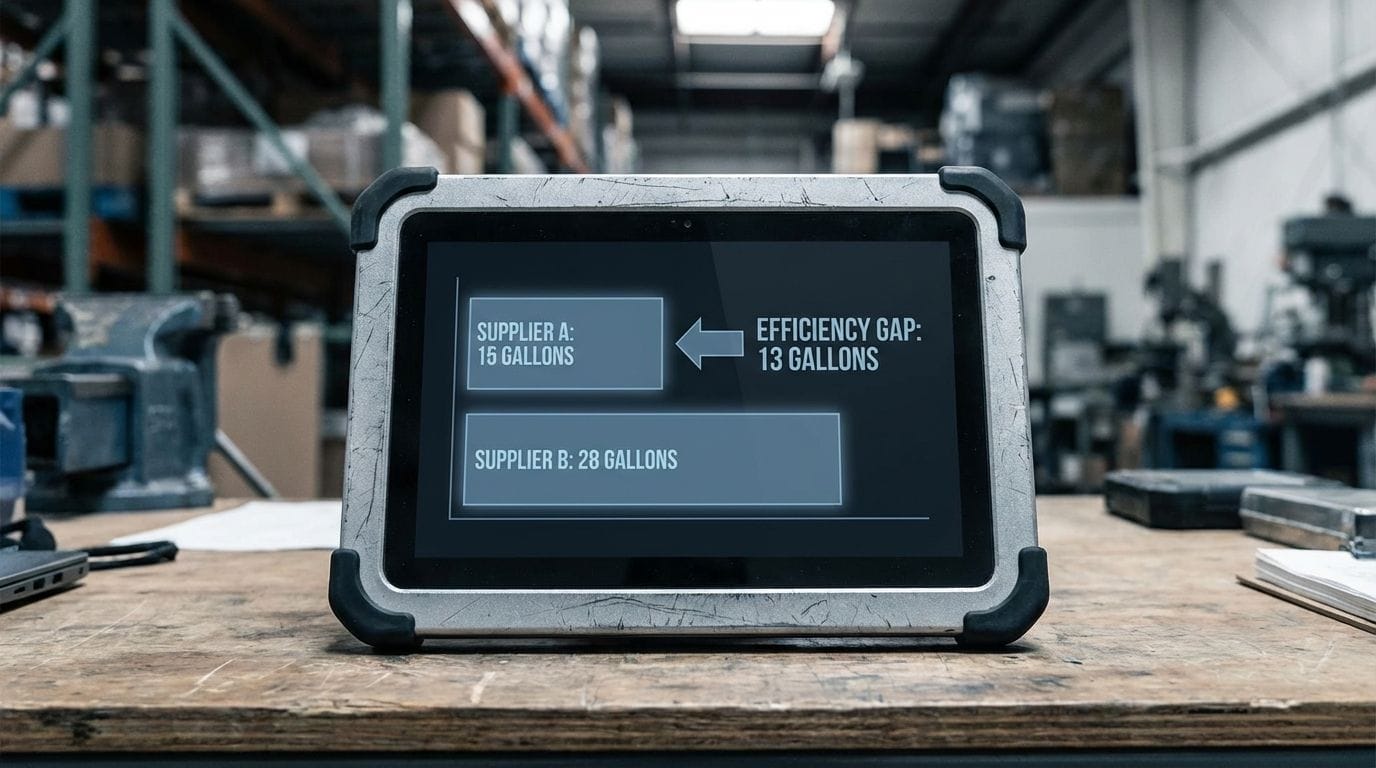
A smart buyer doesn’t calculate the “price per pad.” They calculate the “price per gallon absorbed.” This is the only metric that reveals the true value of your investment.
Storage is the final piece of this puzzle. Absorbent pads are bulky. A standard pallet (48″x40″) can typically hold 30 to 40 bales. If you don’t have the floor space to store a full truckload, you need a supplier who offers reliable “Less Than Truckload” (LTL) shipping options or a vendor-managed inventory program to keep your stock manageable.
Evaluating Product Quality and Manufacturing Standards
Quality in this industry is invisible until you need it. A pad might look thick and fluffy, but if the manufacturing process is poor, it will leave lint all over your machinery or fall apart when saturated. You need to ask about the production method.
Meltblown Polypropylene Quality and Material Purity
The gold standard for oil absorbents is 100% meltblown polypropylene. This process creates a web of fine fibers with a massive surface area, which is what traps the oil. However, not all meltblown is created equal.
Cheaper manufacturers often mix in “regrind” or recycled pellets that have impurities. This weakens the fiber structure. You want “virgin” polypropylene for the most critical tasks. It provides consistent wicking speed and ensures the pad holds its shape.
You should also look for “bonded” or “dimpled” pads. Sonic bonding fuses the top and bottom layers of the pad together. This adds immense strength, allowing you to walk on the mat or wipe down rough machinery parts without the pad shredding into confetti. If you are wiping down precision parts, ask for “fine fiber” or “lint-free” grades specifically.
Testing Absorbency Ratios (10x vs. 15x weight)
How do you prove a supplier’s claims? You ask for their ASTM F726 test data. This is the American Society for Testing and Materials standard for sorbent performance.
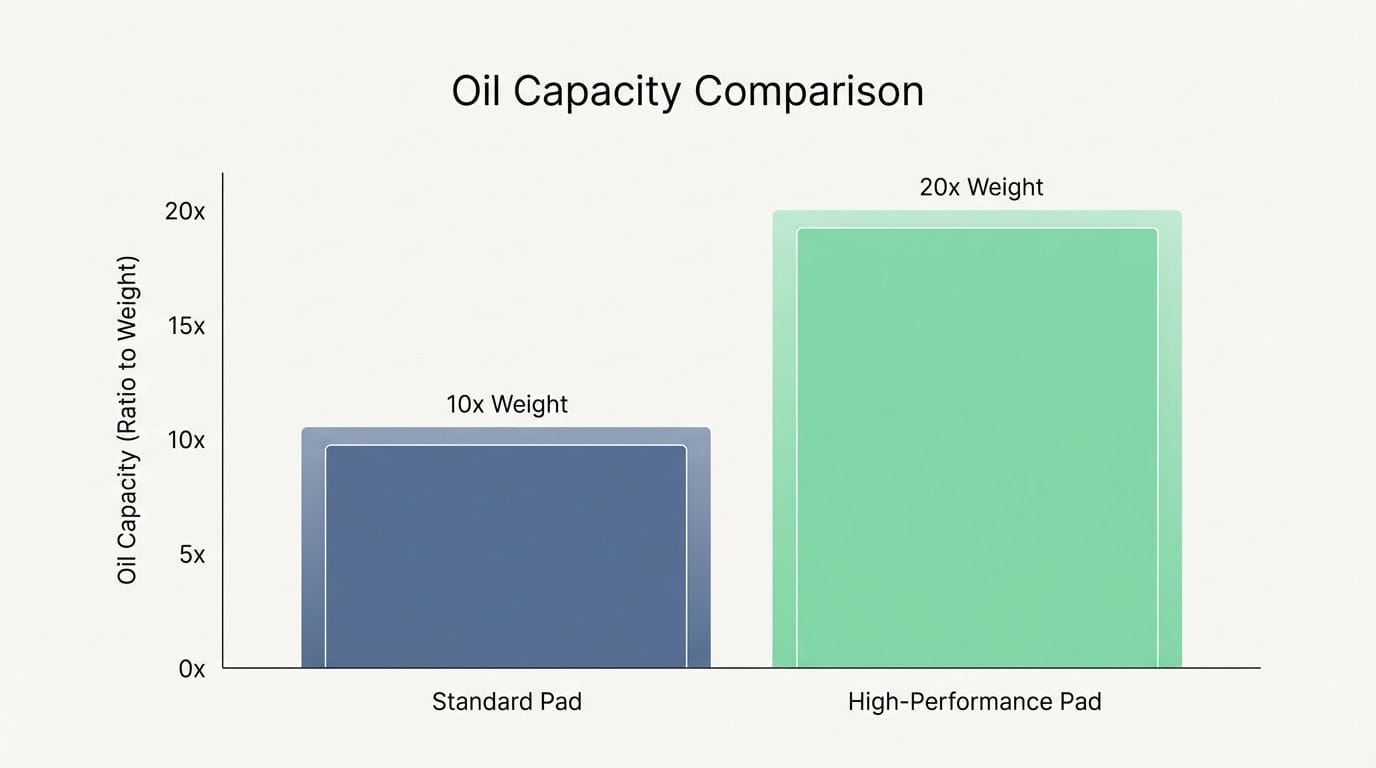
| Feature | Standard Pad (10x Ratio) | High-Performance Pad (15x-20x Ratio) |
|---|---|---|
| Oil Capacity | Absorbs ~10 times its weight | Absorbs ~15-20 times its weight |
| Best Use Case | Small drips, wiping tools, daily maintenance | Large spill response, high-volume recovery |
| Cost Efficiency | Lower upfront cost, higher disposal volume | Higher upfront cost, lower disposal fees |
If a supplier claims their pad absorbs “25 times its weight” but cannot produce an ASTM F726 test report, be very skeptical. That number is likely a marketing exaggeration.
Bonding Techniques for Durability and Lint-Free Performance
I always tell clients to perform the “tear test” on a sample. Grab a dry pad and try to rip it. A simple meltblown pad will pull apart like cotton candy. A pad that has been point-bonded (those little dimples you see) will resist tearing.
For high-traffic areas, look for pads with a “scrim” or “spunbond” top layer. This is a thin, net-like webbing added to one or both sides of the pad. It makes the pad virtually indestructible under foot traffic and completely eliminates linting. This is non-negotiable for cleanrooms or automotive paint shops where loose fibers can ruin a product.
Manufacturer vs. Trading Company: Which is Better?
This decision often comes down to your volume and your timeline. Are you buying a few boxes for a mechanic shop, or are you sourcing containers for a national distribution network?
Pros and Cons of Working Directly with a Factory
Going direct to the manufacturer is usually the best way to secure the lowest unit price. You cut out the middleman, which can save you 15-20%. You also get direct answers to technical questions about the ASTM testing or polymer sourcing.
However, manufacturers often have high “Minimum Order Quantities” (MOQs). They might require you to buy a full container load or several pallets of a single SKU. If your facility only needs 10 bales a month, a factory might not even return your call. Lead times can also be longer, as their production schedules are often booked weeks in advance.
When a Trading Company Might Be the Better Choice
Trading companies or industrial distributors are excellent aggregators. They can sell you a mixed pallet containing ten bales of oil-only pads, five boxes of socks, and two spill kits. This flexibility is massive for small-to-mid-sized operations.
They also handle the logistics. If you are importing, a trading company often manages the customs, duties, and “drayage” (transport from port to warehouse), which can be a nightmare for the inexperienced. The downside is cost; you will pay a markup for this convenience. But for many, the time saved is worth the premium.
Assessing Customization and OEM Capabilities
Sometimes the standard 15″ x 19″ pad isn’t enough. Maybe you have a unique machine footprint or a specific branding requirement.
Custom Sizes, Perforations, and Weights (GSM)
The standard US pad is 15 inches by 19 inches, but a flexible supplier can cut to order. I’ve worked with facilities that needed extra-long 30-inch rolls for a specific assembly line. Ask about their “converting” capabilities.
Perforations are a huge money saver. A pad perforated down the center allows your workers to tear it in half for small spills. This simple feature can reduce your waste by 50% overnight. Check if the supplier offers “double perf” (center and crosswise) for maximum versatility.
You also want options in GSM (grams per square meter). This measures the thickness/weight of the pad.
- Light Weight (~200 GSM): Good for wiping tools.
- Medium Weight (~300 GSM): The general purpose standard.
- Heavy Weight (~400+ GSM): Required for spill response and deep pooling.
Private Labeling and Packaging Options
If you are a distributor looking to resell, private labeling is key. Can the supplier print your logo on the poly-bag? Can they include your custom insert sheet with safety instructions?
Don’t overlook the packaging quality itself. Pads are usually packed in bales or cardboard dispenser boxes. Bales are cheaper but can be harder to stack neatly. Boxes cost more but protect the product from UV light (which degrades polypropylene over time) and are easier to inventory.
Verifying Certifications and Environmental Compliance
You are buying these products to comply with environmental laws, so your supplier needs to be compliant too.
Ask for their ISO 9001 certification to ensure quality management. More importantly, check their product’s Material Safety Data Sheet (MSDS) or Safety Data Sheet (SDS). While polypropylene itself is generally inert, you need to know if any surfactants or chemical additives were used.
For specific industries like aviation or electronics manufacturing, you must ask if the pads are “static dissipative.” Standard polypropylene can build up a static charge, which is a massive fire risk in environments with flammable vapors. Certified anti-static pads usually come in a distinct pink color to differentiate them.
Analyzing Supply Chain and Logistics Efficiency
The price of the pad is only half the battle. Absorbents are essentially “shipping air”—they are light but incredibly bulky. Freight costs can easily exceed the product cost if you aren’t careful.
Minimum Order Quantities (MOQ) Flexibility
Test the supplier’s flexibility. Will they allow you to break a pallet? Can you order a “mixed truckload”? The best suppliers understand that your consumption fluctuates.
A rigid MOQ often forces you to stockpile months of inventory, tying up cash and floor space. A flexible supplier acts more like a partner, helping you maintain a “lean” inventory while ensuring you never run dry.
Production Lead Times and Shipping Stability
In the US market, domestic lead times should be short—typically 3 to 5 business days for stock items. If you are sourcing from overseas to save money, that lead time jumps to 6-8 weeks.
Ask specifically about their “safety stock” policy. Do they keep master rolls of polypropylene ready to convert? Or do they make everything to order? Suppliers with domestic warehousing are generally more reliable during global supply chain disruptions.
Evaluating Communication and International Experience
If you decide to import directly to save on costs, communication becomes your lifeline. Misunderstandings about “FOB” vs “DDP” shipping terms can stick you with thousands of dollars in surprise port fees.
Importance of Fluent English for Technical Specifications
Technical nuance matters. If you ask for “hydrophobic” pads and the sales rep doesn’t understand the term, you might end up with a container of universal pads that sink in water. Fluent communication ensures that specs like GSM, fiber diameter, and bonding type are understood exactly.
Supplier’s Familiarity with Incoterms and Export Documentation
You need a partner who knows their Incoterms. If they quote you “Ex-Works” (EXW), that means you are responsible for picking it up from their factory door in China or Vietnam. If they quote “DDP” (Delivered Duty Paid), the price includes everything up to your warehouse dock.
Ensure they can provide a Commercial Invoice, Packing List, and Bill of Lading that matches US Customs requirements perfectly. Errors here can lead to your shipment being held at the port for weeks, accruing expensive “demurrage” charges every day.
Responsiveness and Time Zone Management
A supplier who takes 48 hours to reply to an email is a liability during a supply crunch. Look for companies with a 24-hour response policy. Many top-tier Asian manufacturers now have sales teams working US hours or US-based representatives to bridge the time gap.
Steps to Vet a Potential Supplier Effectively
Don’t sign a contract based on a website. Follow this practical vetting protocol.
Requesting and Testing Free Samples
Legitimate suppliers will send you a sample pack for free (you might pay for shipping). Once you get it, put it to the test:
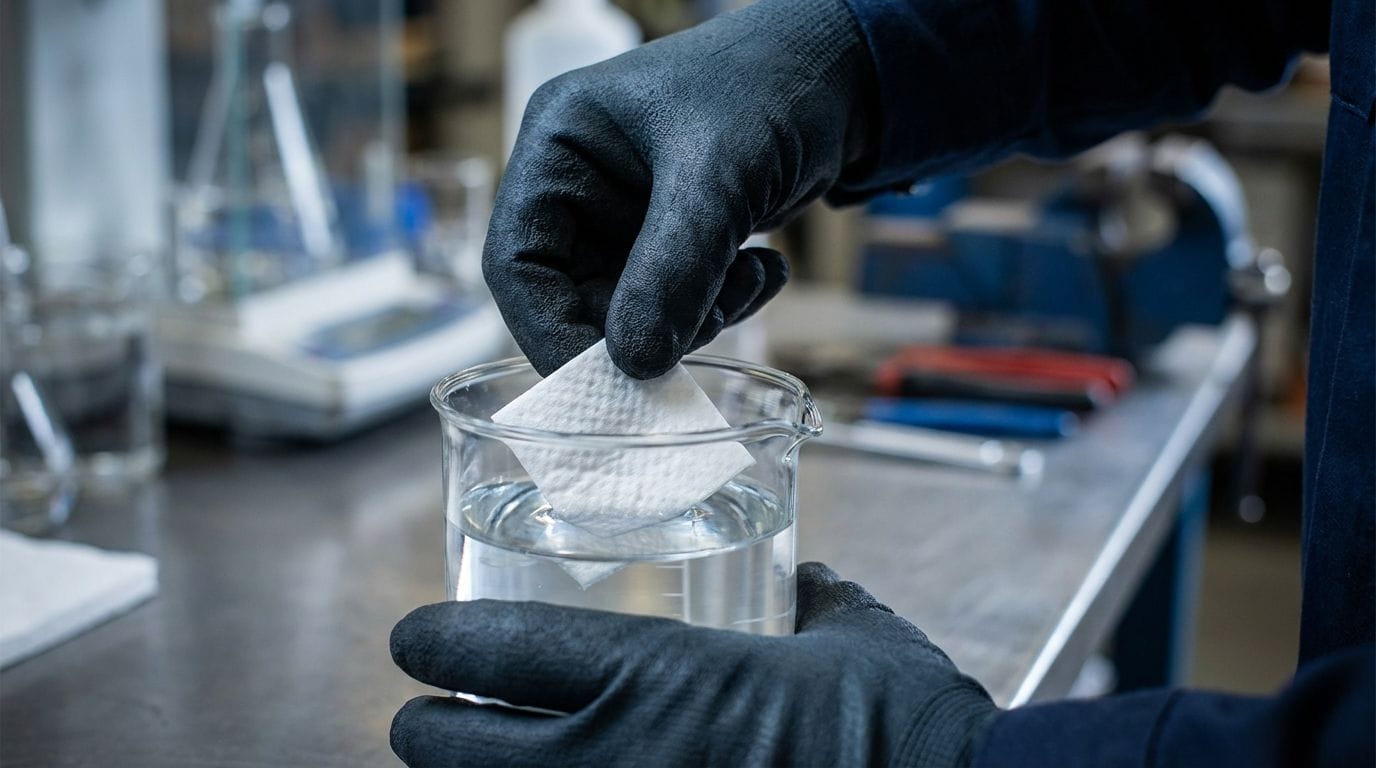
- The Float Test: Throw the white oil-only pad in a bucket of water. Push it down. If it soaks up water and sinks, it fails.
- The Wring Test: Saturate the pad with oil, pick it up, and see if it holds the fluid. A poor quality pad will drip excessively before you even squeeze it.
- The Flame Test: (Do this safely outside). Pure polypropylene should melt like candle wax. If it leaves a lot of ash or smells like burnt paper, it likely has cheap cellulose fillers.
Conducting Video or On-Site Factory Audits
If you can’t visit in person, demand a live video tour. Don’t settle for a pre-recorded video. Ask them to walk onto the production floor right now and show you the meltblown extruders running.
Look for cleanliness. A dirty factory floor means dirt and metal shavings could end up in your absorbent pads. In a spill response scenario, you want a clean product, not one that introduces new contaminants to your environment.
Conclusion
Choosing the right oil absorbent pads supplier is about risk management, not just price. You need a partner who understands the difference between a 15-gallon spill and a 100-gallon disaster and provides the certified products to handle both. Focus on the metrics that matter: absorbency ratios, material purity, and supply chain reliability.
Take the time to verify their claims with ASTM data and real-world testing. A little diligence now ensures that when the alarm sounds, your team has the high-quality tools they need to keep your facility safe, clean, and compliant.
If you need help evaluating absorbent pad suppliers or selecting the right products, feel free to contact us for practical support.