Oil leaks hit industrial facilities hard and lead to slippery floors, lost time, and big fines.
These spills cost companies over $1 billion each year in repairs and cleanup.
This post breaks down easy ways to spot, stop, and clean up leaks for good.
Keep reading to fix your oil problems fast.
Why Oil Leaks Are a Persistent Problem in Industrial Facilities
Industrial facilities face oil leaks as a constant challenge. Heavy machinery runs non-stop, which stresses parts over time. Seals break down from heat and friction. Workers sometimes skip routine checks due to tight schedules.
This leads to small drips that grow into big problems. Maintenance gaps play a key role here. Poor lubrication adds to the wear. Facilities often use old equipment, which boosts leakage risks.
Spill prevention becomes hard without regular inspections. Safety drops when leaks spread unchecked. Productivity suffers from unexpected stops for repairs.
Managers overlook early signs, thinking leaks are minor. Environmental compliance gets tougher with unchecked oil spread. Leak detection tools help, but many sites lack them. Containment fails if not planned well.
Repair solutions demand quick action. These issues make oil leaks stick around in daily operations. Teams need strong management to fight them. Now, explore the common sources of these industrial oil leaks.
Understanding Common Sources of Industrial Oil Leaks
Industrial facilities face oil leaks from various points that demand close attention. Experts trace these issues to worn parts, system breakdowns, and overlooked upkeep, which all contribute to ongoing risks.
Equipment Wear and Seal Degradation
Equipment fails over time in industrial facilities. Seals break down from constant use. This causes oil leaks. Machines run with parts that rub and wear. Gaskets and O-rings lose their tightness.
Oil then escapes from joints and fittings. Factories face this issue often. Maintenance teams spot wear during routine checks. They inspect pumps and valves for signs of damage. Early detection stops small leaks from growing big.
Seal degradation speeds up with poor lubrication. Heat and pressure weaken materials. Dirt builds up and harms seals. Workers must replace worn parts fast. This boosts safety and cuts downtime.
Repair solutions fix the root cause. Spill prevention starts here. Teams use inspections to find weak spots. They manage leaks before they spread. Productivity stays high with good practices.

Hydraulic and Lubrication System Failures
Hydraulic systems push fluids to power machines in industrial facilities. These systems often fail due to worn hoses or faulty pumps, which cause oil leaks. Lubrication systems keep parts moving smoothly but degrade over time.
Seals crack from high pressure or heat, leading to steady drips. Workers spot these issues through routine leak detection. Maintenance teams repair damaged components to stop leakage.
Failures in these systems reduce productivity and raise safety risks. Oil spreads on floors and creates slip hazards. Spill prevention starts with regular inspections of industrial equipment.
Use containment solutions like drip pans under machines. Follow safety protocols to avoid environmental compliance problems. Quick repair solutions limit downtime and support better management of lubrication.
Human Factors and Maintenance Gaps
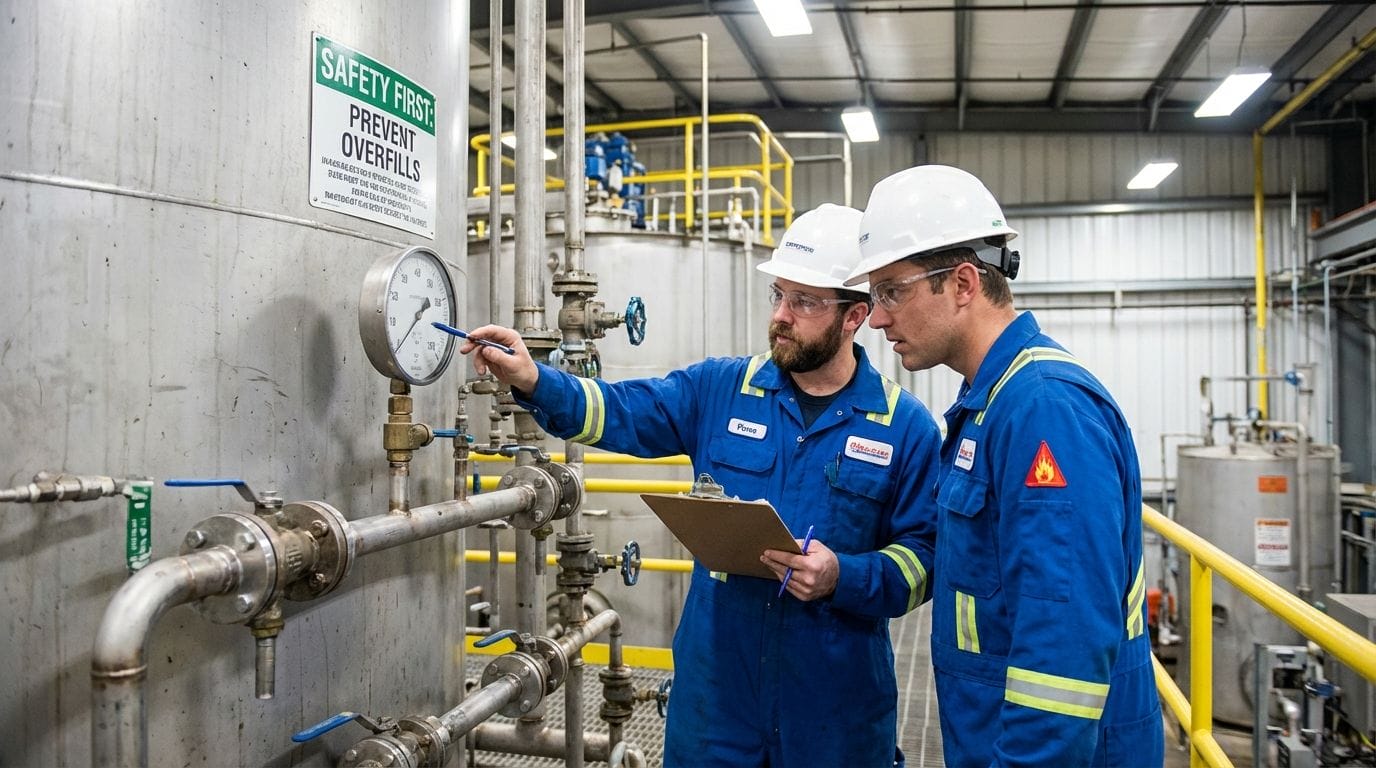
People often cause oil leaks in industrial facilities through simple errors. Workers might overfill tanks or fail to secure fittings during routine tasks. These mistakes lead to leakage and spill risks.
Poor training worsens the issue, as staff ignore safety protocols. Maintenance gaps add to the problem. Teams skip regular inspections, letting small issues grow into big leaks. Old lubrication systems go unchecked, causing failures in industrial equipment.
This hurts productivity and raises environmental compliance concerns.
Fix these human factors with better management. Train workers on leak detection and repair solutions. Set up routine maintenance procedures to catch problems early. Use preventive measures like daily checks on hydraulic systems.
This approach boosts safety and cuts downtime. Spill prevention becomes key when staff follows strict guidelines. Containment solutions help stop leaks from spreading. Emergency response plans ensure quick action on any spill.
Why Early Oil Leak Control Is Critical
4. Why Early Oil Leak Control Is Critical: Early control of oil leaks stops slip and fall dangers, cuts downtime in production, and avoids environmental fines, so keep reading for ways to act fast.
Slip and Fall Safety Risks
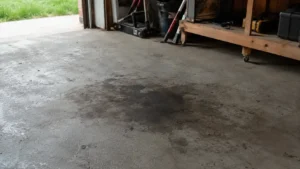
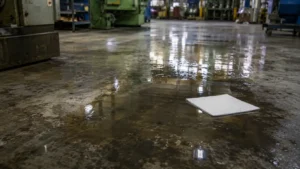
Oil leaks create slippery surfaces in industrial facilities. Workers slip and fall on these oily spots. This leads to injuries like sprains, fractures, or head trauma. Safety protocols demand quick action to prevent such risks.
Spill prevention starts with regular inspections. Maintenance teams spot leaks early through leak detection. They use containment solutions to keep oil from spreading. This protects walkways and work zones.
Proper lubrication helps avoid equipment failures that cause leaks.
Industrial hygiene suffers when leaks go unchecked. Hazardous materials like oil increase accident rates. Risk management includes emergency response plans. Regulatory compliance requires safe environments.
Repair solutions fix sources fast. These steps boost workplace safety. Production downtime and efficiency loss follow when leaks disrupt operations.
Production Downtime and Efficiency Loss
Beyond the slip and fall risks that endanger workers, oil leaks create major production downtime and cut efficiency in industrial facilities. Machines stop when leaks force sudden shutdowns for repairs.
Teams lose hours fixing the problem instead of running operations. This leads to missed deadlines and lower output. Maintenance crews rush to handle the leakage, pulling them from routine tasks.
Leaks in lubrication systems slow equipment and raise wear, harming productivity. Quick spill prevention stops these issues early. Regular inspections spot problems before they grow.
Good management keeps lines moving without breaks. Repair solutions fix sources fast to boost efficiency.
Environmental and Compliance Exposure
Oil leaks pose serious risks to the environment in industrial facilities. They can pollute soil and water sources, harming local wildlife and ecosystems. Facilities must follow strict environmental compliance rules to avoid fines.

The EPA reports that unchecked leaks lead to over 1,000 violations each year in the US. Managers face penalties up to $50,000 per day for non-compliance. Spill prevention becomes key to protect natural resources and meet legal standards.
Early leak detection helps stop contamination before it spreads.
Compliance exposure also affects business reputation and costs. Regulators demand quick repairs and proper management of lubrication systems. Facilities that ignore leakage face lawsuits and cleanup bills in the millions.
Safety protocols include regular inspections to ensure environmental safety. Preventive measures reduce these risks and support productivity. To tackle these issues effectively, focus on controlling oil leaks at the source.
Controlling Oil Leaks at the Source
Workers fix oil leaks at the source to stop problems early. They inspect industrial equipment often for signs of leakage. Maintenance teams replace worn seals and parts right away.
This action boosts safety and cuts downtime. Lubrication systems need regular checks to prevent failures. Repair solutions include tightening fittings and using better gaskets. These steps help in spill prevention.
Managers set up safety protocols for leak detection. They train staff on proper inspection methods. Preventive measures reduce environmental compliance risks. Containment starts with quick fixes at the leak point.
Emergency response plans guide fast action. Productivity rises when leaks stay under control.
Containing Oil Leaks Before They Spread
Workers contain oil leaks fast with barriers and mats to stop spread across facilities. These tools protect key areas and block oil from drains, which cuts risks and keeps operations smooth.
Protecting Floors, Walkways, and Work Zones
Oil leaks can harm floors, walkways, and work zones in industrial facilities. Use spill containment barriers to stop leaks from spreading. Place absorbent mats around equipment for quick leak detection and control.
These steps boost safety and cut slip risks.
Maintenance teams should check areas often. Repair damaged seals right away to aid spill prevention. Good containment solutions keep oil off walkways and protect work zones. This approach supports productivity and meets environmental compliance.
Preventing Oil from Reaching Drains and Equipment
Beyond protecting floors, walkways, and work zones, teams must stop oil from spreading to drains and equipment. Workers install spill containment barriers around leak-prone areas. These barriers block oil flow and keep it away from critical spots.
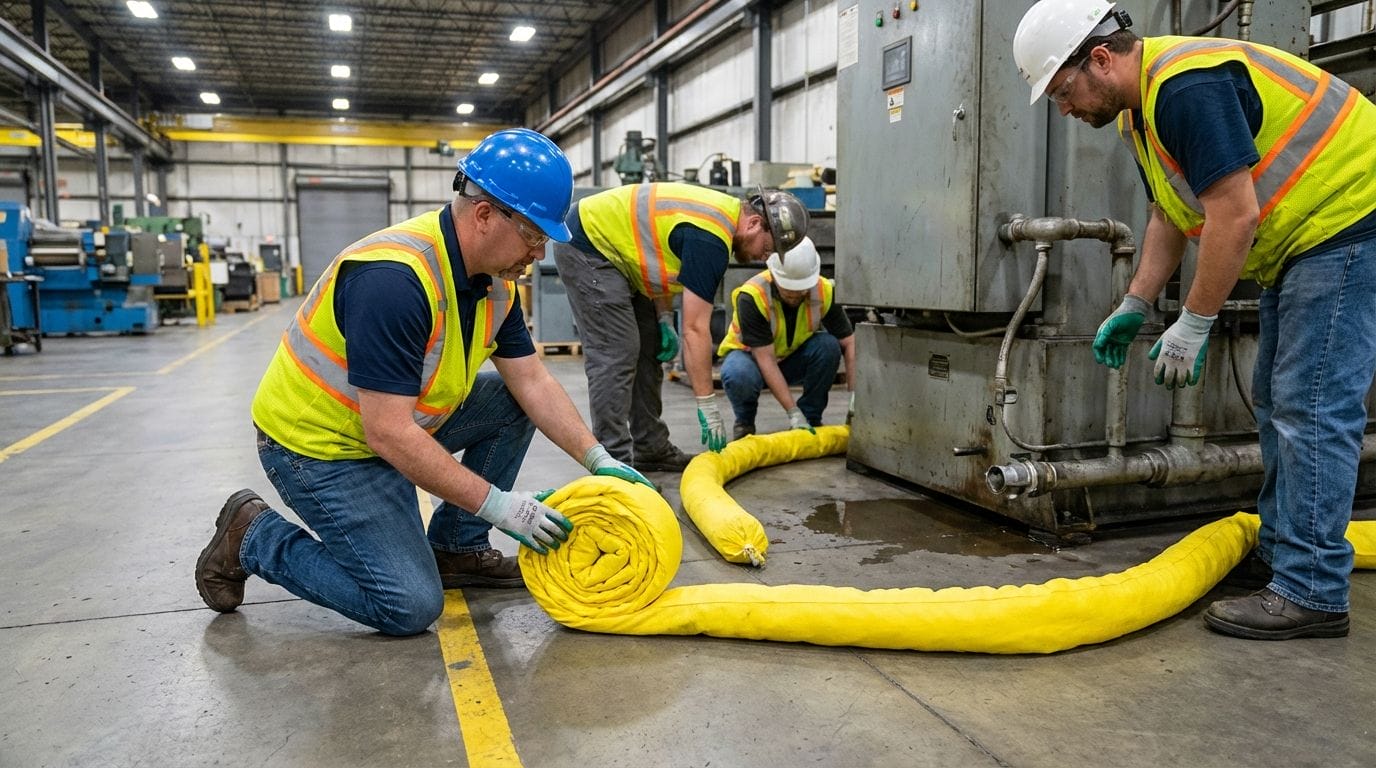
Use absorbent booms to form a quick perimeter. This step boosts safety and cuts environmental risks.
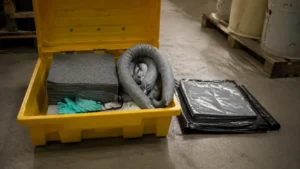
Maintenance crews check drains often for blockages or damage. They place drain covers during leaks to prevent entry. Equip areas with spill kits for fast response. Regular inspections spot weak points in lubrication systems.
These actions support spill prevention and regulatory compliance. Teams repair leaks right away to maintain productivity.
Cleaning Up Oil Leaks the Right Way
Workers face real challenges when leaks occur, and quick action prevents bigger issues. Experts recommend proven methods that restore safety fast, and these steps ensure clean results without extra risks.
Why Traditional Cleaning Methods Often Fail
Traditional cleaning methods, like mops and rags, spread oil instead of removing it. They smear leaks across floors, creating bigger messes. Workers slip on these slick surfaces, raising safety risks.
These methods fail to absorb oil fully, leaving residue that harms equipment. Oil seeps into cracks, causing long-term damage. Water-based cleaners mix with oil, forming emulsions that clog drains.
This blocks spill prevention efforts and cuts productivity. Facilities face higher maintenance costs from repeated cleanups.
Old techniques ignore leak detection needs, missing hidden spills. They produce waste that violates environmental compliance rules. Teams waste time on ineffective repairs, delaying operations.
Proper management demands better tools for containment. Using absorbents offers a smarter path for faster and safer cleanup.
Using Absorbents for Faster and Safer Cleanup
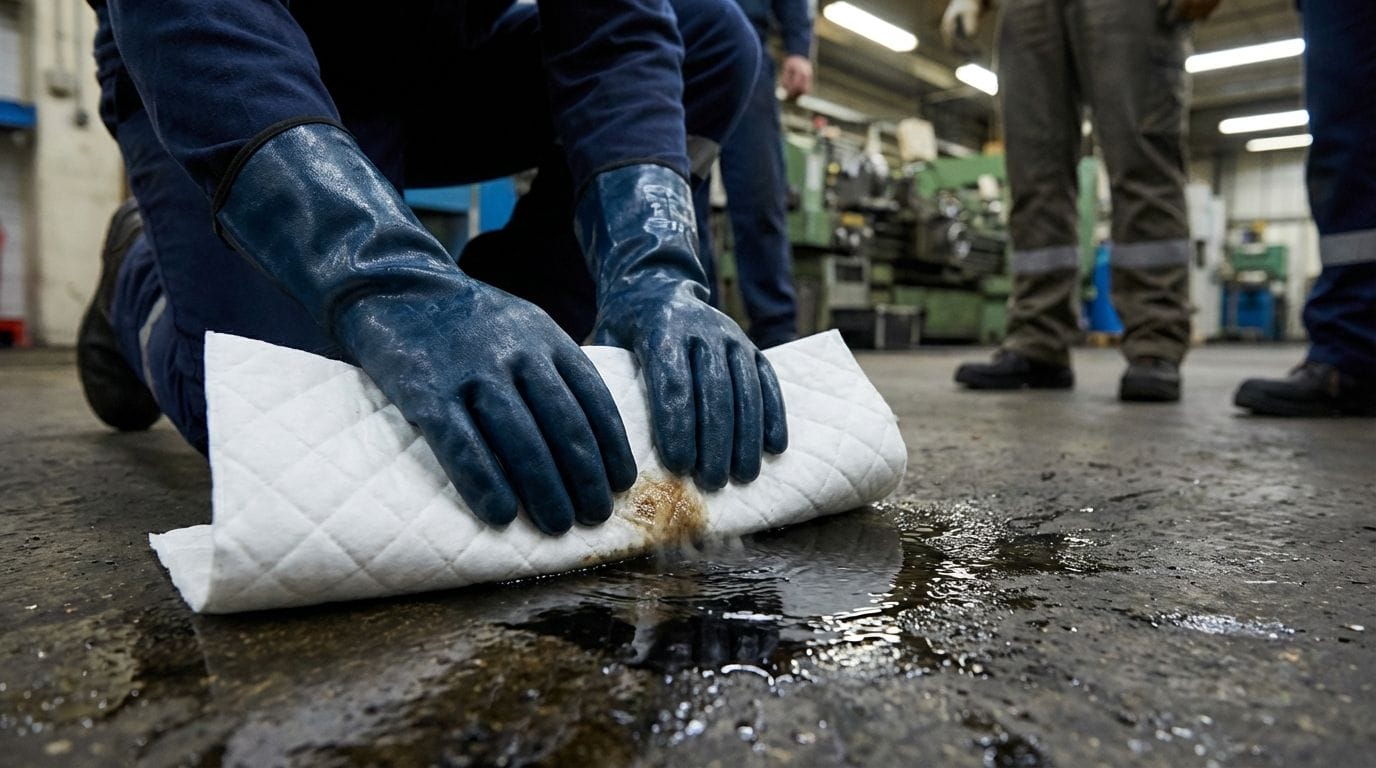
Traditional cleaning methods fall short in many ways, but absorbents offer a strong fix for oil leak cleanup. Workers apply these materials right on spills to soak up oil fast. This approach boosts safety by cutting slip risks in work zones.
Absorbents come in pads, rolls, or granules that trap oil without spreading it more. Teams use them to contain leaks before they hit drains or gear. Spill containment improves with these tools, and they help meet environmental compliance rules.
Pick the right absorbent type for each oil leak to speed up the process. Oil-only absorbents work best on lubricants and ignore water. This choice aids in faster repair and keeps productivity high.
Regular use in maintenance routines prevents bigger issues. Inspection teams spot leaks early and deploy absorbents at once. Safety protocols get stronger with this method, as it lowers exposure to hazards.
Management sees gains in efficiency from quick, clean responses.
Avoiding Secondary Contamination During Cleanup
Workers spread oil during cleanup. This creates secondary contamination. It harms safety and productivity in industrial facilities. Use spill containment tools right away. Place barriers around the leak area.
This stops oil from reaching new spots. Choose absorbents that soak up oil fast. These products follow environmental compliance rules. They cut risks from slippage. Train staff on safety protocols for handling leaks.
Inspect tools before use. This prevents more leakage during the process.
Maintenance teams avoid rinsing oil with water. Water pushes oil into drains. Use dry methods instead. Wipe surfaces with proper cloths. Dispose of used materials safely. Follow repair solutions to fix the source.
Emergency response plans guide these steps. Preventive measures like these protect industrial equipment. They boost management of oil leaks.
Preventive Oil Leak Management in Daily Operations
Teams implement daily routines to spot and fix small oil leaks early, which stops bigger problems from forming. Workers check equipment often, use seals that last, and track lubrication levels to keep operations smooth and safe.
These steps cut risks and boost uptime in facilities. Read on for tips that make a real difference.
Managing Ongoing and Repeated Oil Leaks
Industrial facilities often face ongoing oil leaks from aging equipment. Managers must address these issues daily to maintain safety and productivity. Start with regular inspections of lubrication systems.
Check seals and hoses for signs of wear. Fix small leaks right away to prevent bigger problems. Use drip pans under machines for quick containment. This stops oil from spreading to floors or drains.
Train workers on leak detection methods. They spot issues early during routine checks. Implement a repair schedule for repeated leakage spots. Replace faulty parts with high-quality ones.
Track all incidents in a log for better management.
For repeated leaks, focus on preventive measures like better lubrication practices. Apply the right amount of oil to reduce overflow risks. Install secondary containment barriers around key areas.
These catch spills before they cause downtime. Follow environmental compliance rules to avoid fines. Conduct safety protocols training often. Workers learn to handle leaks without risks.
Use absorbents for immediate cleanup. This keeps work zones safe. Monitor progress with monthly reviews. Adjust strategies based on data from past leaks. Strong maintenance routines cut costs over time.

Establishing Routine Inspection and Control Practices
To handle ongoing and repeated oil leaks, teams must shift focus to proactive steps. Set up routine inspection practices as a core part of maintenance. Train staff to check industrial equipment daily for signs of leakage.
Use leak detection tools to spot issues early. This approach boosts safety protocols and prevents spills.
Incorporate preventive measures into daily operations for better control. Schedule regular lubrication checks to maintain seals and reduce wear. Repair small leaks right away to avoid bigger problems.
Focus on spill containment during inspections to protect the environment. These steps improve productivity and ensure environmental compliance.
Common Mistakes That Worsen Oil Leak Problems
Industrial teams delay fixes on minor oil leaks until they escalate into major hazards, and they select wrong absorbents or barriers that fail to contain spills effectively, which boosts safety risks and cleanup costs; explore the full guide for proven ways to sidestep these errors.
Delaying Action Until Leaks Become Severe
Many teams wait too long to fix oil leaks. They ignore small drips until problems grow big. This delay hurts safety and raises slip risks. Workers face more dangers from unchecked spills.
Productivity drops as leaks cause machine breakdowns. Facilities lose time and money on sudden repairs.
Act fast on leaks to boost maintenance. Quick inspections spot issues early. Use spill prevention tools right away. This approach cuts environmental harm and aids compliance. Teams build better habits with routine checks.
Fast action keeps operations smooth and safe.
Using Improper Materials for Oil Control
Facilities often delay fixes on oil leaks, which leads to bigger issues. This delay can compound problems when teams choose the wrong materials for control. Workers sometimes grab rags or sawdust for quick cleanups.
These items fail to absorb oil well. They spread the mess instead. Oil soaks through rags and leaves slippery spots. Sawdust mixes with oil and creates fire risks. Use proper absorbents for spill containment.
These materials soak up oil fast. They help with safety and prevent leaks from worsening. Pick pads or booms made for oil. These tools stop leakage from reaching drains. They boost productivity by cutting cleanup time.
Teams make errors with wrong sealants too. Some apply household glues to fix equipment. These glues break down in oil. Leaks return soon after. Opt for industrial sealants in maintenance.
These products last longer in lubrication systems. Check labels for oil resistance. Proper choices aid leak detection early. They support environmental compliance. Train staff on right materials.
This step cuts risks in daily operations. Good management avoids costly repairs later.
Conclusion
Master oil leak control to boost safety and efficiency in your facility. Implement routine checks, quick fixes, and proper cleanups to cut risks and downtime. These steps protect the environment and keep operations smooth.
Take action now for long-term gains in productivity and compliance.